
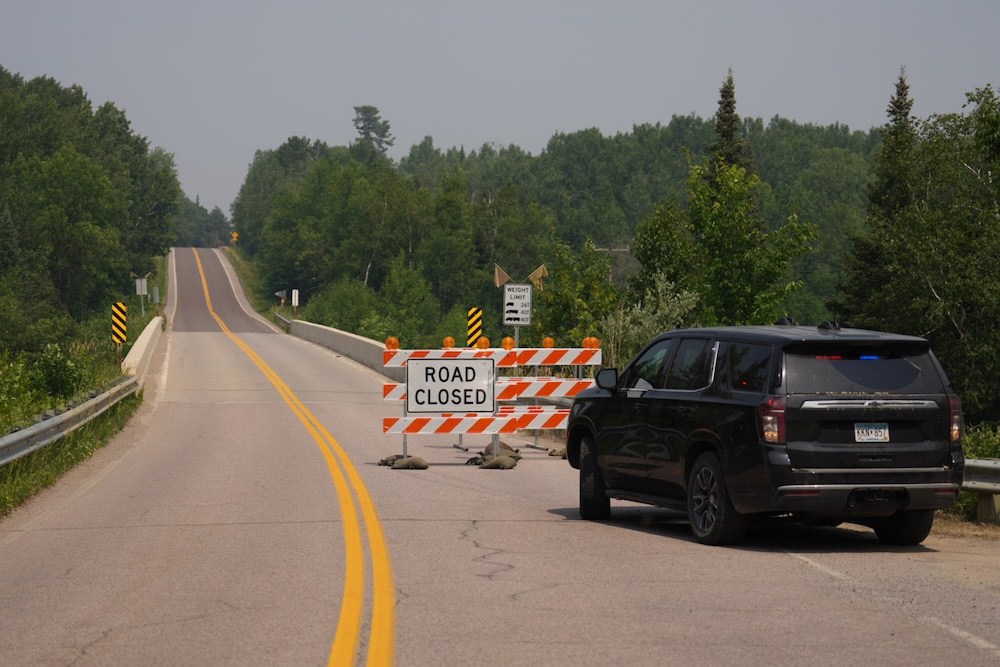
Heavy smoke from several large wildfires blazing in Canada and Minnesota is expected to engulf large swaths of the Midwest and Northeast U.S. this week, exposing millions of people to dangerous air pollution.
Minnesota officials issued an air quality alert from Tuesday through Friday for areas including the Twin Cities metro area, Alexandria and Two Harbors, with very heavy smoke expected across the state’s northeastern corner as large wildfires spread. Air quality levels in Two Harbors, the Tribal Nation of Grand Portage and other regions in northeast Minnesota were expected to reach hazardous levels, making it unsafe for everyone.
Dan Westervelt, associate professor at Columbia University’s Climate School, said severe drought conditions combined with heat in Canada and the U.S. have created “a perfect storm for really dry conditions to provide a lot of fuel for these wildfires to burn.” Research shows warming temperatures from burning coal, oil and gas are making fires more frequent and intense.
People should stay indoors as much as possible to avoid the extreme heat, especially as smoke moves in, said Tyler Hasenstein, meteorologist with the National Weather Service in Chanhassen, Minnesota.
“Those two things coinciding with each other is not good from a health perspective,” he said.