
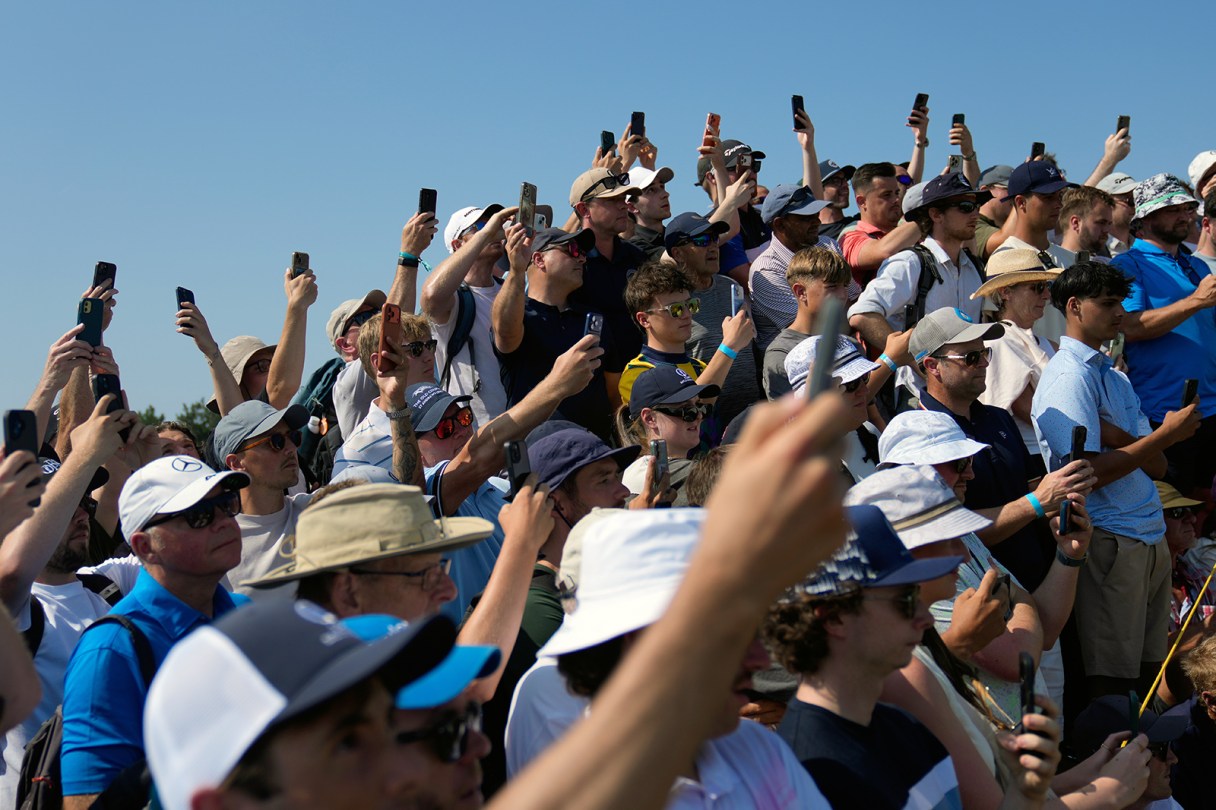
SOUTHPORT, England — More than 300,000 fans will attend the British Open at Royal Birkdale Golf Club this week, making it a record crowd for the sport’s oldest major championship tournament.
They’ll need to bring sunscreen and some manners.
The tourney has a rare forecast of warm sunshine and cloudless skies, at least over the first couple of days. And for the first time, the R&A — golf’s governing body outside of Mexico and the United States, which is covered by the U.S. Golf Association — has felt it necessary to publish a fan code of conduct. It comes at a time when some of the sport’s biggest events have been marred by unsavory and even abusive behavior by spectators.
Titled “The Open Commitment,” the code boils down to these five basic requirements of fans: respect the players, respect the links, respect each other, be aware, and enjoy responsibly.
Essentially, just be a nice person. If not, the R&A says it can punish “serious or repeated breaches” by removing the guilty parties from the property “without refund.”
“I’m all for an atmosphere,” said Matt Fitzpatrick, one of the 21 English players in the field who are most likely to be cheered rather than heckled at the 154th British Open. “Obviously I don’t want it to cross a line.”
That’s what happened during the Ryder Cup last September at Bethpage Black on New York’s Long Island, when Team Europe’s players — especially second-ranked Rory McIlroy of Northern Ireland — endured a torrent of personal insults and shouting on their back swings and putts. McIlroy, who repeated at the Masters in April for the sixth major title of his career, deemed the abuse from the American fans “unacceptable.”
Wyndham Clark, a Colorado native, didn’t get much love at last month’s U.S. Open, with spectators at Shinnecock Hills Golf Club — another Long Island venue — cheering the mistakes of a player who also won the 2023 U.S. Open at Los Angeles Country Club but was banned from Pennsylvania’s Oakmont Country Club after his missed-cut meltdown in the 2025 tournament there included damage to the locker room. Regardless of the reasoning, top-ranked Scottie Scheffler, who was among those chasing Clark on the final day at Shinnecock Hills, said the fans’ behavior toward Clark was “a bit much to me.”
Even the most recent British Open held on English soil — just down the road at Hoylake — didn’t escape some crowd misbehavior as American player Brian Harman defied some jeers and insults on his way to lifting the claret jug in 2023.
Clark doesn’t appear too concerned about any repeat incidents at Birkdale this week, describing British golf fans as “the best.”
“They respect the game, they respect the players and they really understand golf,” he said. “If you hit it into a tough spot and make the correct play or the smart play, the prudent play, they clap; they understand sometimes 20 feet is a great shot.”
The Masters has long had strict guidelines for fan conduct, but its status as the lone major being played at the same venue and the extreme difficulty of getting a ticket to the tournament, even for a practice round, allow Augusta National Golf Club to easily enforce what is essentially a no-tolerance policy for bad behavior.
R&A chief executive Mark Darbon said marshals, volunteers and officials at Royal Birkdale have been well-briefed on what constitutes poor fan conduct.
“We feel that it’s within our gift, if someone does step over the line, to ask them to leave the venue, and I think that’s a pretty powerful display,” Darbon said. “That’s the mechanism that we’ll use rather than fining a spectator.”