
The world’s militaries are locked in an arms race to develop the use of artificial intelligence in warfare. They’ve been at it for more than a decade — despite calls from civil society and AI experts to ban its use in military operations, given the devastation inaccurate AI targeting can cause.
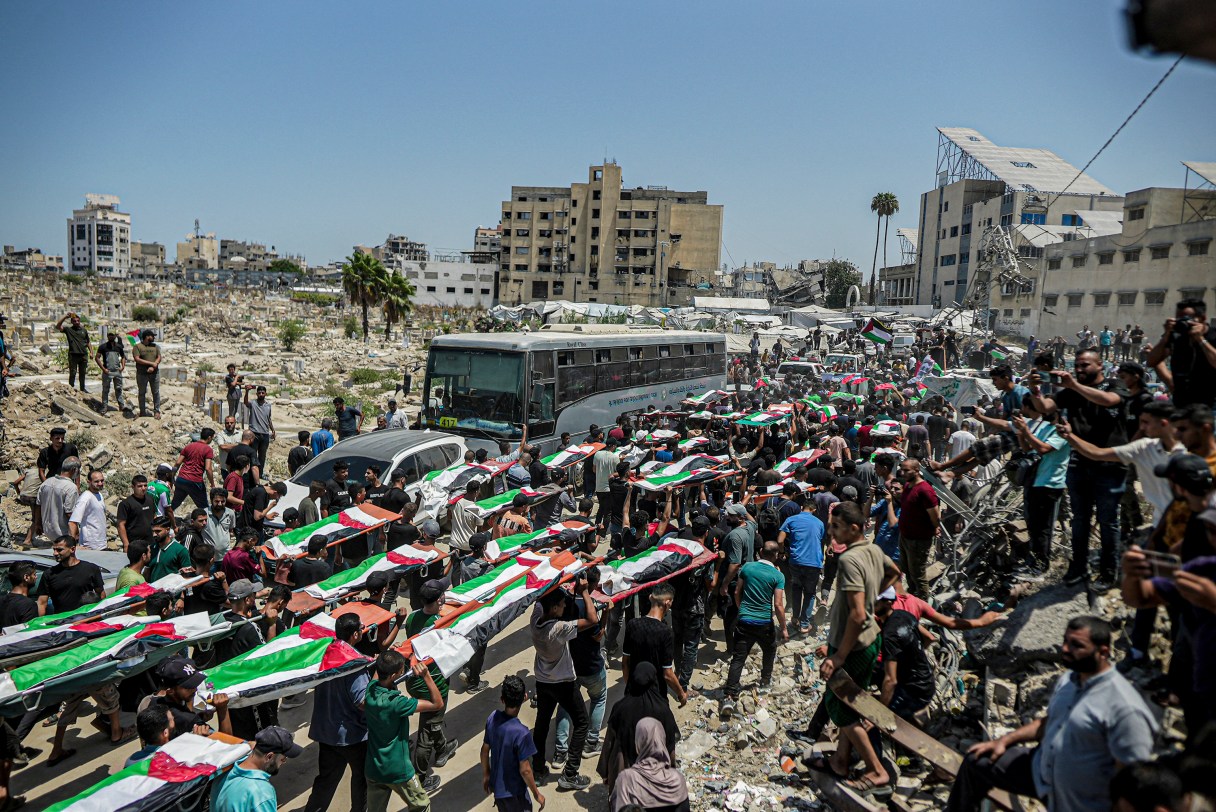
In Gaza, AI has helped accelerate the death toll to more than 72,000 people. In Iran, a U.S. airstrike on the first day of the war killed between 175 and 180 people, mostly girls between the ages of 7 and 12. The strike was said to be AI-assisted, with outdated intelligence data and human error playing pivotal roles.
The Pentagon is ignoring such red flags over the use of AI to identify targets, direct drones and analyze battlefields. In July, the U.S. military tested an AI-powered drone controlled entirely by its own software, with no human pilot or remote operator involved.
The International Committee of the Red Cross has called for new restrictions seeking to reduce the harm this emerging technology can cause. Concerns have also spurred resistance efforts from tech workers, policymakers and human rights organizations, including the group I work for, MPower Change, which successfully organized with Microsoft workers to pressure the company into terminating its contract with an Israeli military intelligence unit surveilling Palestinians.
But we need to do a lot more. The use of AI in war is the most harmful use of this technology. Heidy Khlaaf, chief AI scientist at the AI Now Institute, a New York-based nonprofit, has argued that “AI systems have built-in inaccuracies that make them inappropriate for a life-and-death context such as war.” In late July, the institute and the transparency watchdog Airwars released a powerful visualization of how “cascading errors” in data and AI analysis can wrongfully bring death and destruction to large numbers of civilians.