
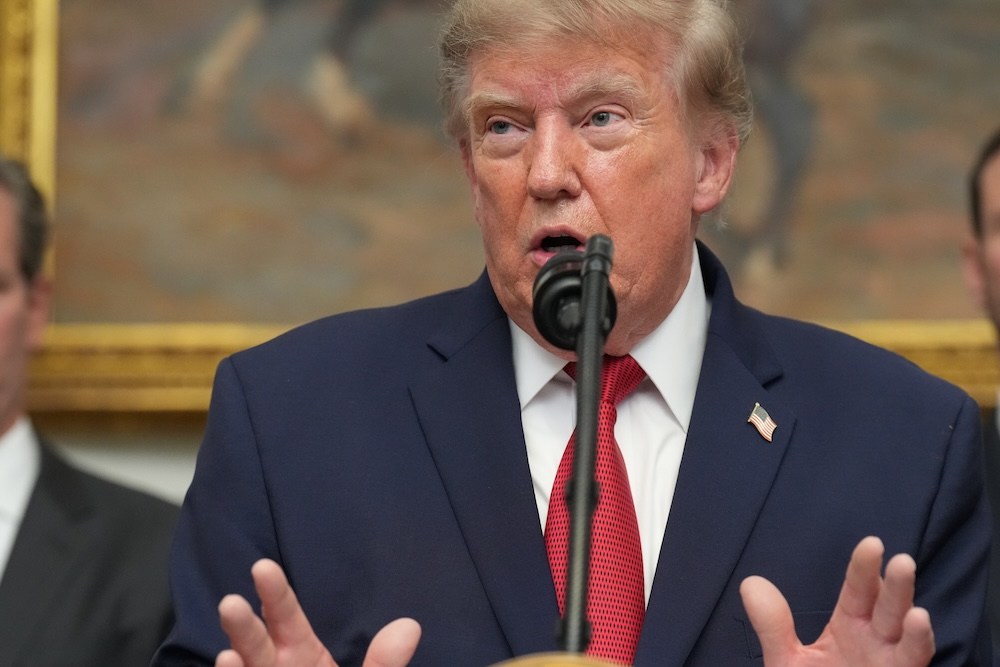
NEW YORK (AP) — Nearing the six-month mark of the Iran war and facing diminishing stockpiles of key weapons, the Trump administration is touting a crushing financial campaign against Tehran, promising an “economic D-Day” against a country that has so far withstood nearly five decades of punishing American sanctions.
With sparse details, President Donald Trump announced this week that the U.S. would be imposing an “unprecedented” level of economic warfare and isolation on Iran, aiming to force its leadership to cave to demands to end its nuclear program and fully reopen the crucial Strait of Hormuz to oil and natural gas tankers.
It reflects the dire reality Trump faces with an increasingly unpopular war he can’t seem to end just months before pivotal midterm elections that will decide whether his Republican Party keeps control of Congress. Whether out of desperation or strategy, the president is refocusing America’s might on bringing Iran to its knees through an accelerated sanctions campaign against one of the most economically penalized countries in the world.
The immediate response from Iran hawks has been praise and a call for patience as it plays out, while other analysts warn that Trump is refusing to learn the lessons of his predecessors.
In an interview Thursday on CNBC, Treasury Secretary Scott Bessent offered a small glimpse of what may be ahead, threatening secondary sanctions on nations and companies that conduct business with Iran.