
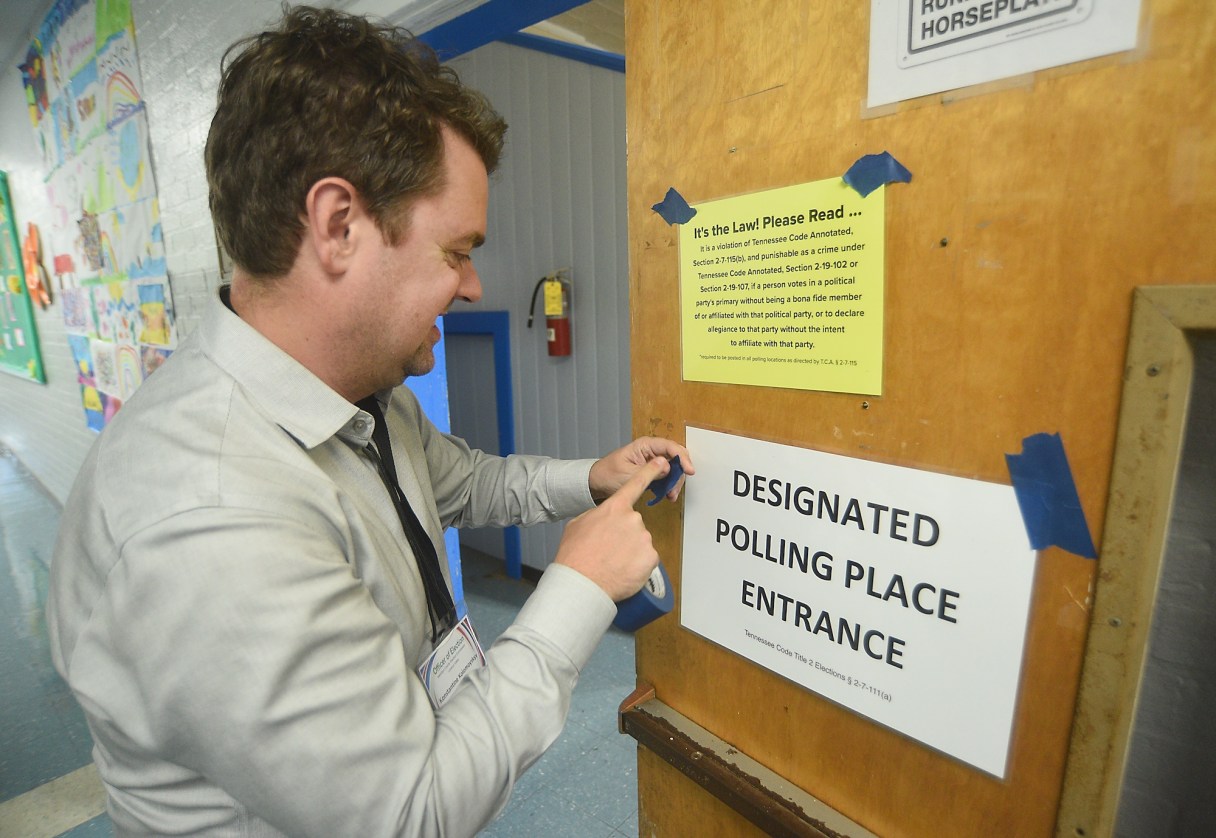
Here’s a civics trick question. Write down all the states that had a lower voter turnout than Tennessee in the last midterm election. If you did not write anything down, congratulations!
According to data from the nonpartisan United States Election Project, Tennessee’s 31% turnout of eligible voters was the lowest rate of voter participation in the nation, more than a full percentage point less than the next-lowest state, Mississippi.
As we approach our upcoming midterm election and hope for a higher turnout, it may be helpful for voters to consider evaluating political candidates on the basis of behavioral traits that social sciences have shown to be associated with sound judgment and good decision-making. These considerations stand apart from particular policy positions and may be overlooked during policy-focused debates.
My background as a retired psychologist may allow me to be a bit more attentive to the value of political leaders having dispositional attributes associated with good judgment. My investment as a concerned citizen makes me unquestionably fearful of harmful consequences that result when leaders lack them.
Nobel Prize-winning psychologist Daniel Kahneman and his collaborator, Amos Tversky oversaw extensive research on the nature of mental shortcuts, such as confirmation bias and reliance upon gut instinct, which make us prone to impulsive action. In his book “Thinking, Fast and Slow,” Kahneman noted that effective decision-making teams encourage reflective consideration of dissenting opinions before arriving at definitive conclusions and taking action. It seems unlikely the current administration’s recent decisions to initiate war with Iran and a tariff war with Canada benefitted from careful reflection upon dissenting opinions. Voters might therefore consider a candidate’s dispositional willingness to express and seek out dissenting opinions that differ from powerful party colleagues.
Psychologist John Gottman conducted scientific studies of marriages that spanned decades. Gottman summarized research identifying the communication of contempt within a marriage as the strongest predictor of divorce. That is due to the toxic effect of contemptuous feelings upon genuine efforts at compromise. Similarly, political candidates, who express disdainful feelings about members of the opposing party, typically reject bipartisan collaboration. Voters can listen for insulting, unnecessarily hostile language.
Historian Barbara Tuchman examined how governments undertook courses of action that perversely proved to be against their own interest. Examples she scrutinized included King George III’s punitive policies toward the American colonies, Japan’s attack on Pearl Harbor and unnecessary entanglements by the U.S. that led to the Vietnam War. Tuchman identifies “the illusion of omnipotence” as the single most destructive characteristic of governments prone to poorly conceived undertakings that result in what she calls “folly.” Voters should be wary of candidates who express overly aggressive, jingoistic nationalism language suggestive of a blind overestimation of our country’s power.
It is not at all necessary to study books and research articles to recognize the above traits. In fact, an often referenced 2007 study showed people are surprisingly accurate in appraising personality characteristics during initial social interactions as brief as five minutes. In other words, people as a whole are pretty skilled at reading the character and behavioral predispositions of others.
In addition to considering policy differences, voters would be wise to apply their people-reading skills to appraise candidates along the lines of behavioral predispositions likely to influence their decision-making in office.
Patrick Lavin of Hixson is a retired psychologist. He received a doctorate in clinical psychology from the University of Georgia and was certified in that specialty by the American Board of Professional Psychology.