
Wednesday, November 4, 2026Nov 4

This story is free to read.

Germany mulls fallout from elections, nationalist gains

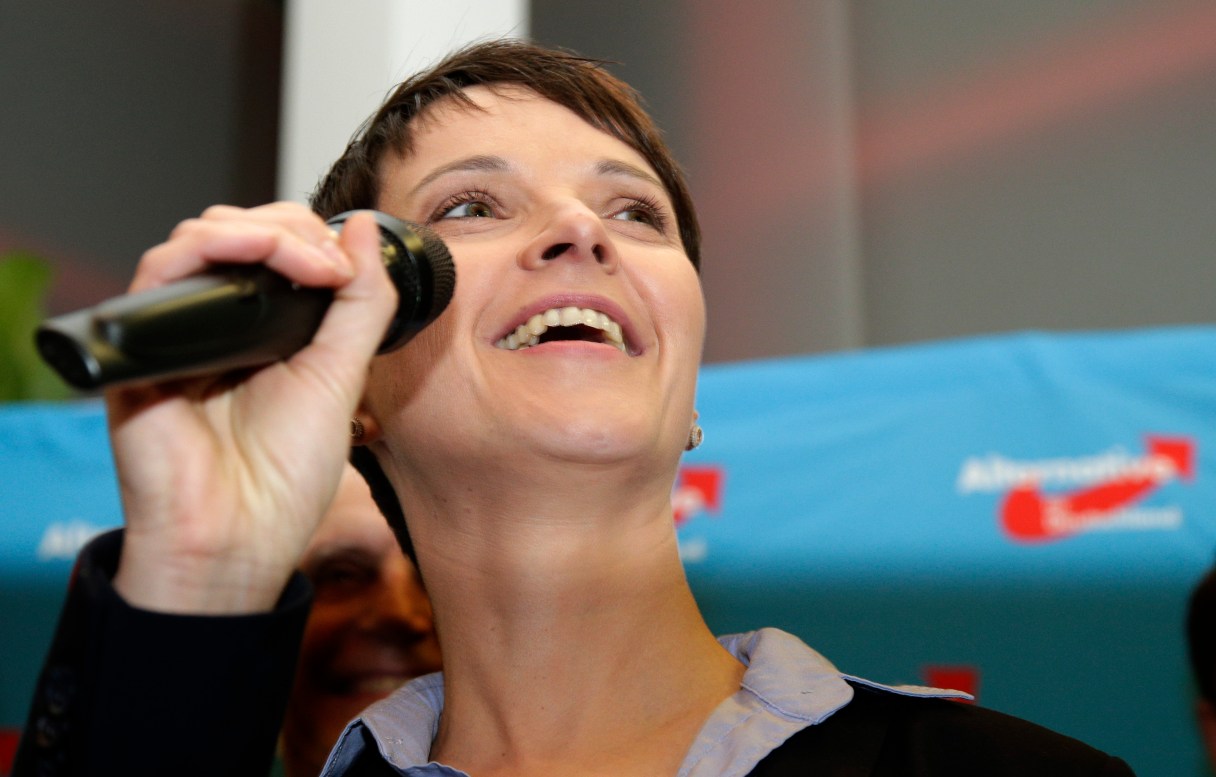
Frauke Petry, chairwoman of the AfD, smiles as she speaks at the gathering of the right-populist AfD (Alternative for Germany) after the closing of the state elections in the German federal states of Baden-Wuerttemberg, Rhineland-Palatinate and Saxony-Anhalt in Berlin, Germany, Sunday, March 13, 2016. Three German states were voting Sunday in the first significant political test since the country saw a massive influx of migrants. (AP Photo/Michael Sohn)
Frauke Petry, chairwoman of the AfD, smiles as she speaks at the gathering of the right-populist AfD (Alternative for Germany) after the closing of the state elections in the German federal states of Baden-Wuerttemberg, Rhineland-Palatinate and Saxony-Anhalt in Berlin, Germany, Sunday, March 13, 2016. Three German states were voting Sunday in the first significant political test since the country saw a massive influx of migrants. (AP Photo/Michael Sohn) Frauke Petry, chairwoman of the AfD, smiles as she speaks at the gathering of the right-populist AfD (Alternative for Germany) after the closing of the state elections in the German federal states of Baden-Wuerttemberg, Rhineland-Palatinate and Saxony-Anhalt in Berlin, Germany, Sunday, March 13, 2016. Three German states were voting Sunday in the first significant political test since the country saw a massive influx of migrants. (AP Photo/Michael Sohn)

BERLIN (AP) – Germany’s leading politicians are mulling the fallout from state elections that brought gains for a nationalist, anti-migration party and two major disappointments for Chancellor Angela Merkel’s conservatives.

The three-year-old Alternative for Germany, or AfD, powered into three state legislatures Sunday after campaigning against Merkel’s liberal immigration policy. Merkel’s party also lost two states they had hoped to win back from center-left incumbents, with victory going to governors who often sounded more enthusiastic about her migrant approach than her own candidates.

Germany’s parties were holding meetings Monday to digest the outcome, which featured tricky results for most established political forces.

Germany’s European commissioner Guenther Oettinger, a member of Merkel’s Christian Democrats, told the Funke newspaper group that “it would be wrong to bring about a change of course now” on migrants.