
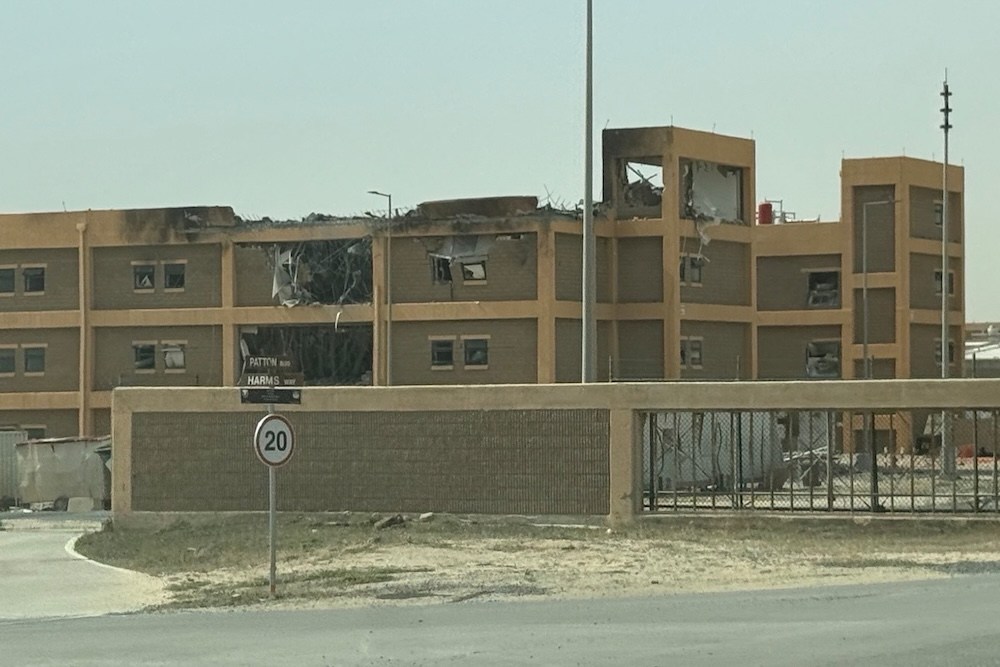
WASHINGTON (AP) — As the war with Iran enters its eighth month, U.S. soldiers wounded in its deadliest strike yet on American troops are raising concerns publicly, many for the first time, about whether commanders underestimated the threat. Some of those wounded also said the military medical system failed them.
The Pentagon has released few details about the Iranian drone strike on Port Shuaiba in Kuwait that killed six soldiers on March 1, the day after the United States and Israel started the war against Iran.
The Associated Press spoke with 13 soldiers, primarily officers, serving in key positions of responsibility there or familiar with high-level briefings. Many said the Pentagon did not take Iranian threats seriously enough as it launched Operation Epic Fury. Some of the wounded soldiers said that since the strike they have faced what they see as inadequate medical care and a military bureaucracy that impeded their benefits.
Several soldiers spoke on the record — rare for troops still in the Army — others on the condition of anonymity for fear of reprisal.
The Army declined to comment on the AP’s reporting on the Port Shuaiba strike, saying it had not yet briefed the families of those killed on the outcome of its investigation into the attack. The Pentagon also declined to comment.