
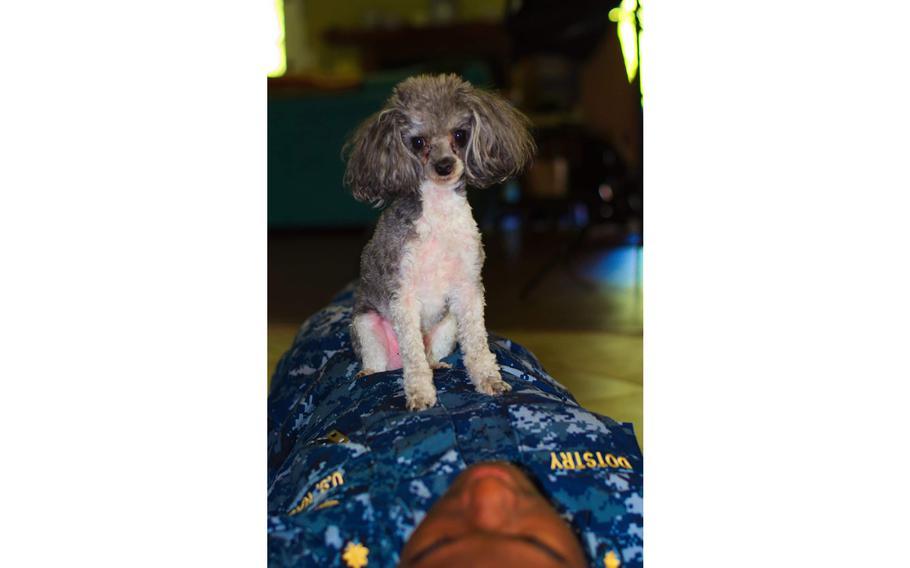
Several years ago, I went through a training program called the Submarine Command Course before I could assume the responsibilities of executive officer of a nuclear submarine. It is an arduous course, meant to challenge each participant to make sure that they can withstand the pressures of the job. Being responsible for a submarine, the crew of more than 150 people, and the weapons on board is a big deal. The Navy goes through a lot of effort to minimize the risk that you’d fail.
The instructors, all previous submarine captains, pushed our buttons to determine our fitness. Much of the course focuses on technical knowledge, tactics and decision-making. However, they also had us take a battery of psychological and personality tests to expose any potential issues. Each of these assessments yielded a similar profile for me. The instructors and mental health professionals all said something to the effect of: “You do not emotionally respond to anything. This can keep people calm in tough situations. It could also lead people to believe that you are aloof, so be careful of that.”
I’d heard these things before. I’d all but built my personal reputation on it. Many of my professional evaluations I received in my time in the Navy pointed out the fact that my presence was a calming force, one of which is a letter from a senator, which hangs on my wall. I was proud that I could be counted on as a rock in a storm. My extreme stoicism was a byproduct of my rough upbringing and a series of overt decisions to not feel the emotion of any event while it was happening, thus reducing the emotion to a whisper in the background. This also extended to my personal life.
I’ve recently retired from the Navy. Most of the decisions that I’ve made in my adult life have been centered around the question “what type of person do I want to be?” Recently, asking myself that question revealed that I needed to be a stronger presence with those I loved. That was fundamentally at odds with what would be required of me had I continued in the Navy. As such, I made the decision to retire. There have been many adjustments. Finding my way back to feeling has been one of the most surprising.
Very recently, our dog passed away. He was a 5-pound toy poodle named Dan Schultz. He joined our family as a puppy, when I was on my first ship, and he’d been with us for 13 years. A tumor developed in his stomach that was inoperable due to its size and a preexisting heart condition. The mass deprived him of his appetite, and he could not eat. It was putting pressure on his other organs, restricting their normal function. Under the advice of his veterinarian, we made the decision not to prolong his end of life.