
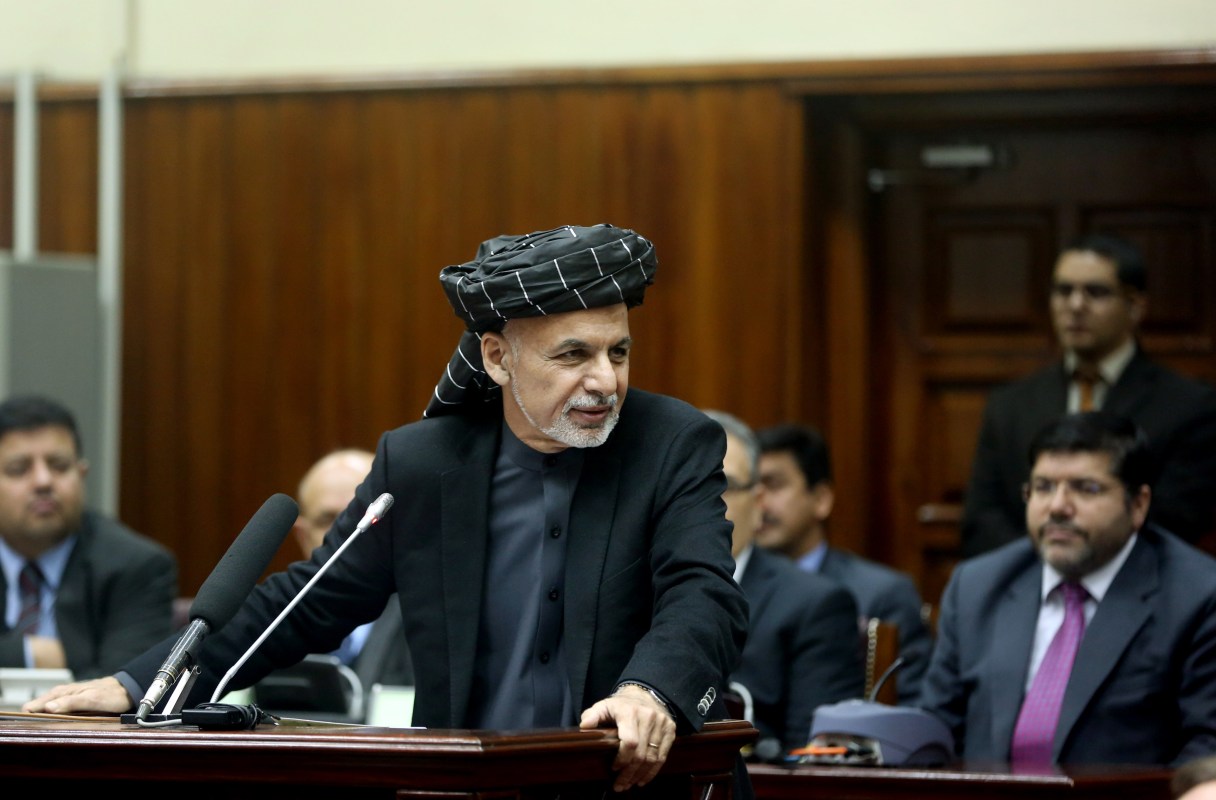
KABUL, Afghanistan (AP) – Afghanistan’s President Ashraf Ghani presented his nominees for Cabinet to the country’s parliament for confirmation on Tuesday – almost four months after he took office and amid mounting public impatience over the delays in forming a government.
The candidates, including three women, were presented to the assembly’s lower house, or Wolesi Jirga, as Ghani’s original list was hit by controversy – with one nominee allegedly being sought by Interpol to answer tax evasion charges and two others mysteriously withdrawing their candidacy just hours before the presentation.
In a speech lasting more than an hour and ranging widely over topics including trade, corruption, drug addiction and government accountability, Ghani said: “I have tried my best to present a cabinet that would be acceptable to you.”
Ghani was inaugurated in September after a protracted election process that ended in a U.S.-brokered deal that he and his main rival, Abdullah Abdullah form a “national unity” government. Abdullah is now chief executive.
The delay in choosing cabinet nominees eroded confidence in Ghani, who took office promising to end corruption and create a transparent, accountable government, signaling a break with the 13 years of patronage politics favored by his predecessor Hamid Karzai.