
Monday, November 16, 2026Nov 16

Agency nixes proposed rafts where walrus can rest off Alaska

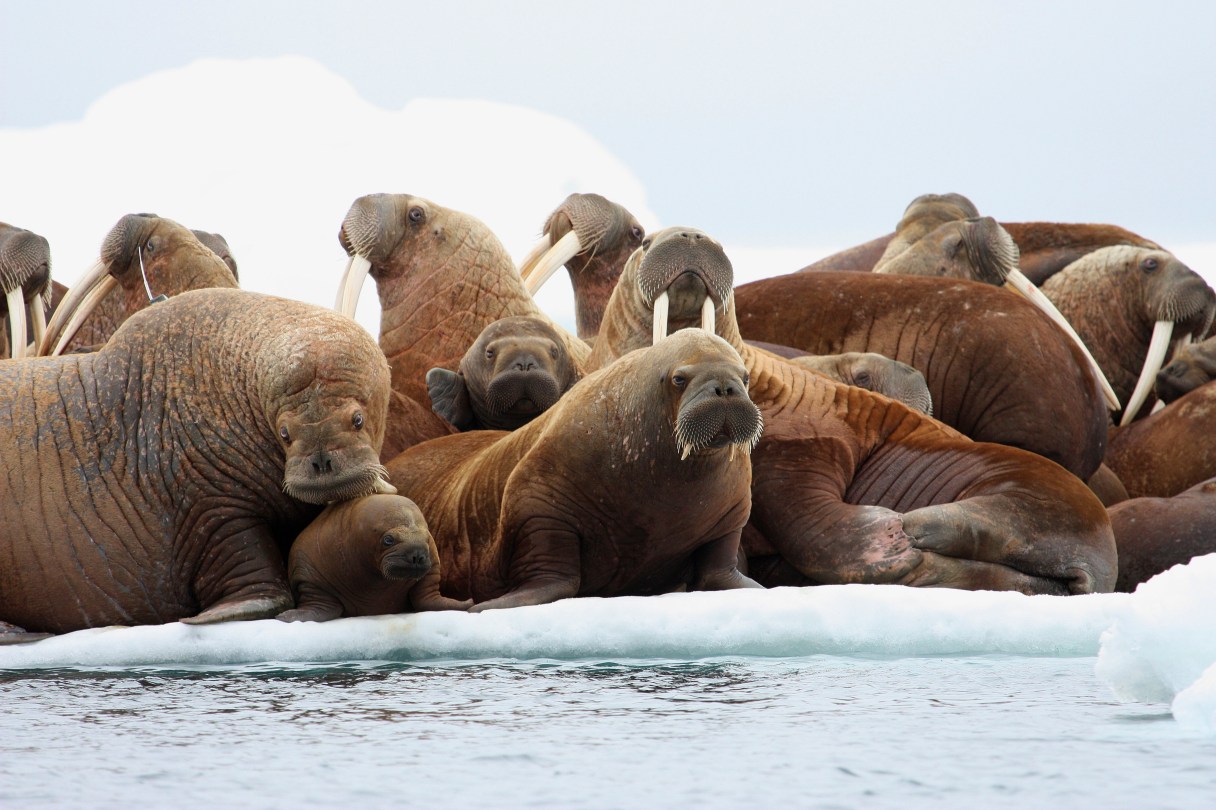
FILE - In this July 17, 2012, file photo, adult female walruses rest on an ice flow with young walruses in the Eastern Chukchi Sea, Alaska. Federal wildlife officials have declined the suggestion of a wildlife advocacy group to place experimental rafts off Alaska's northwest coast as a resting place for walrus. A U.S. Fish and Wildlife Service regional director says the agency is studying Pacific walrus coming to shore in huge numbers along the Chukchi Sea because of shrinking sea ice. (S.A. Sonsthagen/U.S. Geological Survey via AP, File)

ANCHORAGE, Alaska (AP) – The U.S. Fish and Wildlife Service has declined for now to create artificial floating platforms for Pacific walrus that come ashore in Alaska because they lack summer sea ice.

The agency’s decision came in response to a suggestion by a wildlife advocacy group to place experimental rafts over a prime Chukchi Sea feeding area 100 miles off Alaska’s coast, Geoffrey Haskett, Alaska regional director for the U.S. Fish and Wildlife Service, said in a letter Monday.

“We do not think such a measure is needed at this time,” Haskett said in the letter to Rick Steiner of Oasis Earth.

An estimated 35,000 Pacific walrus were photographed Sept. 2 near Point Lay in what has become an annual September phenomenon tied to shrinking sea ice attributed to climate warming.

Walrus dive to feed on clams, sea snails and other food on the ocean bottom but cannot swim indefinitely. In recent years, sea ice has receded north beyond the shallow continental shelf to water that exceeds 2 miles deep, beyond the diving range of an adult walrus.