
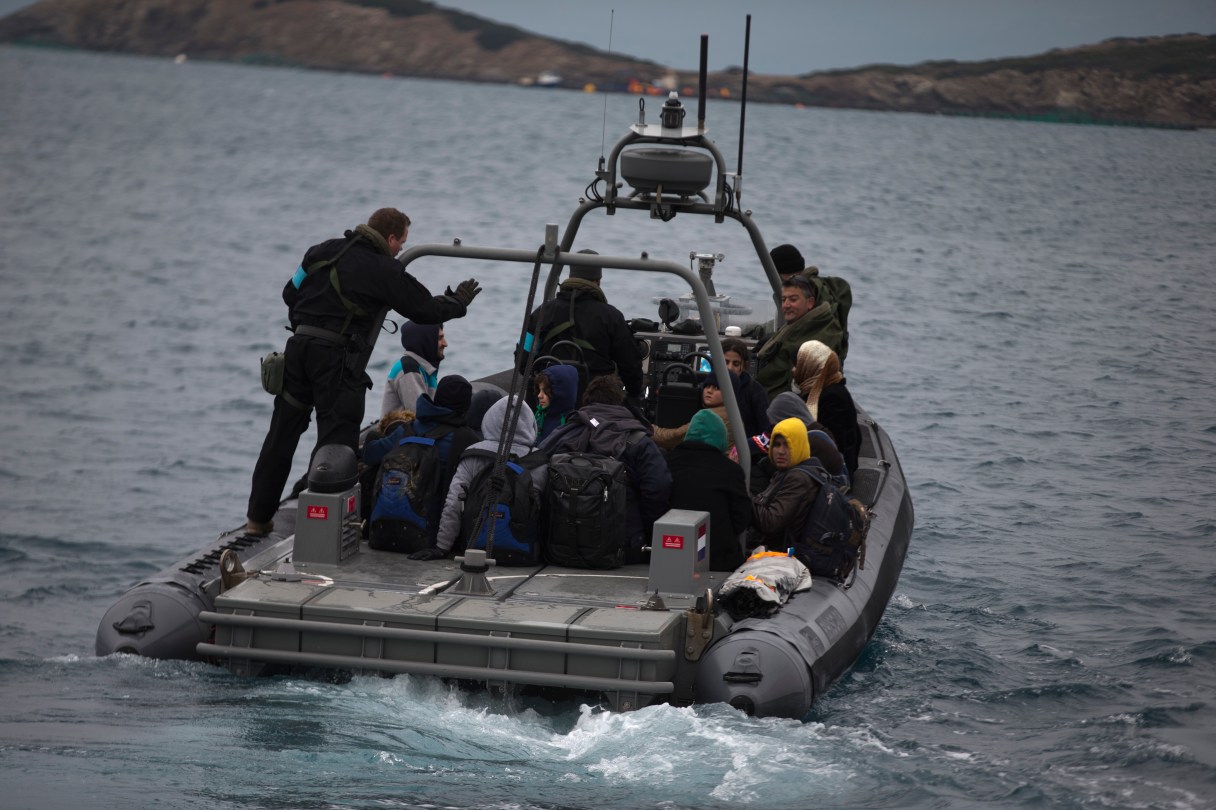
CHIOS, Greece (AP) – In the inky nighttime blackness, a small red dot appears on the radar screen, moving fast.
“That’s a smuggler,” the captain of the coast guard’s lifeboat says, swinging the vessel around and opening up the throttle, the boat cutting through the water on a frigid January night.
But the lifeboat, designed for search and rescue operations rather than high-speed chases, is no match for the smuggler’s speedboat. The smuggler ignores the searchlight, the shouts and the warning shots fired by the coast guard, deftly navigating his small white vessel onto a tiny patch of beach among rocks.
There he disgorges his human cargo – men, women and children risking their lives in a quest for safety and a better future in Europe. They use ropes to scramble up a cliff, heading toward a lighthouse on an island they are soon to discover is deserted save for an army outpost. They will spend a cold, wet, uncomfortable night there until the coast guard can send boats in the morning.
Hour after hour, by night and by day, Greek coast guard patrol and lifeboats, reinforced by vessels from the European Union’s border agency Frontex, ply the waters of the eastern Aegean Sea along the frontier with Turkey, on the lookout for people being smuggled onto the shores of Greek islands – the frontline of Europe’s massive refugee crisis.