
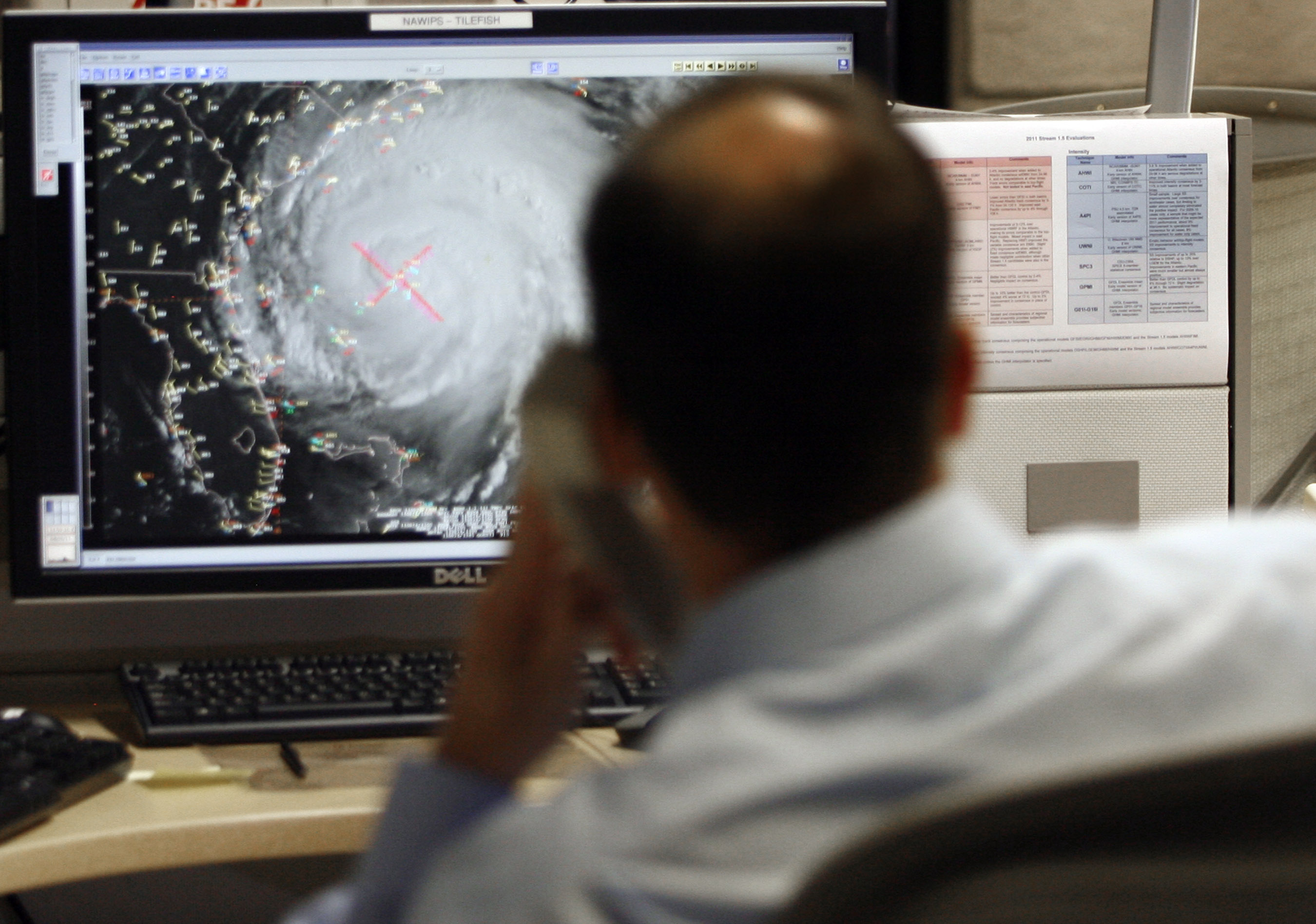
 Hurricane specialist Dan Brown reviews the tracks and intensity of Hurricane Irene at the National Hurricane Center on Friday.
Hurricane Irene, most meteorologists and emergency management and public safety officials now agree, could have been much worse. That’s true, but one’s view of the storm is a matter of perspective. The tens of millions of people along the U.S. East Coast from the Carolinas into New England who braved the weekend onslaught of wind, torrential rains, waves and storm surge likely have a much different assessment. It was plenty bad enough for them.
What the storm left in its wake is telling.
The hurricane/tropical storm had led to the reported deaths of at least 31 people in 10 states as of Monday afternoon. . Economic losses, including property damage, could reach $7 billion or perhaps more, a high total to be sure, but significantly below the record for a natural disaster in the United States. About $3 billion of the estimated $7 billion will be covered by insurance, industry experts say.
It will take some time for appraisers and experts to precisely determine the losses attributable to the hurricane, but some numbers immediately available attest to the might of the storm. On Monday, afternoon, nearly five million people along the storm’s path were without power. That’s down from the nearly 7.5 million homes and businesses that were in the dark at the height of the outage. That total is only one sign of the damage wrought by Irene.
In many places, people still can not reach homes and businesses. Flood waters, washed out roads and bridges, downed utility poles, toppled trees and other debris make travel dangerous if not impossible. In some places, individuals can get to their homes and businesses, but they’ll remain without essential services for days or weeks. Some officials say full restoration of power in the hardest hit locales — like Vermont, where the governor said the state had experienced its worst flooding in a century –might take weeks.