
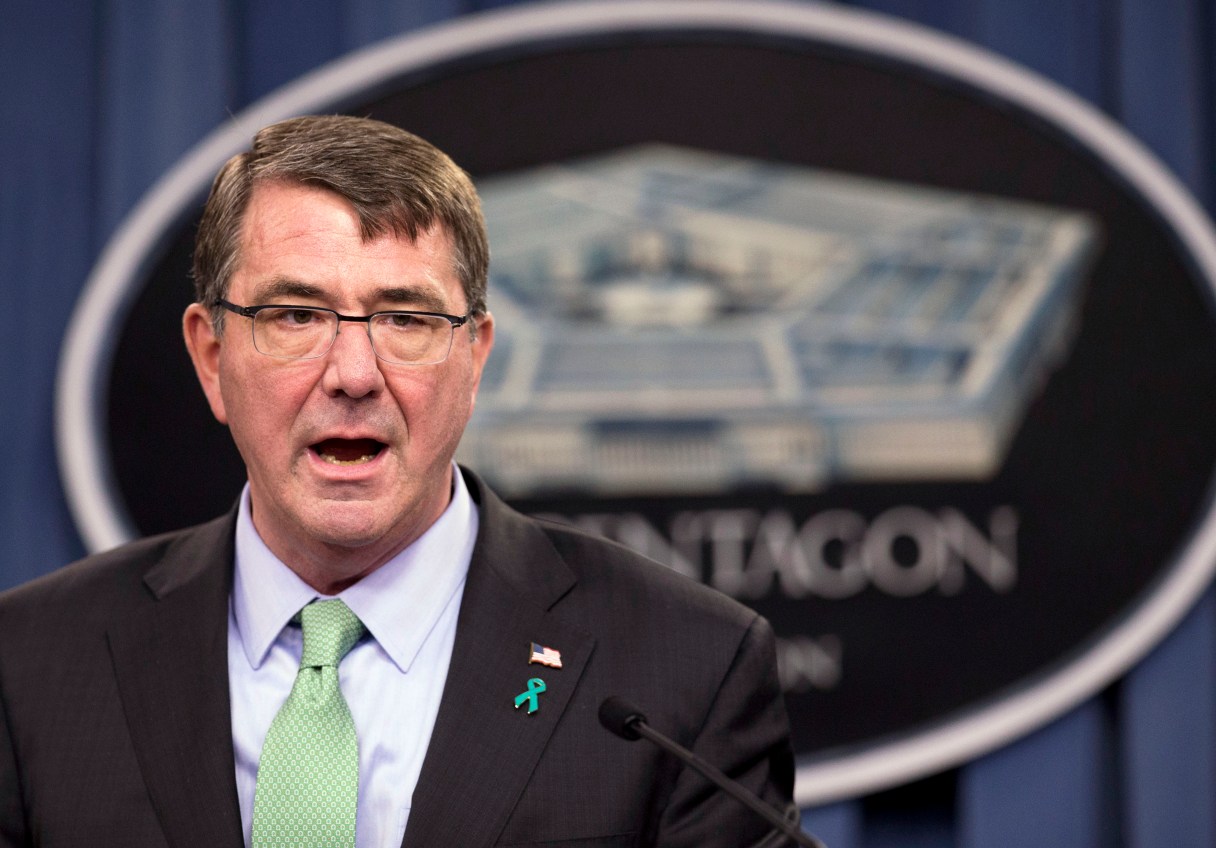
WASHINGTON (AP) – The Islamic State group’s takeover of the Iraqi provincial capital Ramadi has prompted criticism from Defense Secretary Ash Carter and raised new questions about the Obama administration’s strategy to defeat the extremist group.
The Islamic State group, which had already seized a strategically important swath of the Middle East, seized Ramadi in central Iraq a week ago, which has revived concerns about U.S. efforts to fight the group.
The Obama administration’s approach in Iraq is a blend of retraining and rebuilding the Iraqi army, prodding the Shiite-dominated government in Baghdad to reconcile with the nation’s Sunnis and bombing Islamic State group targets from the air without committing American ground combat troops.
President Barack Obama’s strategy is predicated on Baghdad granting political concessions to the country’s alienated Sunnis, who are a source of personnel and money for the Islamic State group. But there has been little visible progress on that front. Baghdad has continued to work closely with Shiite militias backed by Iran, which have been accused of atrocities against Sunnis, a religious minority in Iraq that ruled until Saddam Hussein fell from power.
The U.S. has sought to reach out on its own to Sunni tribes and is training some Sunni fighters, but those efforts have been limited by the small number of American troops on the ground.