
DANGEROUS ADVICE
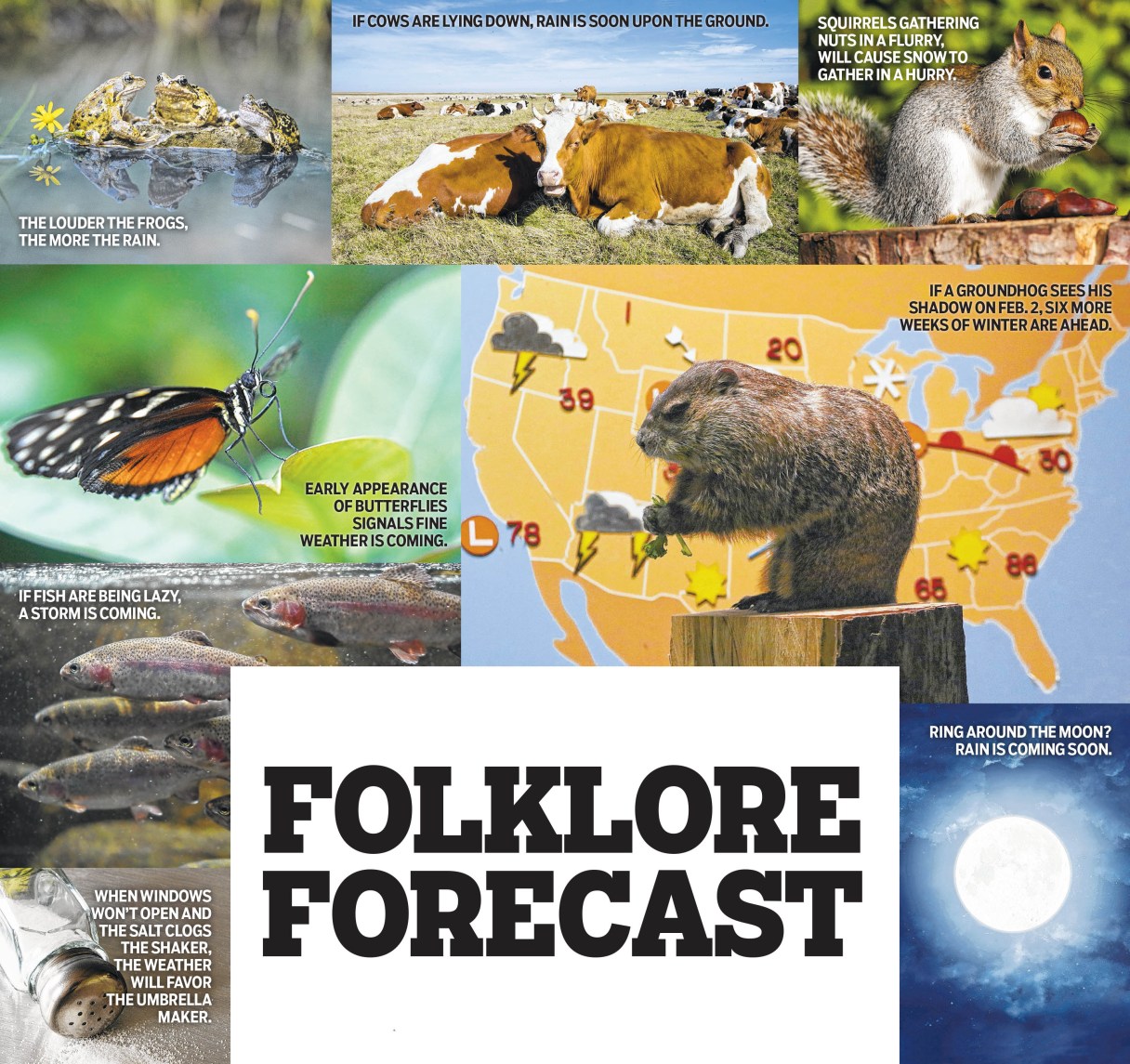
Some well-known weather sayings are so wrong they’re potentially deadly. * Lightning never strikes the same place twice. Absolutely, positively false. As an example, lightning strikes the Empire State Building in New York about 25 times per year. Lightning tends to strike the highest object in an area, and it is attracted to metal. * Tornadoes never attack mountains. The thought is that mountains break up the weather fronts that create tornadoes, but tornadoes have been sighted in the Appalachians, the Rockies and the Sierra Nevadas. They’re rare in mountains because air that high is cool, and tornadoes usually need warm, unstable air to form. But in 1987, an F4 tornado roared for 24 miles across the Rockies in Wyoming at heights from 8,500 to 10,000 feet. In the Appalachians, a mile-wide tornado hit Roanoke, Va., in April 1974. * Tornadoes never hit cities. Nashville would beg to differ. A tornado roared through the city’s downtown on April 16, 1998). Other cities hit by tornadoes include Miami, Salt Lake City, Birmingham, Oklahoma City, Houston and Fort Worth. As NOAA points out, tornadoes are usually 5 to 10 miles tall; even a 1,000-foot building (92 stories) cannot deflect something that big.
The past few weeks have been rough ‘n’ tumble for regional weather forecasters.
A few days before Feb. 17, they were predicting 3 to 5 inches of snow in the Chattanooga area, but by Feb. 16 had changed that to freezing rain and ice. People rushed to the stores to grab food; schools closed before the morning even arrived. When Feb. 17 dawned, there was nothing, no ice, no snow.
A little over a week later, they were warning of up to 6 inches of snow on Feb. 26. People rushed to the stores; schools closed before the morning arrived. The snow started falling on the evening of Feb. 25 and, by the next morning, sure enough, there were about six inches of snow coating most of the metro area, deeper in the higher elevations.
Even with all the computers, satellites and hi-tech gear now employed by meteorologists, they’ll readily admit that predicting the weather can be tricky. Winds suddenly change direction; warm and cold fronts get stubborn, refusing to move when computer models say they’re supposed to. Temperatures rise and fall from the ground to the upper atmosphere, changing water droplets from rain to sleet to snow to freezing rain as they tumble from the sky.