
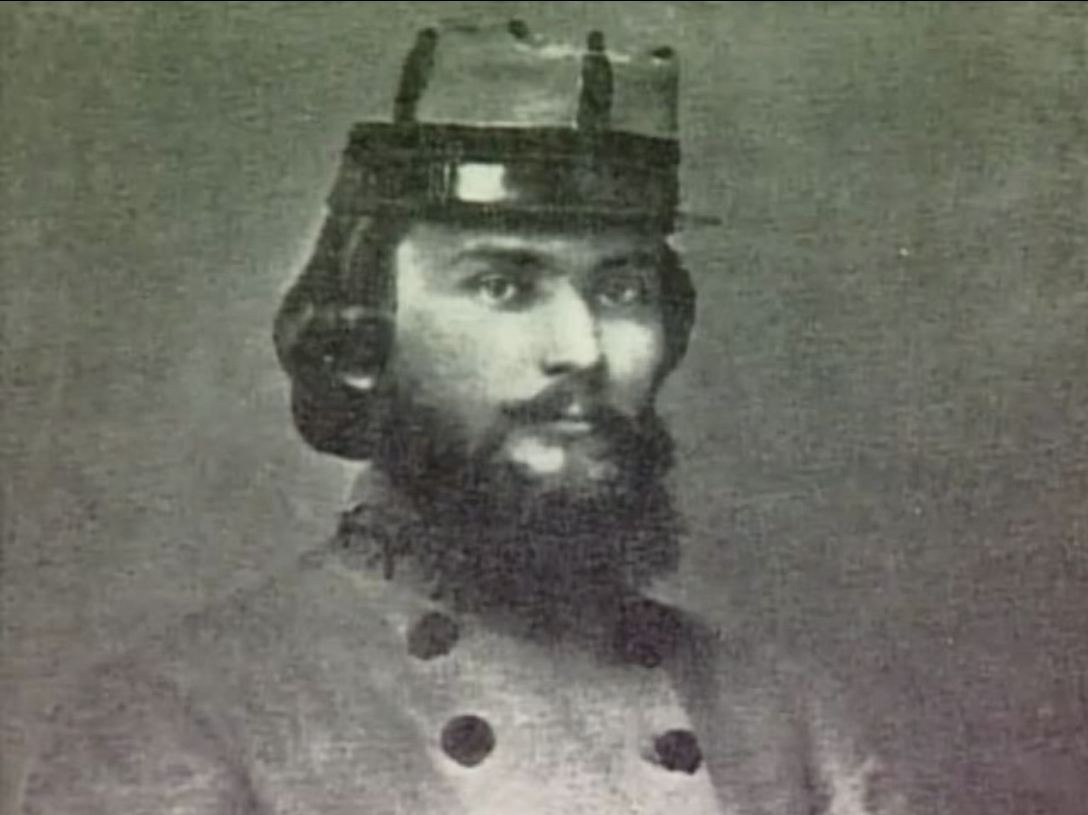
By age 17, Pike County, Ala., native William C. Oates had become a drifter. After he settled in Texas, his brother urged him to come home, improve himself and become a lawyer, which he did. At the outbreak of the Civil War, he joined the Confederate States Army and became commander of the 15th Alabama Infantry.
Before coming to Chickamauga, Confederate Col. William Oates and his 15th Alabama regiment fought valiantly against Col. Joshua Chamberlain’s 20th Maine at Little Round Top in the battle of Gettysburg, an action made famous in Michael Shaara’s novel, “The Killer Angels.”
At Chickamauga, the 15th Alabama’s performance also was distinctive though not necessarily distinguished. Here the unit won the sobriquet, the “Wandering 15th Alabama.”
The 15th Alabama came to Chickamauga as part of the Confederate army shipped down from Virginia. The soldiers arrived just as the Battle of Chickamauga began on Sept. 19, 1863.
Throughout the fighting, regiments frequently wandered from their assigned brigade. On Sept. 20, Oates and his 15th Alabama took wandering to a new level.
The regiment was part of Col. William Perry’s brigade and the massive column formed by Gen. James Longstreet to break the Union lines.
During the advance, Oates and his 15th crossed Lafayette Road and entered the woods south of Brotherton field. Going through the chaos of smoke-filled woods, the soldiers veered to the southwest while the rest of Perry’s brigade veered to the northwest.
Emerging from the woods, Oates and his 15th Alabama found themselves on South Dyer field. The rest of the brigade was nowhere in sight. Oates may have been puzzled but he was still full of fight. Where should he go?
To his left, he spotted Gen. Zachary Deas’ brigade attacking a Union position. Oates elected to join that fight. The 15th Alabama fell in behind the right part of Deas’ brigade.
It wasn’t exactly a welcomed addition. Members of Deas’ brigade complained that the 15th Alabama was firing into their ranks. This mistake was corrected. Once the fighting in front of Deas’ brigade ended, Oates looked around to see where to go.
Oates still had no idea of the location of his own brigade. However, far to the north, he heard heavy gunfire coming from the fight developing around Snodgrass Hill-Horseshoe Ridge, which was at least a mile away.
Undismayed by the distance, Oates led the 15th Alabama across Dyer field and straight to the sound of the guns. Laudable as his impulse was, his arrival at the foot of Horseshoe Ridge wasn’t helpful.
Oates and his 15th Alabama regiment arrived smack in the middle of Gen. Joseph Kershaw’s South Carolina brigade. Undeterred by being in a different brigade, Oates began issuing orders to the South Carolina regiments on either side of him. The South Carolina regiment on his left ignored him. The regiment on the right obeyed and followed along as Oates and his 15th Alabama tried to climb the ridge and overrun the Yankees at the top.
Despite their valiant attacks, Oates and his soldiers were repulsed. The 15th Alabama settled down amidst Kershaw’s brigade on the lower slopes of Horseshoe Ridge.
Happily, a courier found Oates and directed him to rejoin his original brigade. This ended the wandering of Oates and the 15th Alabama at Chickamauga.
It wasn’t the end of their prominence in the action around Chattanooga.
One of Confederate Gen. Braxton Bragg’s key objectives during the siege of Chattanooga was to prevent Union supplies stored at Bridgeport, Ala., from reaching Chattanooga. This meant blocking Union wagon trains from crossing the Tennessee River at Brown’s Ferry.
Oates’ 15th Alabama was assigned the duty of guarding the long stretch of the south bank at the ferry. When the Union soldiers made their surprise attack on the morning of Oct. 27, the thin line of Confederates was unable to offer a concentrated defense.
The Union victory over the Oates’ 15th Alabama at Brown’s Ferry opened the Union’s “cracker line” at the crossing, giving the Union access to the Federal Road on the Bend and allowing supplies to flow freely to the troops in Chattanooga. That ended the siege of Chattanooga.
After this, Oates and the 15th Alabama went north with Longstreet and aided him in his futile assault on Knoxville.
After the war, Oates served seven terms in the U.S. House and one term as governor of Alabama. He died in 1910 at age 74.
Smith Murray is a retired urologist. For more, visit www.chattahistoricalassoc.org or call LaVonne Jolley at 423-886-2090.