
Monday, November 16, 2026Nov 16

China has pain pill addicts too, but no one’s counting them

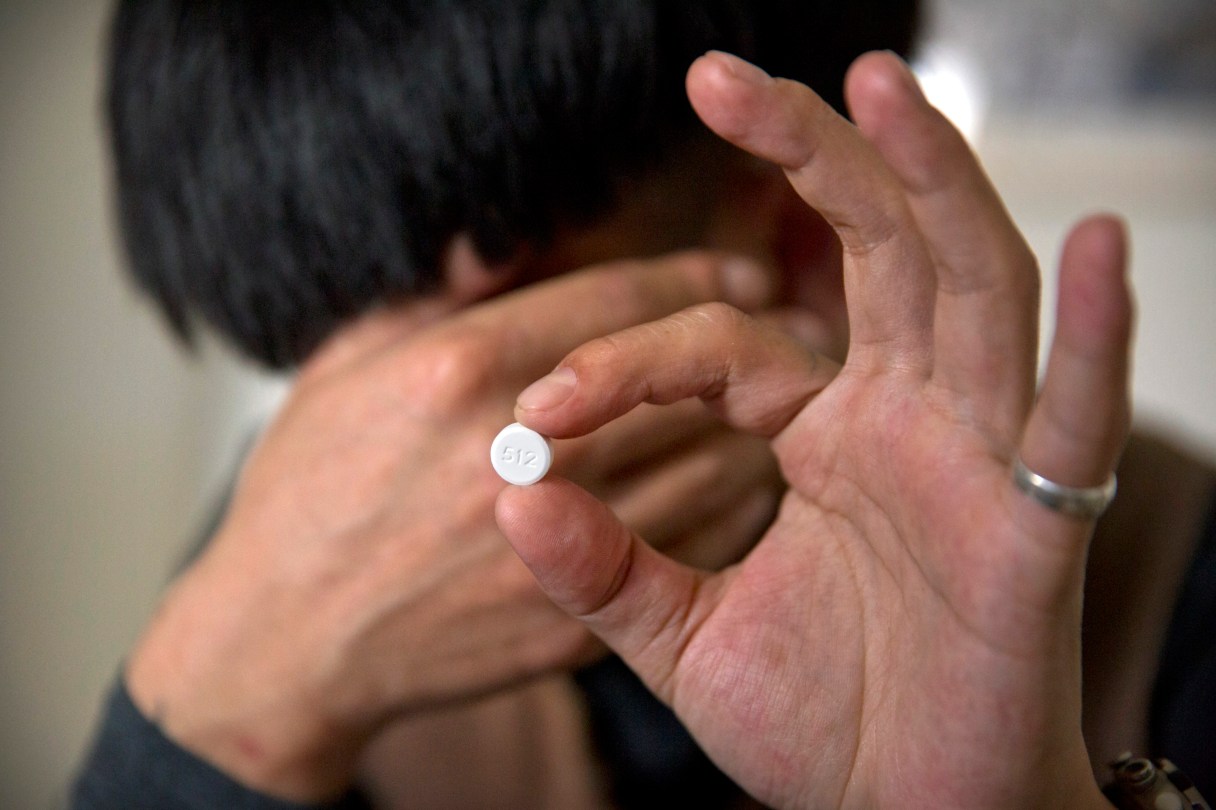
In this March 28, 2019, photo, Yin Hao, who also goes by Yin Qiang, holds a Tylox pill while sitting in a tea house in Xi'an, northwestern China's Shaanxi Province. Officially, pain pill abuse is an American problem, not a Chinese one. But people in China have fallen into opioid abuse the same way many Americans did, through a doctor's prescription. And despite China's strict regulations, online trafficking networks, which facilitated the spread of opioids in the U.S., also exist in China. (AP Photo/Mark Schiefelbein)

SHANGHAI (AP) – Wu Yi was supposed to die. At age 26, his cancer was spreading.

His doctor gave him five years to live and a prescription for OxyContin.

Six years later, he was still alive. And still taking OxyContin. Wu said his doctor told him that OxyContin is not addictive, but when Wu tried to stop, he couldn’t.

“This drug is addictive,” Wu said. “One hundred percent addictive.”

A thousand miles (1,600 km) away, in the ancient trading city of Xi’an, Yin Hao shoved eight pills of Tylox, a combination painkiller that contains the opioid oxycodone, in his mouth. Yin had started taking Tylox after getting injured in a fight six years earlier.