
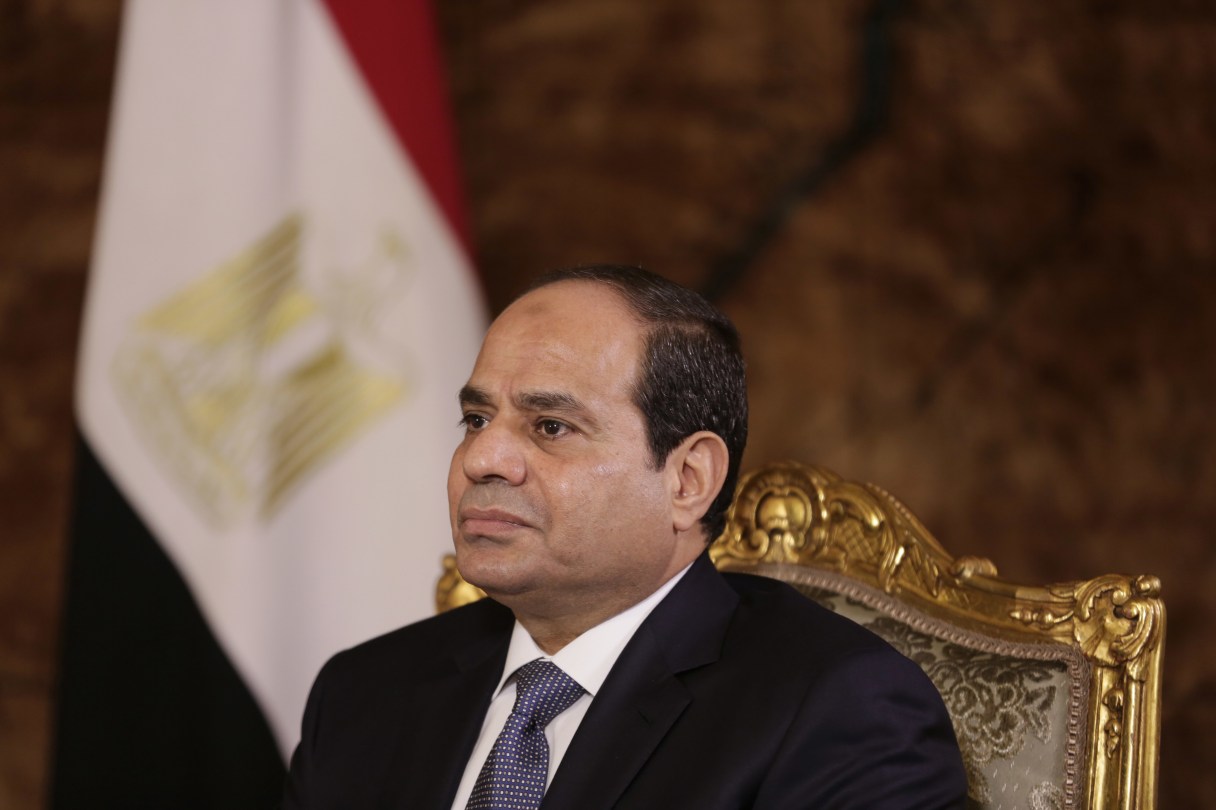
CAIRO (AP) – During two years in office, Egypt’s general-turned-president Abdel-Fattah el-Sissi has sought to impose a military-style discipline to end years of turmoil and has turned to the armed forces to help rebuild the deeply damaged economy to a degree unseen in more than 50 years.
The military has taken the lead in carrying out a string of major projects, from building roads and overseeing housing construction to providing cheap food to the public. That has provided a needed bit of stimulus and helped keep Egyptians going in hard times. But the flip side has been a heavy emphasis on secrecy, leaving observers unsure how el-Sissi plans to tackle an economy struggling under high inflation, unemployment and a tumbling currency.
El-Sissi has frequently sought to impose secrecy on politicians over issues that usually would be open for public discussion. In June, he said some of his planned projects cannot be announced, without explanation.
When his electricity minister said on live TV in May that the Aswan Dam was taken off the electricity grid temporarily, el-Sissi angrily cut him off, saying, “Let us not talk about these details.” When his oil minister, again on live television, showed a map of a proposed oil pipeline during a power point presentation, el-Sissi ordered the slide removed.
One of his most controversial decisions, to surrender two Red Sea islands to Saudi Arabia, was taken behind closed doors – intentionally, el-Sissi said, to prevent media attention. The move sparked a rare burst of street protests and angry criticism. In a televised meeting with politicians and editors, el-Sissi defended the decision and demanded no one discuss the subject again. He brusquely shut down one lawmaker who attempted to speak to him, saying “Excuse me, I did not give anyone permission to speak.”