
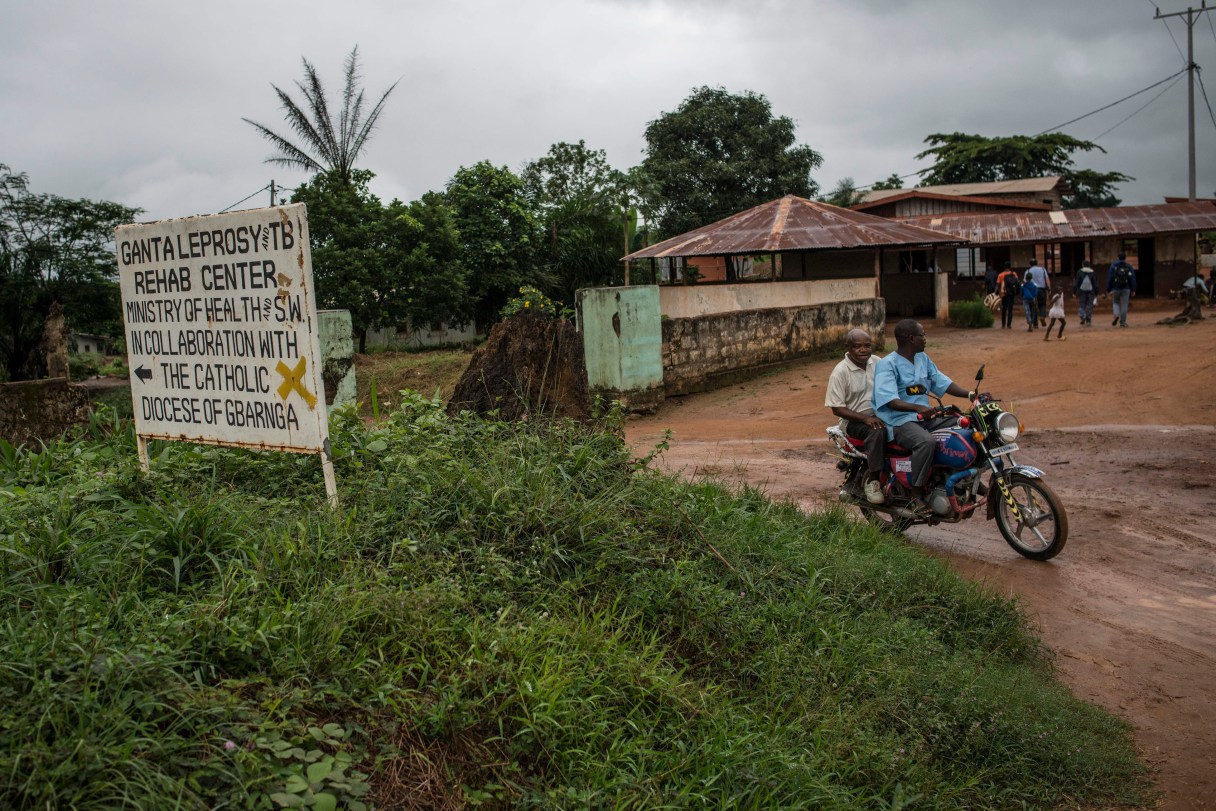
GANTA, Liberia – Cheer up: Despite the gloom, the world truly is becoming a better place. Indeed, 2017 is likely to be the best year in the history of humanity.
To explain why, let me start with a story. I’m on my annual win-a-trip journey with a university student, who this year is Aneri Pattani, a newly minted graduate of Northeastern University. One of the people we met is John Brimah, who caught leprosy as a boy.
At the age of 12, Brimah was banished by his village and forced to live in an isolated grass hut. His father would bring food and water once a day to a spot halfway between the village and the hut, and then pound a stick on the ground to let him know that it was there.
For a year and a half, he lived in complete isolation even as his leprosy worsened. Then a missionary from Ohio, Anthony Stevens, happened to pass by. “He heard me crying and investigated,” Brimah recalled. Stevens took him to a leprosy center where he received treatment, and Brimah has never seen his family since.
Brimah was cured, received a missionary education and became a nurse. Now he is in charge of the leprosy hospital here in Ganta, on the Liberia-Guinea border. He presides over men and women missing fingers, toes and sometimes feet, gnarled reminders of why leprosy has terrified people since biblical times.