
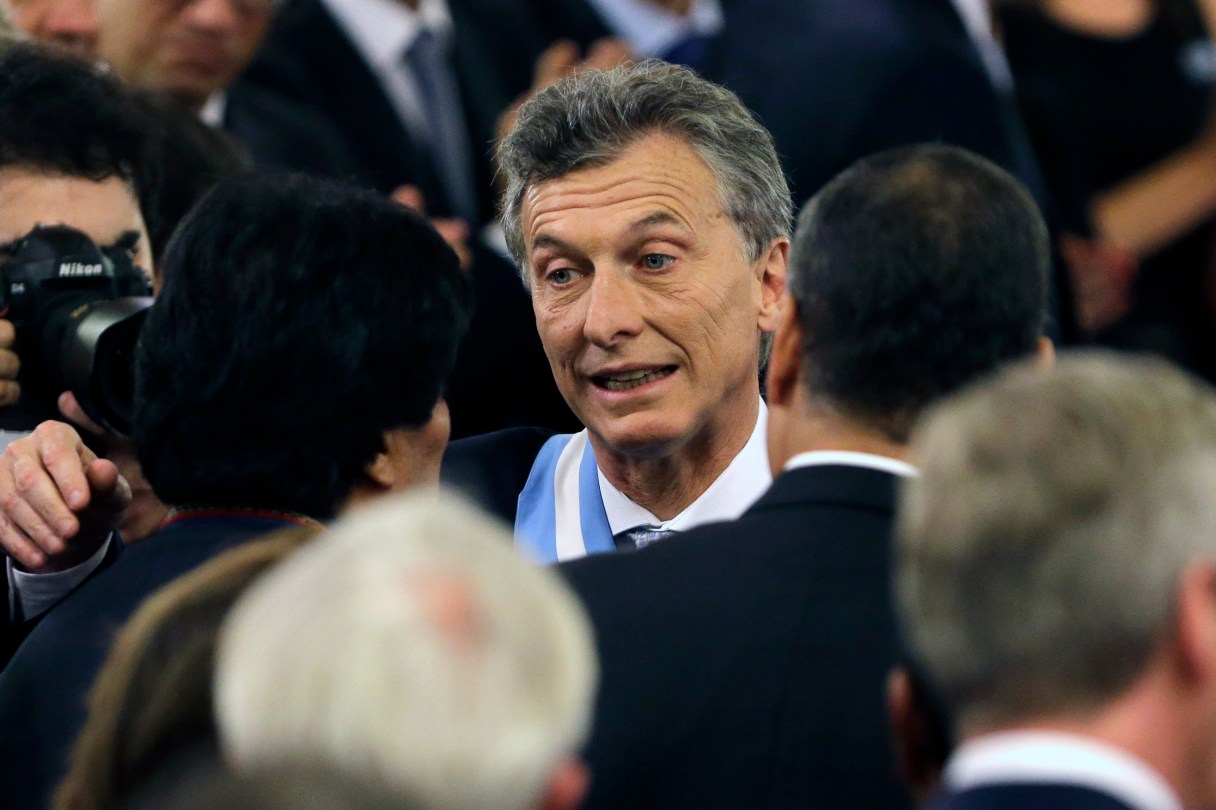
BUENOS AIRES, Argentina (AP) – Fulfilling a campaign promise to overhaul Argentina’s agricultural sector, President Mauricio Macri on Monday announced the elimination of export taxes on key products, a move that will also have a deep impact on how Latin America’s third largest economy is funded.
Macri made the announcement while meeting with farmers in Pergamino, about 135 miles (220 kilometers) northeast of Buenos Aires. Starting Tuesday, export taxes will be eliminated on corn, wheat, meat and fish. Export taxes on soy beans will be lowered from 35 to 30 percent.
“Without the agricultural sector, the country can’t move forward,” Macri said in comments that were broadcast live.
The South American nation is one of the world’s breadbaskets. However, the sector struggled amid frequent fights with former President Cristina Fernandez over the last eight years. She kept export taxes high to stimulate local consumption and keep the prices of bread, corn, meat and dairy products low at home.
The taxes were also a key part of financing her government, which spent heavily on social welfare programs for the poor.