
Sunday, November 15, 2026Nov 15

Q&A: A look at the history of Jewish extremism in Israel

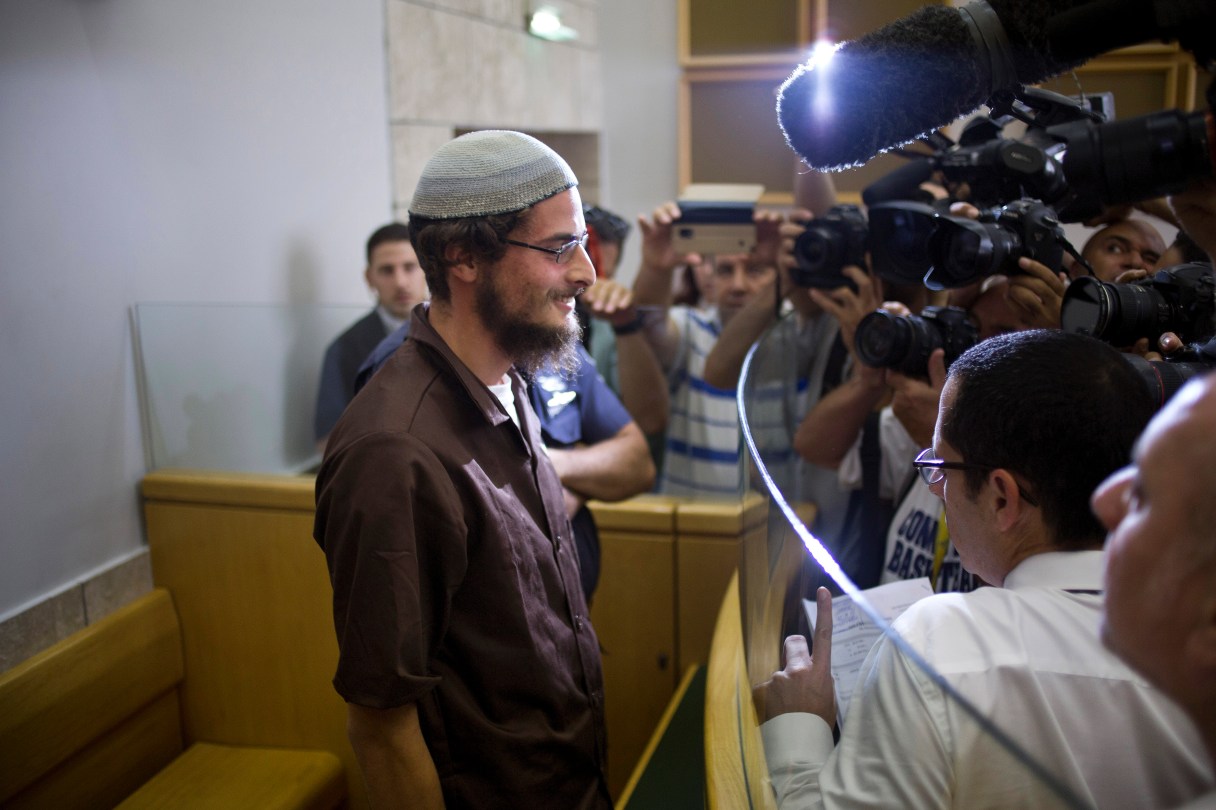
Head of a Jewish extremist group Meir Ettinger appears in court in Nazareth Illit , Israel, Tuesday, Aug. 4, 2015. Israel said Tuesday it was interrogating the suspected head of a Jewish extremist group in the first arrest of an Israeli suspect following last week's arson attack in the West Bank that killed a Palestinian toddler and wounded his brother and parents. According to the Shin Bet security agency, 23-year-old Ettinger was arrested late Monday for "involvement in an extremist Jewish organization." (AP Photo/Ariel Schalit)

JERUSALEM (AP) – The arrest of a well-known Jewish extremist marks Israel’s first concrete step in its new “zero tolerance” approach toward what the government describes as Jewish terrorism. A recent pair of attacks brought into the open long-standing fears about a radicalized and ultraconservative fringe that had been operating below the radar but now appears to be intensifying its violence.

Israel’s Shin Bet security service says 23-year-old Meir Ettinger, grandson of the late ultranationalist Rabbi Meir Kahane, was arrested for “involvement in an extremist Jewish organization” that was seeking to bring about religious “redemption” through attacks on Christian sites and Palestinian property.

With its focus primarily on preventing Palestinian attacks, Israeli authorities now pledge to direct more resources toward domestic assailants who have been allowed to operate with relative impunity. The threat is nothing new, but authorities indicate they can no longer overlook the violence.

Here’s a look at the phenomenon and what it means for Israel.

____