
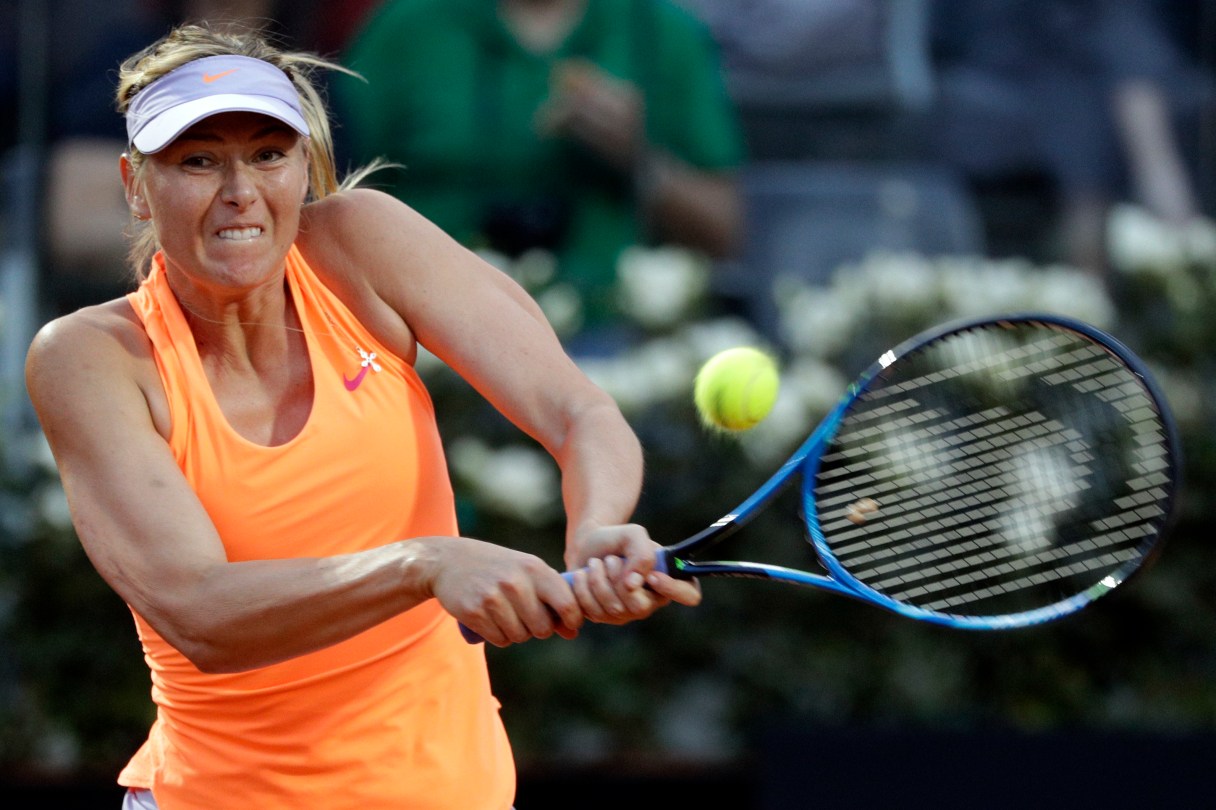
The folks who run the sport of tennis do not have a hard-and-fast rule that would apply to Maria Sharapova and others in her shoes, something along the lines of: When returning from a drug suspension with a ranking too low to earn access to tournaments, a player is (or is not) entitled to wild-card entries.
The way things are now, it is up to each individual tournament to elect whether to invite players under such circumstances. So Sharapova will not compete at the French Open after that country’s tennis federation announced Tuesday it opted not to allow the two-time champion into the field because of her recently concluded 15-month doping ban.
Many figured Sharapova would be permitted to play in Paris – in the qualifying rounds, at the very least, if not in the main draw, which starts May 28.
She is, after all, the owner of a total of five major titles, a former No. 1-ranked player and one of the world’s most recognizable athletes. And she did, after all, return to the WTA tour last month; she tested positive for the newly banned drug meldonium at the Australian Open in January 2016.
“This suspension is over and she can take her path toward new success,” French Tennis Federation president Bernard Giudicelli said. “But while there can be a wild card for return from injury, there can’t be a wild card for return from doping.”