
DENVER (AP) – Wednesday’s gay marriage ruling contained two historic firsts: It was the first appellate decision for gay marriage since the U.S. Supreme Court struck down the Defense of Marriage Law exactly one year ago, and it also marked the first time since then a federal judge has argued for keeping a state ban on same sex marriages.
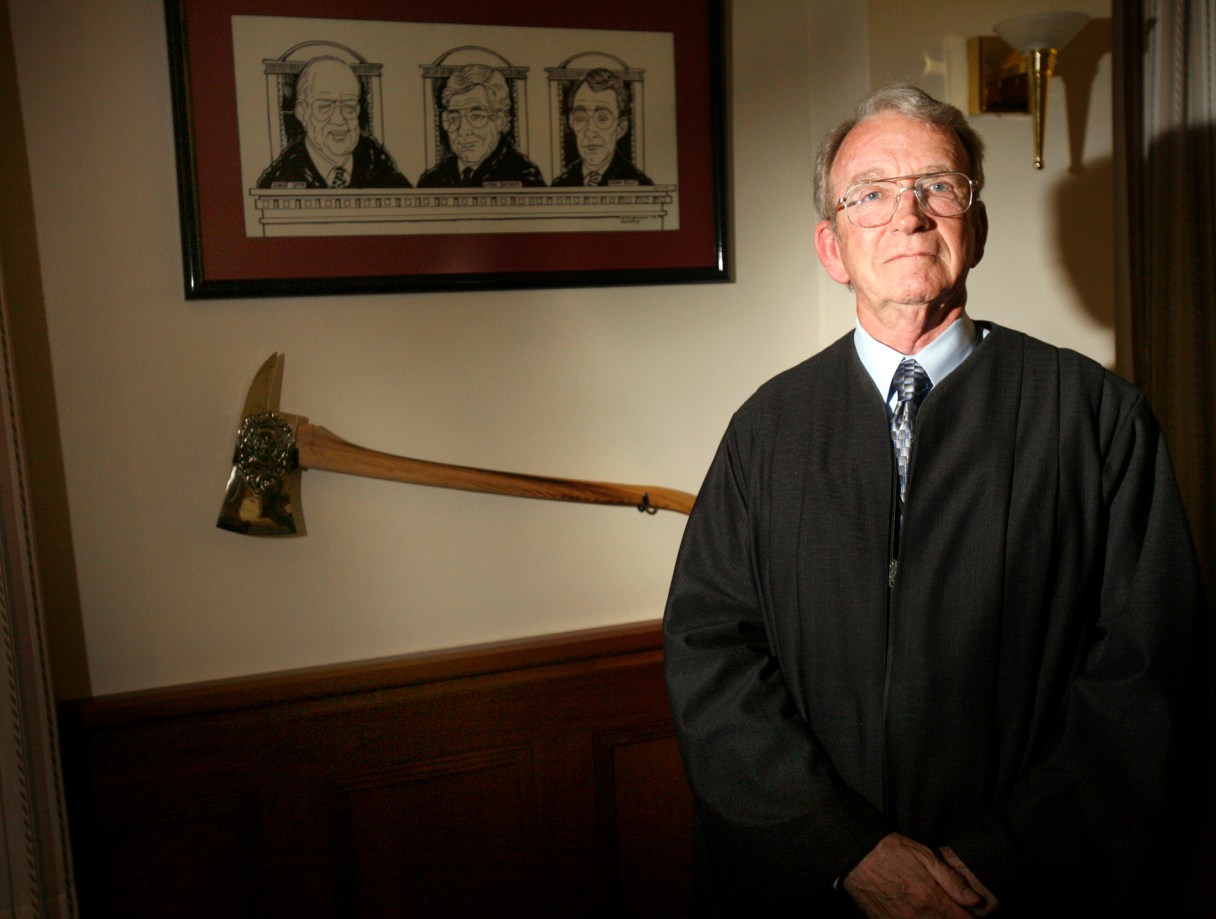
Justice Paul J. Kelly, Jr. was in the minority in his opinion as the two other judges on the 10th Circuit Court of Appeals panel found the U.S. Constitution protects the rights of gay couples to marry. Kelly has broken the string of 16 state and federal judges who sided with gay marriage advocates in cases across the country over the past year.
Legal observers and friends both say that’s not a surprise. “He’s not afraid to be the only guy taking a position if he believes it’s correct,” said Hal Stratton, a former New Mexico Attorney General who served with Kelly in the state legislature in the late 1970s.
Kelly, 73, is a Republican and appointee of President George H.W. Bush who is known for his fondness for bow ties, withering questioning at oral argument and willingness to rule against law enforcement and for civil rights. On Wednesday, in his 21-page dissent, Kelly warned that his colleagues were overreaching in striking down Utah’s voter-approved gay marriage ban.
Creating a national mandate for gay marriage, even in states where it is unpopular, “turns the notion of a limited national government on its head,” he wrote, adding later: “We should resist the temptation to become philosopher-kings, imposing our views under the guise of constitutional interpretation of the 14th Amendment.”