
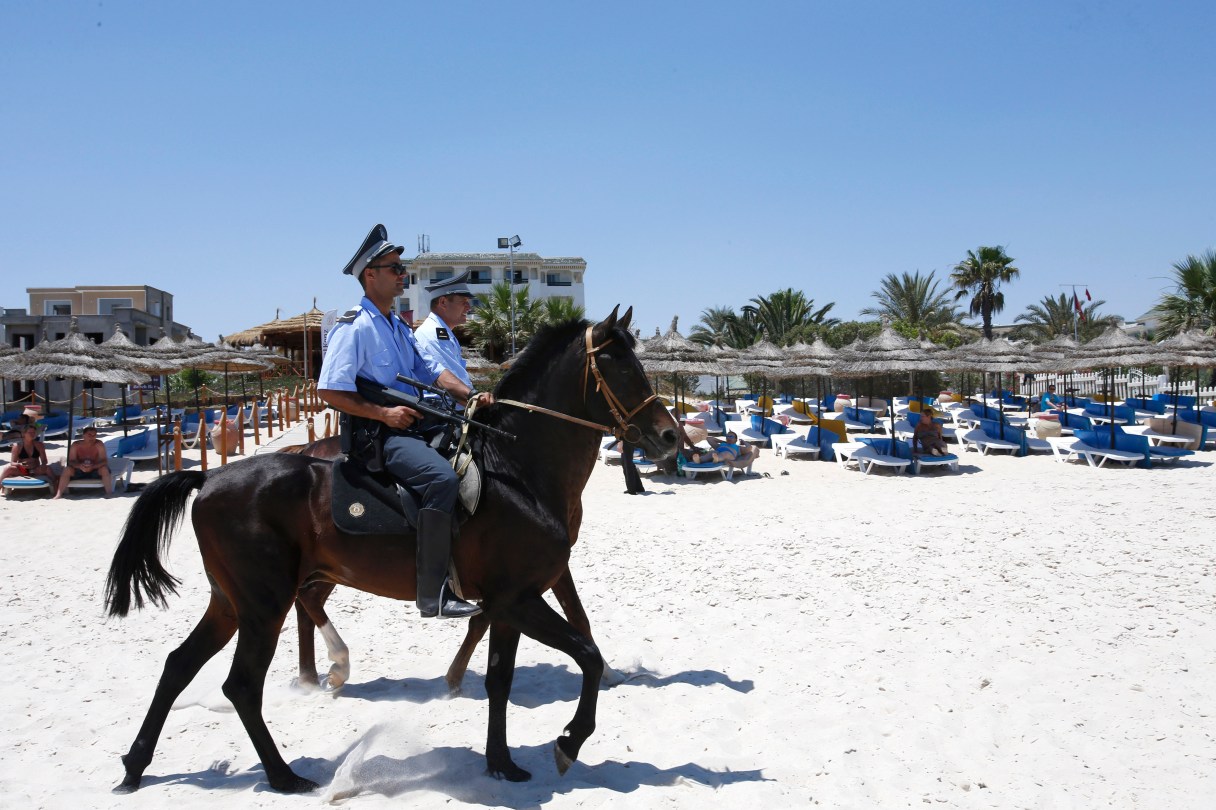
TUNIS, Tunisia (AP) – The blood on the sand has washed away, but the damage inflicted on Tunisia by a few terrifying minutes of gunfire at a beach resort will be deep and lasting.
The tourism industry, the lifeline for the north African country’s economy, is likely to be gutted after 38 tourists were killed in the June 26 rampage in Sousse. Up to 2 million hotel nights are expected to be lost over the next year, hastened by warnings from Britain and other European governments last week that their citizens are no longer safe on Tunisia’s shores.
And Tunisia’s budding democracy – the only one to emerge from an Arab Spring uprising – is now facing its toughest test. Failure to secure the country against Islamic extremism while protecting newly won freedoms would echo across the region.
A big part of the government’s challenge will be containing the economic fallout of the tourist exodus, and social unrest that might result from mass job losses in the travel industry.
“This is their livelihood. It’s not just affecting us Britons coming back home. It’s affecting the whole of Tunisia itself,” said Scottish tourist Darren Blackery, drinking a beer near a pool in the resort of Hammamet and lamenting his government’s warning to leave the country. “They need to earn a living and without us, it’s very hard for them.”