
AMSTERDAM (AP) – The delicacy of one of the first objects in new exhibition at Amsterdam’s Rijksmuseum belies its brutality. At the end of a thin iron rod are the artistically interwoven letters GWC – used to brand the initials of a Dutch trading company into the skin of enslaved workers.
The stark contrast between finery and brutality, wealth and inhumanity is a recurring pattern at the museum’s unflinching exhibition titled, simply, “Slavery,” that examines the history of Dutch involvement in the international slave trade.
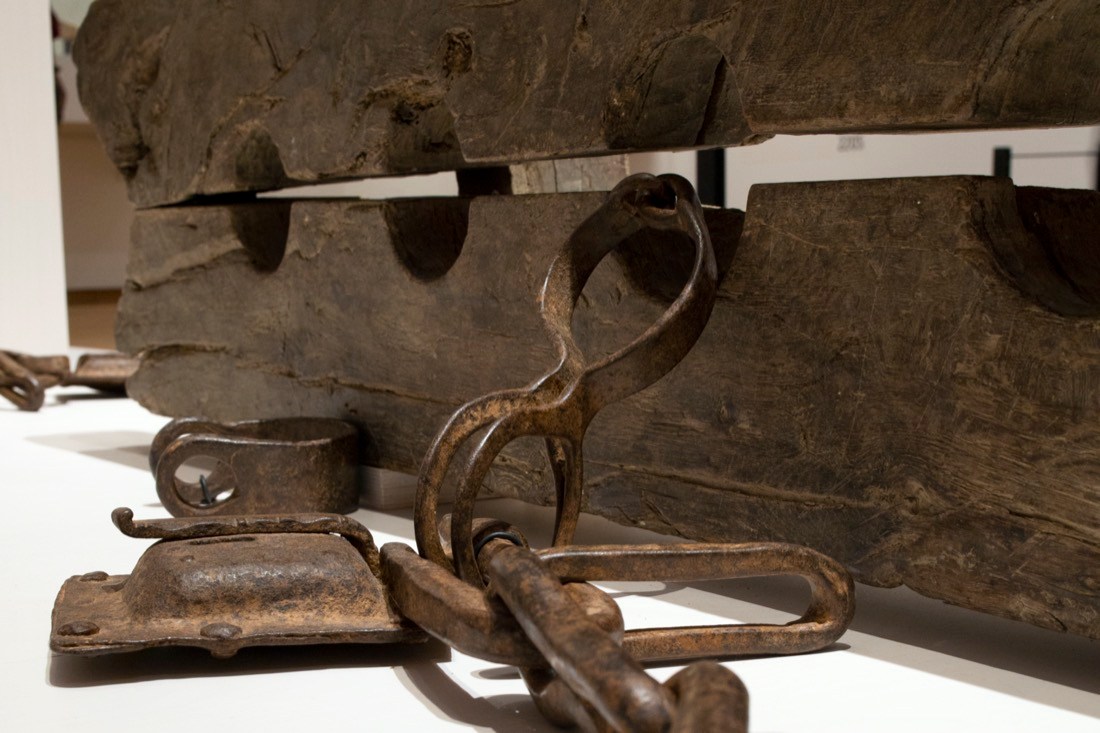
Nearby, a huge wooden set of stocks and heavy iron chains and locks used to constrain enslaved people stands close to a small box, intricately decorated with gold, tortoiseshell and velvet celebrating some of the valuable commodities traded by the Dutch West India Company in the 18th century: Gold, ivory and human beings.
The exhibit, being opened Tuesday by King Willem-Alexander, tells the story of slavery by drilling down into the personal stories of 10 people, ranging from enslaved workers to a wealthy Amsterdam woman.
“We wanted to make the case, that this is a history that speaks to anybody in the Netherlands. It belongs to all of us, so that’s why we chose a personal approach,” Valika Smeulders, head of the museum’s history department, told The Associated Press.