
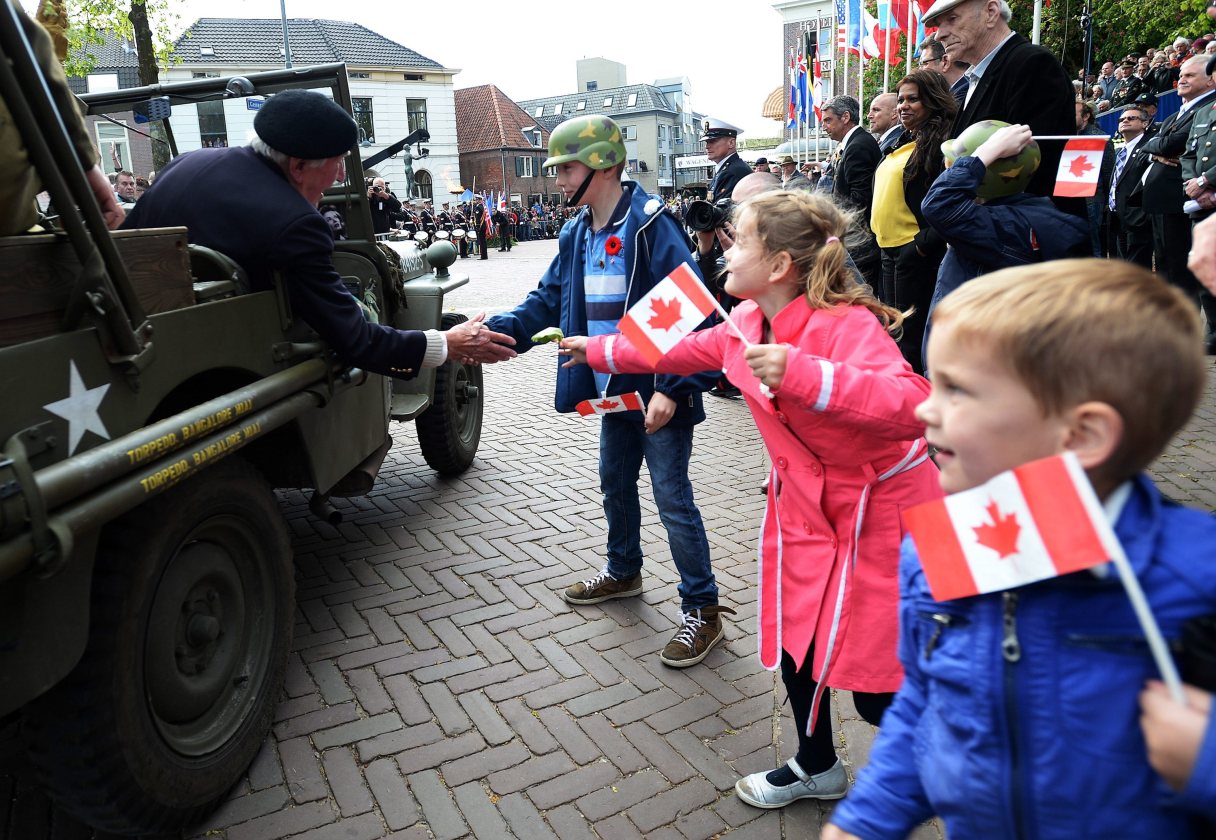
BERGEN-OP-ZOOM, Netherlands (AP) – Canadian Pvt. Albert Laubenstein found his final resting place on Wednesday, 70 years after he was killed during the Allied advance through the Netherlands in the closing months of World War II.
Laubenstein was buried with military honors at the Canadian War Cemetery in the Netherlands, 70 kilometers (45 miles) from where he fought and died in a battle amid Dutch canals and rivers to drive the Germans back east. His remains were found only last year and his burial was one of the highlights of a week of remembrances and celebrations to mark Canada’s part in the liberation of the Netherlands.
“Private Albert Laubenstein, at the going down of the sun, and in the morning, we shall remember you,” said military chaplain Murray Bateman during a ceremony attended by hundreds of onlookers in both brilliant sunshine and high winds and driving rain.
Laubenstein appeared all but lost for decades. He was killed in action during the Battle of Kapelsche Veer in the winter of 1945 and was given a battlefield grave that was soon forgotten in the chaos of war.
It took a hobbyist with a metal detector scanning the southern banks of the Maas River last June to pick up a suspicious signal of old cartridges and a silver ring among human remains. A check of dental records, historical documents and artifacts led to the identification of Laubenstein.