
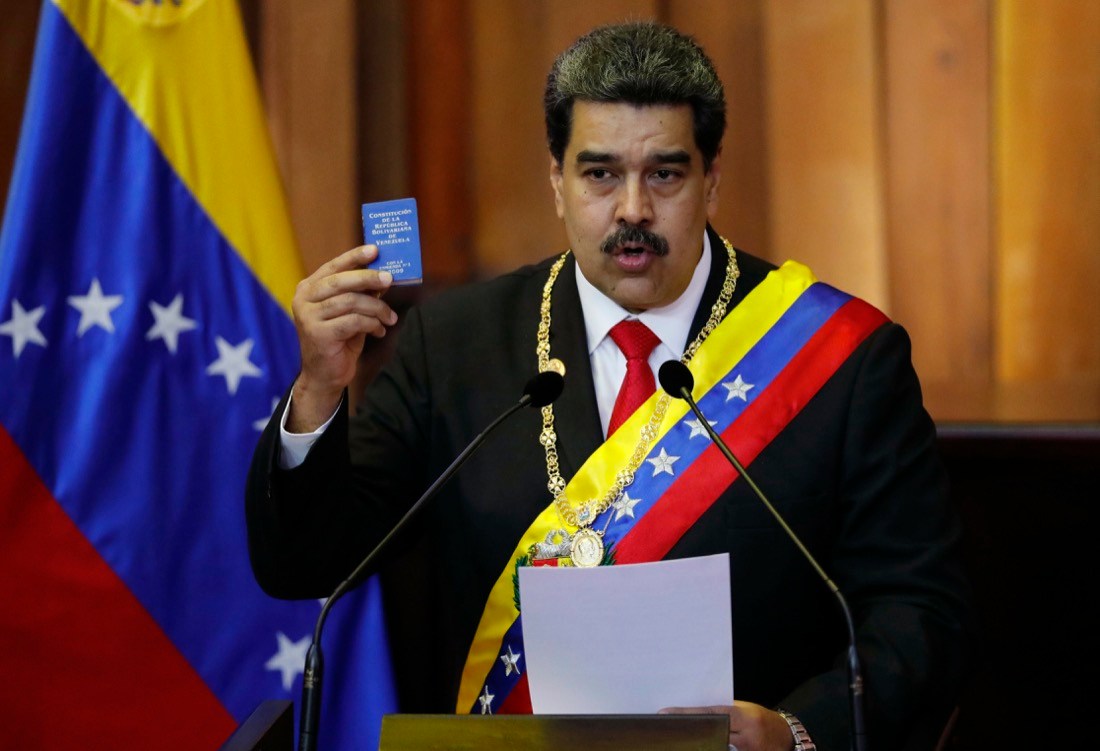
CARACAS, Venezuela (AP) – The coalition of Latin American governments that joined the U.S. in quickly recognizing Juan Guaido as Venezuela’s interim president came together over weeks of secret diplomacy that included whispered messages to activists under constant surveillance and a high-risk foreign trip by the opposition leader challenging President Nicolas Maduro for power, those involved in the talks said.
In mid-December, Guaido quietly traveled to Washington, Colombia and Brazil to brief officials on the opposition’s strategy of mass demonstrations to coincide with Maduro’s expected swearing-in for a second term on Jan. 10 in the face of widespread international condemnation, according to exiled former Caracas Mayor Antonio Ledezma, an ally.
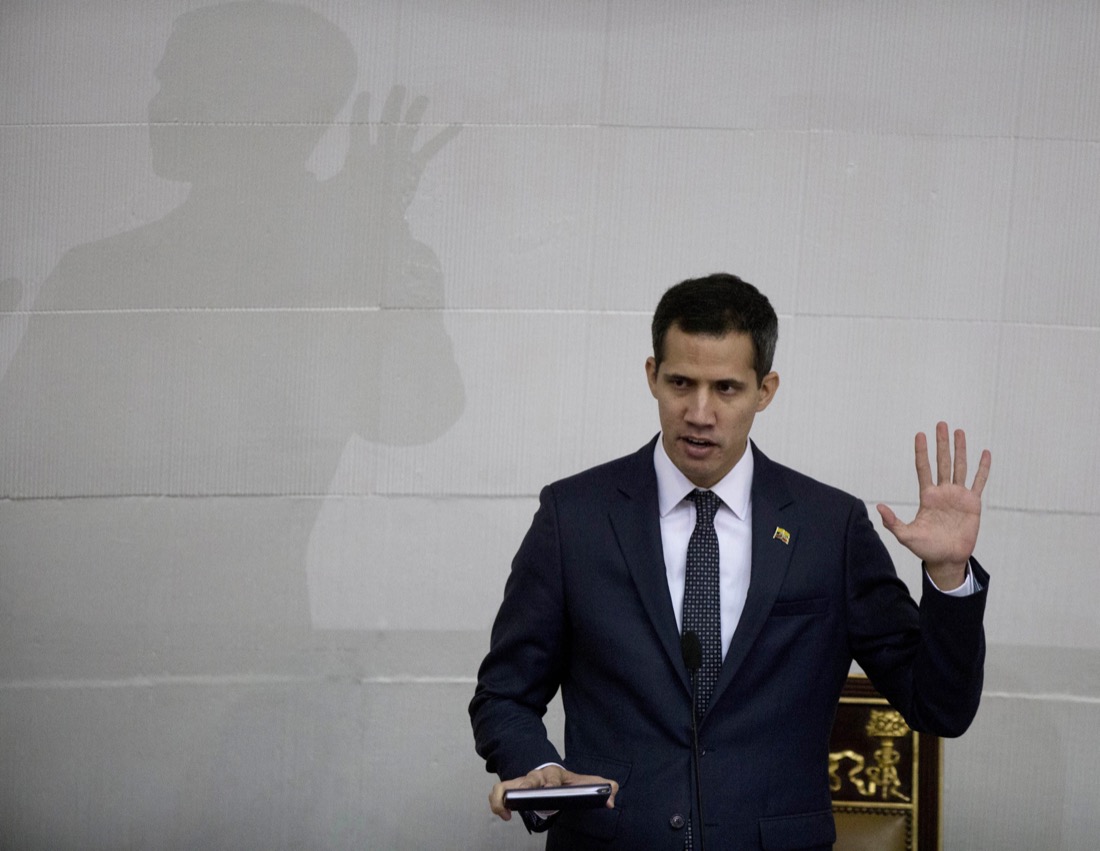 In this Jan. 5, 2019, file photo, Venezuelan lawmaker Juan Guaido takes the oath of office as president of the National Assembly in Caracas, Venezuela. A coalition of Latin American governments that joined the U.S. in quickly recognizing Guaido as Venezuela’s interim president, and not Nicolas Maduro, came together during weeks of secret diplomacy. (AP Photo/Fernando Llano, File)
To leave Venezuela, he sneaked across the lawless border with Colombia, so as not to raise suspicions among immigration officials who sometimes harass opposition figures at the airport and bar them from traveling abroad, said a different anti-government leader, speaking on condition of anonymity to discuss security arrangements.
Building consensus in the fragmented anti-government coalition proved to be an uphill battle. The opposition has for years been divided by egos and strategy, as well as a government crackdown that has sent several prominent leaders into exile, making face-to-face meetings impossible. Others inside Venezuela were being heavily watched by intelligence agencies, and all were concerned about tipping off the government.
Long sessions of encrypted text messaging became the norm, the opposition leader said. A U.S. official said intermediaries were used to deliver messages to Guaido’s political mentor and opposition power broker Leopoldo Lopez, who is under house arrest after he tried and failed to lead a mass uprising against Maduro in 2014. The U.S. official spoke on condition of anonymity out of security concerns.