
Friday, November 6, 2026Nov 6

This story is free to read.

Criminal charges in Tulsa police shooting may prevent unrest

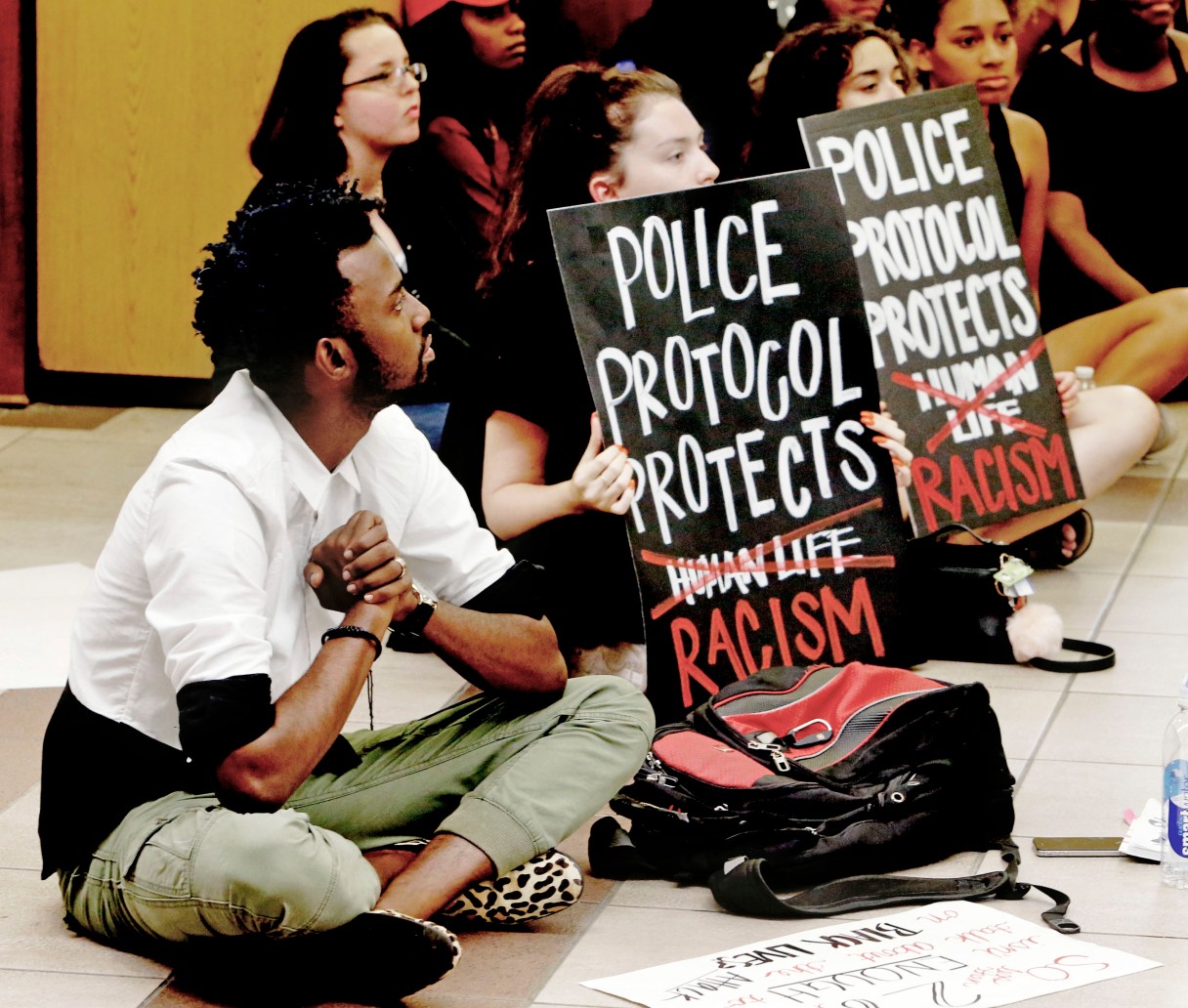
Protesters fill the food court chanting "Black Lives Matter" in the Oklahoma Memorial Union at the University of Oklahoma on Thursday, Sept. 22, 2016 in Norman, Okla. Prosecutors in Tulsa, Oklahoma, charged a white police officer who fatally shot an unarmed black man on a city street with first-degree manslaughter Thursday. (Steve Sisney/The Oklahoman via AP)
Protesters fill the food court chanting "Black Lives Matter" in the Oklahoma Memorial Union at the University of Oklahoma on Thursday, Sept. 22, 2016 in Norman, Okla. Prosecutors in Tulsa, Oklahoma, charged a white police officer who fatally shot an unarmed black man on a city street with first-degree manslaughter Thursday. (Steve Sisney/The Oklahoman via AP) Protesters fill the food court chanting "Black Lives Matter" in the Oklahoma Memorial Union at the University of Oklahoma on Thursday, Sept. 22, 2016 in Norman, Okla. Prosecutors in Tulsa, Oklahoma, charged a white police officer who fatally shot an unarmed black man on a city street with first-degree manslaughter Thursday. (Steve Sisney/The Oklahoman via AP)

TULSA, Okla. (AP) – Less than a week after an unarmed black man was shot dead by a white police officer on a Tulsa street, prosecutors charged the officer with first-degree manslaughter.

That decision that may prevent unrest in a city with a long history of tense race relations.

Prosecutors wrote in an affidavit filed with the charge on Thursday that Tulsa officer Betty Shelby “reacted unreasonably” when she fatally shot 40-year-old Terence Crutcher on Sept. 16.

Phil Turner, a Chicago-based defense attorney and former federal prosecutor, says that in acting quickly, prosecutors may partly have wanted to allay outrage in the city and avoid the kind of violent protests Charlotte, North Carolina, has seen over another recent police shooting of a black man.