
Monday, November 16, 2026Nov 16

Move to rename ‘Bloody Sunday’ bridge has critics in Selma

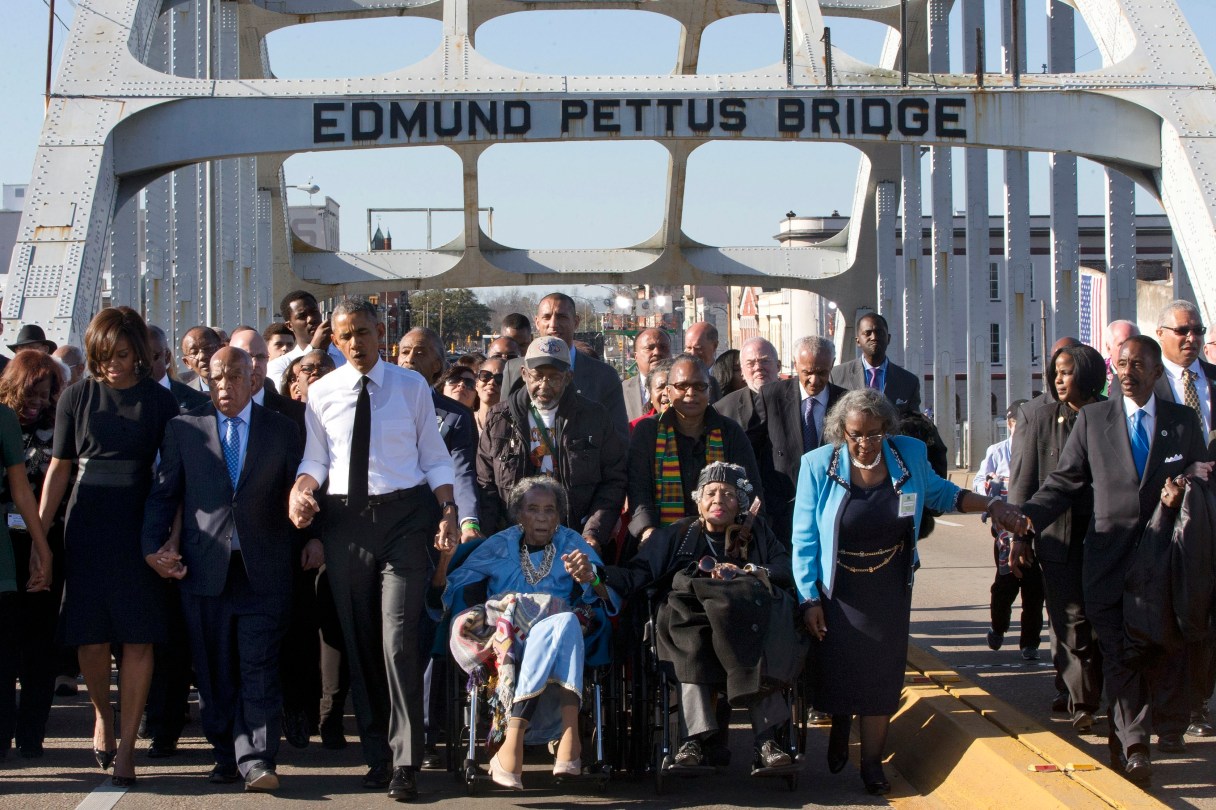
FILE - In this March 7, 2015, file photo, singing "We Shall Overcome," President Barack Obama, third from left, walks holding hands with Amelia Boynton, who was beaten during "Bloody Sunday," as they and the first family and others including Rep. John Lewis, D-Ga, left of Obama, walk across the Edmund Pettus Bridge in Selma, Ala., for the 50th anniversary of "Bloody Sunday," a landmark event of the civil rights movement. Some residents in the landmark civil rights city of Selma, Ala., are among the critics of a bid to rename the historic bridge where voting rights marchers were beaten in 1965. (AP Photo/Jacquelyn Martin, File)

SELMA, Ala. (AP) – Thousands gathered in this river city in 1940 to dedicate a new bridge in honor of white supremacist Edmund Pettus, a Confederate general and reputed Ku Klux Klan leader. Just 25 years later, the bridge became a global landmark when civil rights marchers were beaten at its base.

Today, with thousands protesting nationwide against racial injustice, a years-old push is gaining steam to rename the Edmund Pettus Bridge in honor of Rep. John Lewis, who led the 1965 marchers on “Bloody Sunday.” But the idea is drawing opposition in Selma, including from some who marched with Lewis that day.

Pettus’ name has ironically come to also symbolize Black freedom and shouldn’t be painted over, some say. Others oppose the move because Lewis was an outsider who followed in the footsteps of locals who had worked to end segregation for years before he arrived. Still others fear a change would hurt tourism in a poor town with little going for it other than its civil rights history.

Lynda Lowery, who was 14 and received 35 stitches in her head on Bloody Sunday, doesn’t want the bridge renamed for anyone. She said the span over the muddy Alabama River “isn’t a monument, it’s a part of history.”

“They need to leave my bridge alone,” said Lowery, 70.