
Imagine an alternative universe in which an enlightened Israeli government did almost everything progressive America demanded of it.
An immediate cessation of hostilities in Gaza. An end to Israeli controls over the movement of goods into the territory. A halt to settlement construction in the West Bank. Renunciation of Israel’s sovereign claims in East Jerusalem. Fast-track negotiations for Palestinian statehood, with the goal of restoring the June 4, 1967, lines as an internationally recognized border.
Oslo would be placing phone calls to Jerusalem and Ramallah in October to bestow the Nobel Peace Prize on the Israeli and Palestinian leaders. Arab states such as Saudi Arabia would establish formal diplomatic relations with Israel. The international community would agree on a multibillion-dollar aid package for the new state of Palestine.
But there would be flies in this ointment.
Damascus would refuse to recognize Israel until it agreed to return the Golan Heights, which even the most left-wing Israeli government would refuse to do, given Bashar Assad’s record of brutality and Iran’s extensive military presence in Syria.
Lebanon, dominated as it is by Hezbollah (an Iranian proxy), would also refuse to recognize Israel.
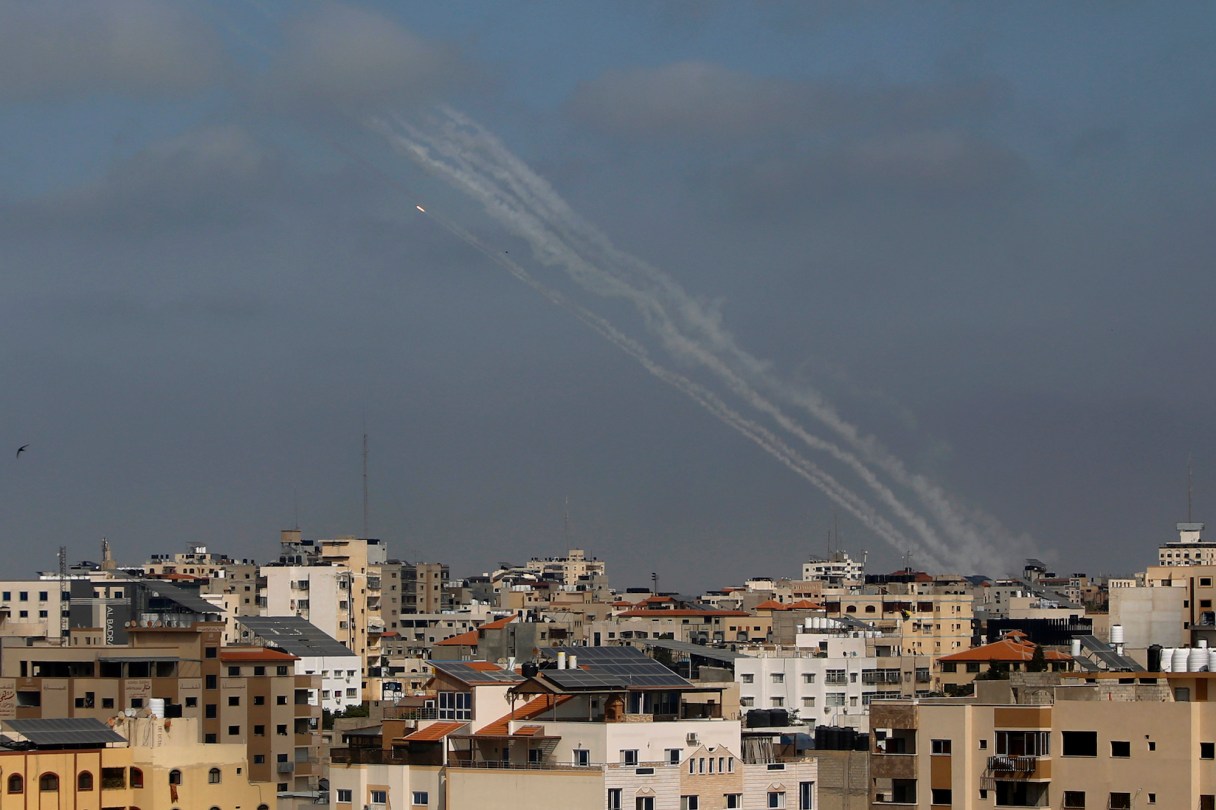
As for Gaza, the end of the so-called blockade would turn the steady trickle of military equipment into the strip, most of it from Iran, into a cascade. Hamas, which currently makes do with relatively unsophisticated rockets, would replenish its arsenal with more powerful guided munitions, able to reach any target in Israel.
This would require Israel to change its military doctrine toward Hamas. Out would be the approach of periodically degrading the group’s military capabilities through targeted strikes. In would be a strategy calling for a full-scale land invasion and reoccupation of the strip in order to defend the Israeli heartland from Hamas’ missiles.
In addition to its new military might, Hamas would be strengthened politically. Its policy of resistance – i.e., guerrilla warfare and terrorism – against Israel would look to many Palestinians as if it forced a change in Israeli policy, while the more peaceful policies of Mahmoud Abbas’ Fatah party would smack of fruitless collaboration.
The international community would try to help Fatah with lavish economic aid and technical assistance. But Fatah has a long record of corruption and mismanagement, two factors that helped Hamas win parliamentary elections in 2006.
Eventually, Hamas will come to power, doubly legitimized by success at the polls and its commitment to wipe Israel off the map.
Before then, however, Israel would freeze all settlement construction with a view toward forcing settlers to leave their homes or be stranded inside a future Palestinian state.
The result would be massive radicalization among Israelis against their own government. Any decision to repartition Jerusalem in ways that risked or hampered access to the Western Wall and other sacred Jewish sites like the Mount of Olives would likely spark civil war.
But perhaps the progressive Israeli government might yet succeed if a U.N.-sanctioned, U.S.-led force – you might almost call it a mandate – agreed to deploy peacekeeping forces to guarantee Jewish rights and security. America’s appetite for such deployments hasn’t exactly been growing in recent years, and its staying power is easily tested.
In the meantime, a Hamas administration in the West Bank wouldn’t take long to duplicate the formula that paid such dividends for it in Gaza: the complete militarization of the territory, putting every Israeli at immediate risk of rocket attack.
In this it would be assisted by Iran.
And what about peace? A Hamas government would likely renege on any agreement with a Jewish state that does not honor the “right of return” of the descendants of Palestinian refugees.
As for Israelis, they would eventually emerge from the morass, at a terrible cost in blood, because they have no other choice. When they did, they could be sure the progressive wing of the Democratic Party would be quick to denounce them for having the temerity to survive.
The New York Times