
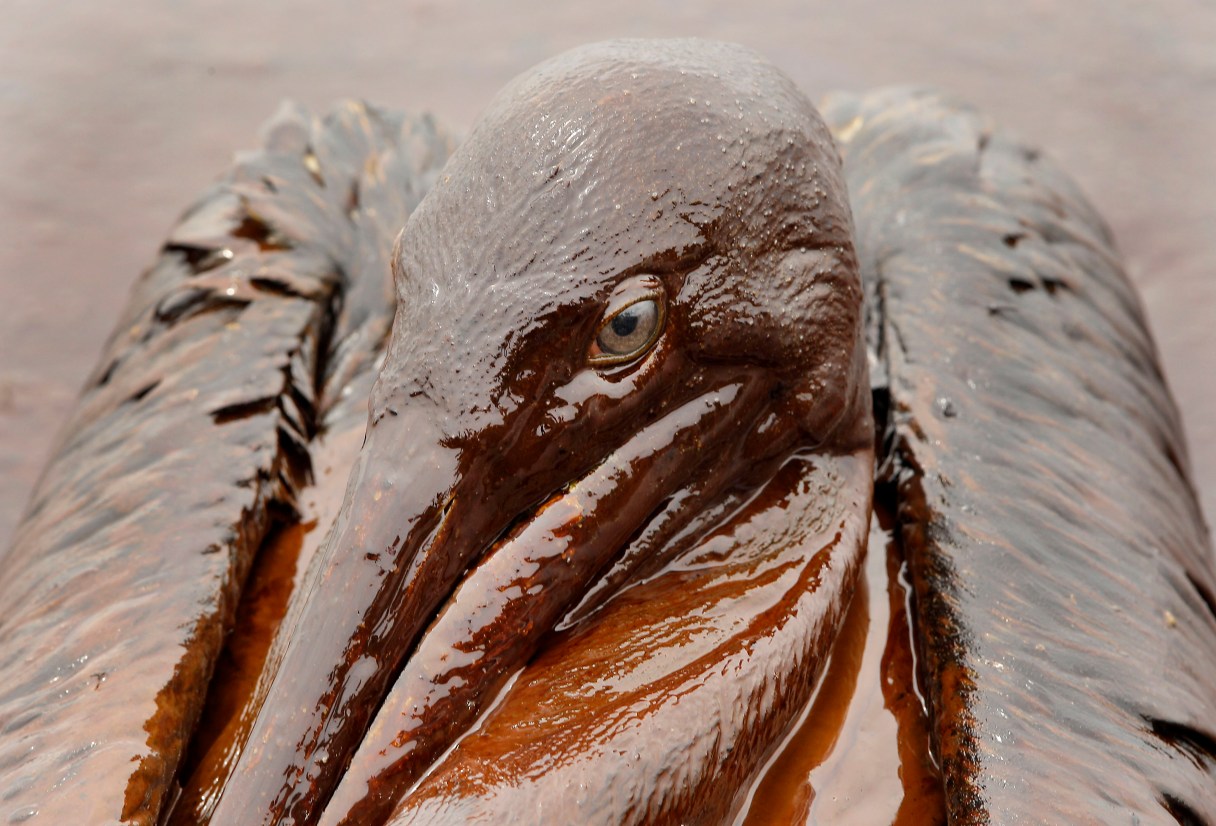
NEW ORLEANS (AP) – Ten years after an oil rig explosion killed 11 workers and unleashed an environmental nightmare in the Gulf of Mexico, companies are drilling into deeper and deeper waters, where the payoffs can be huge but the risks are greater than ever.
Industry leaders and government officials say they’re determined to prevent a repeat of BP’s Deepwater Horizon disaster. It spilled 134 million gallons of oil that fouled beaches from Louisiana to Florida, killed hundreds of thousands of marine animals and devastated the region’s tourist economy.
Yet safety rules adopted in the spill’s aftermath have been eased as part of President Donald Trump’s drive to boost U.S. oil production. And government data reviewed by The Associated Press shows the number of safety inspection visits has declined in recent years, although officials say checks of electronic records, safety systems and individual oil rig components have increased.
Today companies are increasingly reliant on production from deeper and inherently more dangerous oil reserves, where drill crews can grapple with ultra-high pressures and oil temperatures that can top 350 degrees (177 degrees Celsius).
Despite almost $2 billion in spending by the industry on equipment to respond to an oil well blowout like BP’s, some scientists, former government officials and environmentalists say safety practices appear to be eroding. And there are worries that cleanup tactics have changed little in decades and are likely to prove as ineffective as they were in 2010.