
Monday, November 16, 2026Nov 16

Amid outcry, states push mental health training for police

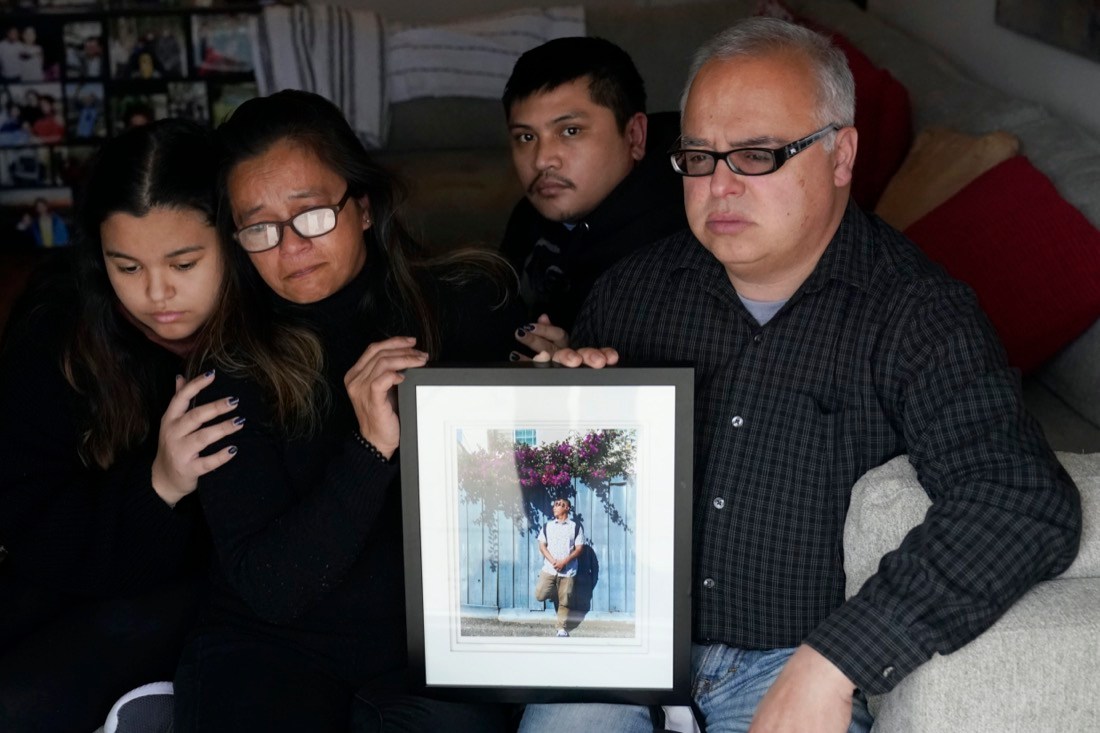
Cassandra Quinto-Collins, second from left, holds a photo of her son, Angelo Quinto, while sitting with daughter Bella Collins, left, son Andrei Quinto, center, and husband Robert Collins during an interview in Antioch, Calif., Tuesday, March 16, 2021. Angelo Quinto died three days after being restrained on Dec. 23, 2020, in police custody while having a mental health crisis. Lawmakers in several states are proposing legislation that would require more training for police in how to interact with someone in a mental crisis following some high-profile deaths. (AP Photo/Jeff Chiu)

The officer who Cassandra Quinto-Collins says kneeled on her son’s neck for over four minutes assured her it was standard protocol for sedating a person experiencing a mental breakdown.

“I was there watching it the whole time,” Quinto-Collins told The Associated Press. “I just trusted that they knew what they were doing.”

Angelo Quinto’s sister had called 911 for help calming him down during an episode of paranoia on Dec. 23. His family says Quinto didn’t resist the Antioch, California, officers – one who pushed his knee on the back of his neck, and another who restrained his legs – and the only noise he made was when he twice cried out, “Please don’t kill me.”

The officers replied, “We’re not going to kill you,” the family said. Police deny putting pressure on his neck. Three days later, the 30-year-old Navy veteran and Filipino immigrant died at a hospital.

It is the latest stark example of the perils of policing people with mental health issues. In response to several high-profile deaths of people with mental health issues in police custody, lawmakers in at least eight states are introducing legislation to change how law enforcement agencies respond to those in crisis.