
Friday, November 13, 2026Nov 13

20 years on, ex-SC gov Beasley’s prayer on flag answered

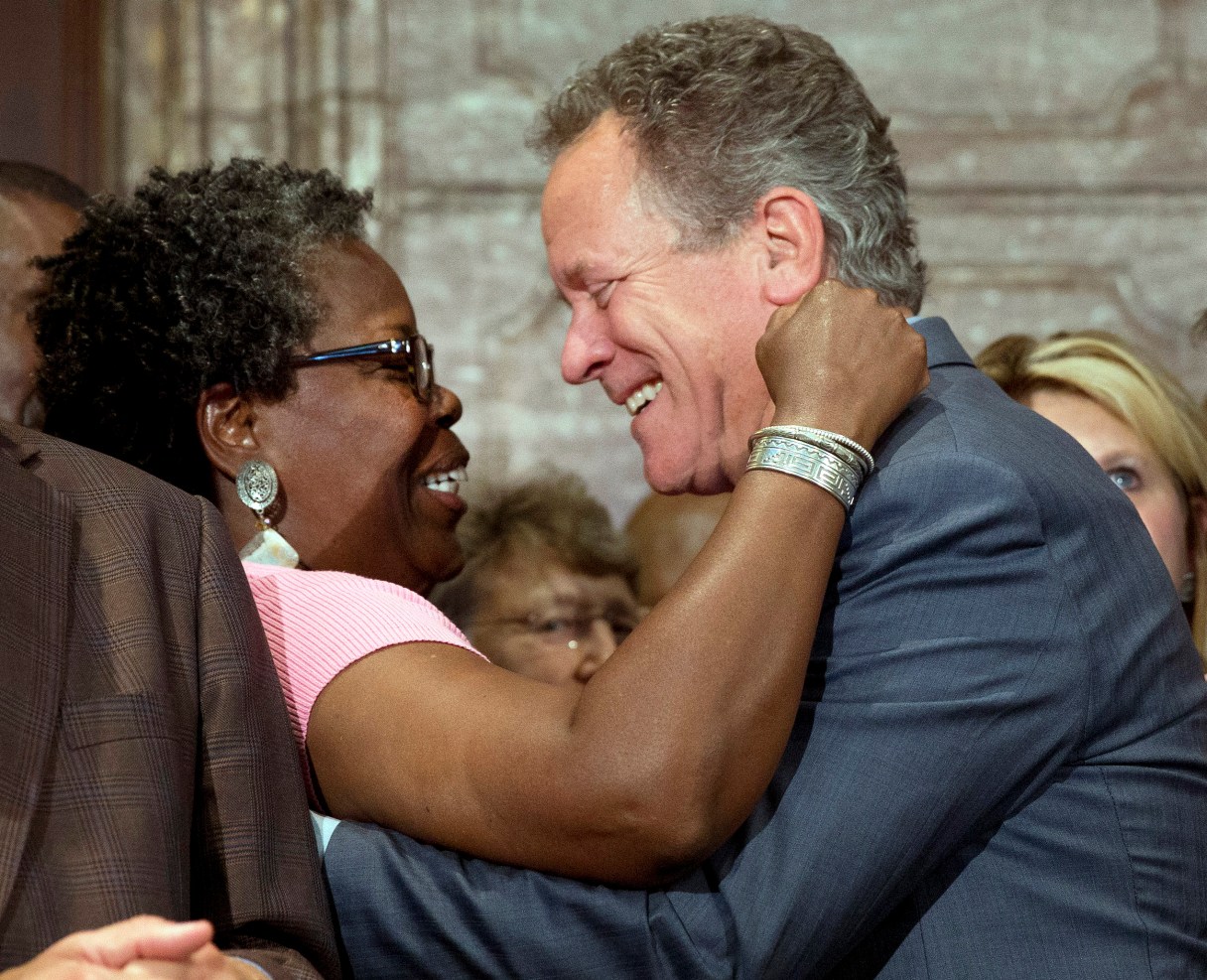
Rep. Gilda Cobb-Hunter, D-Orangeburg, left, reacts with former South Carolina Gov. David Beasley after a ceremony where Gov. Nikki Haley signed a bill into law, Thursday, July 9, 2015, at the Statehouse in Columbia, S.C. The law enables the removal of the Confederate flag from the Statehouse grounds more than 50 years after the rebel banner was raised to protest the civil rights movement. (AP Photo/John Bazemore)
Rep. Gilda Cobb-Hunter, D-Orangeburg, left, reacts with former South Carolina Gov. David Beasley after a ceremony where Gov. Nikki Haley signed a bill into law, Thursday, July 9, 2015, at the Statehouse in Columbia, S.C. The law enables the removal of the Confederate flag from the Statehouse grounds more than 50 years after the rebel banner was raised to protest the civil rights movement. (AP Photo/John Bazemore) Rep. Gilda Cobb-Hunter, D-Orangeburg, left, reacts with former South Carolina Gov. David Beasley after a ceremony where Gov. Nikki Haley signed a bill into law, Thursday, July 9, 2015, at the Statehouse in Columbia, S.C. The law enables the removal of the Confederate flag from the Statehouse grounds more than 50 years after the rebel banner was raised to protest the civil rights movement. (AP Photo/John Bazemore)

COLUMBIA, S.C. (AP) – The Confederate battle flag has been an albatross around David Beasley’s neck for 20 years, costing him the political legacy of a second gubernatorial term, a seat in the U.S. Senate and beyond.

Now that it’s been removed from South Carolina’s Statehouse grounds, the former Republican governor says the unity that has grown from the flag debate was worth the wait – and personal sacrifice.

As governor in 1996, the native of Darlington, in South Carolina’s northeastern corner, infuriated fellow Republicans when, amid threats of boycotts and lawsuits and protests, he went on statewide television, saying he had reversed his position in whether the flag should remain atop the dome after praying about it.

Lawmakers rejected Beasley’s plan to relocate the flag to a monument on the grounds, and voters bounced him from office in a 1998 re-election bid.

Yet, in 2000, Beasley watched as his proposal essentially came to life, as the flag was raised on a pole near a monument to Confederate soldiers.