
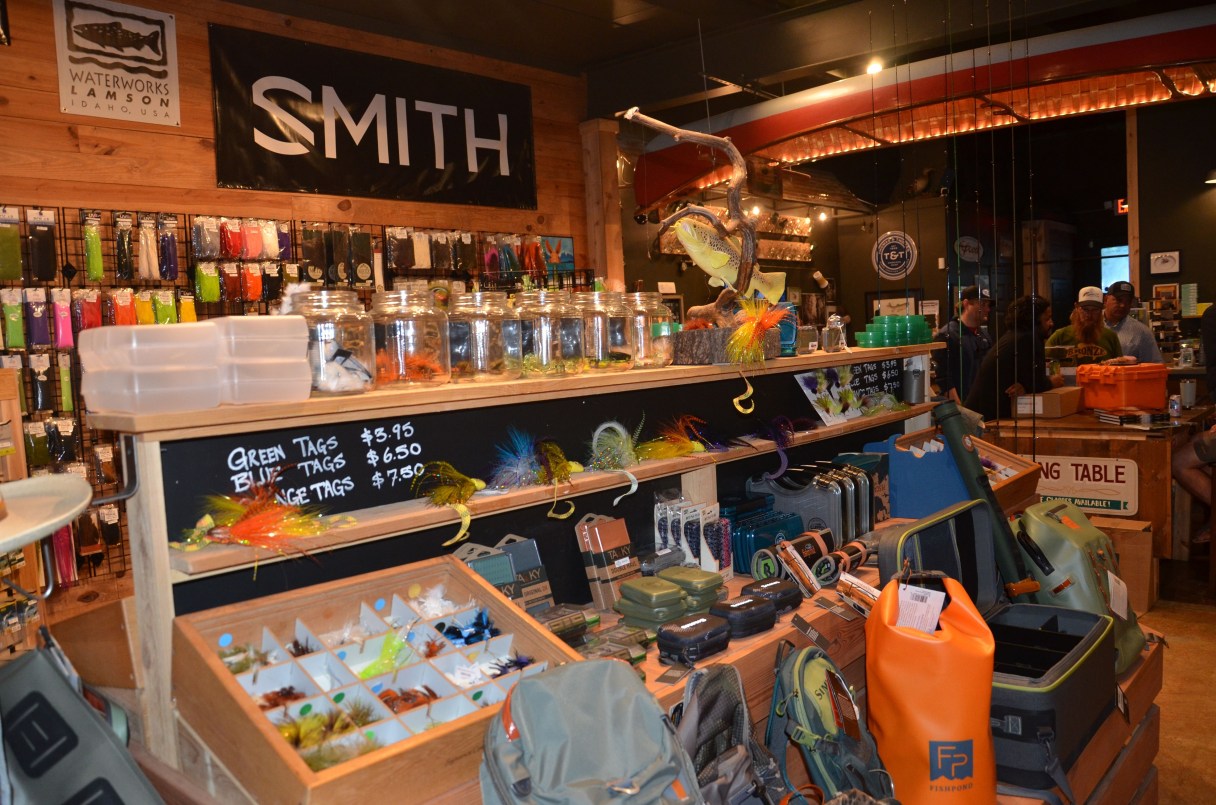
The beer was cold and conversation flowed freely on a Friday evening in a small but well-appointed little fly shop in Olde Brainerd. A group of anglers, mostly ball-capped and bearded, gathered around a high table at The Hatch Outfitters. They talked fishing, laughed and lied, and picked the brain of a man who passes for a celebrity in the niche world of fly fishing.
At the center of the conversation was Blane Chocklett. He’s a heck of an angler who made his name in Virginia, where he pioneered a style of fishing that bears little resemblance to the widely held perception of fly fishing as the delicate pursuit of trout. On big waters like the James, Roanoke and New rivers, Chocklett refined fly fishing tactics and tackle for big warm-water species, most notably muskellunge, the largest and most vicious freshwater predator in North America.
For those unfamiliar with muskie, they inhabit lakes and rivers of the East, from the Great Lakes down through Appalachia as far south as North Georgia. They are apex predators wherever they exist and regularly grow longer than 4 feet and heavier than 50 pounds. They feed on anything living they can shred in their toothy maws, mostly smaller fish.
Giant, voracious predators – on a fly rod? Sounds awesome, right? Well, there’s a catch. Muskie are difficult to find and catch. Even live bait anglers can go days without a strike. The phrase “the fish of a thousand casts” is clichéd among muskie anglers and catching one on a fly is even more difficult.
That’s where Chocklett stepped in to try and even the playing field. His innovative fly designs revolutionized streamer fishing. Streamers are flies tied to mimic baitfish swimming under the surface. In recent decades, fly tyers have tinkered with multiple hooks or hook shanks with flexible joints in a single streamer to add length and swimming action. This segmentation is called articulation.