
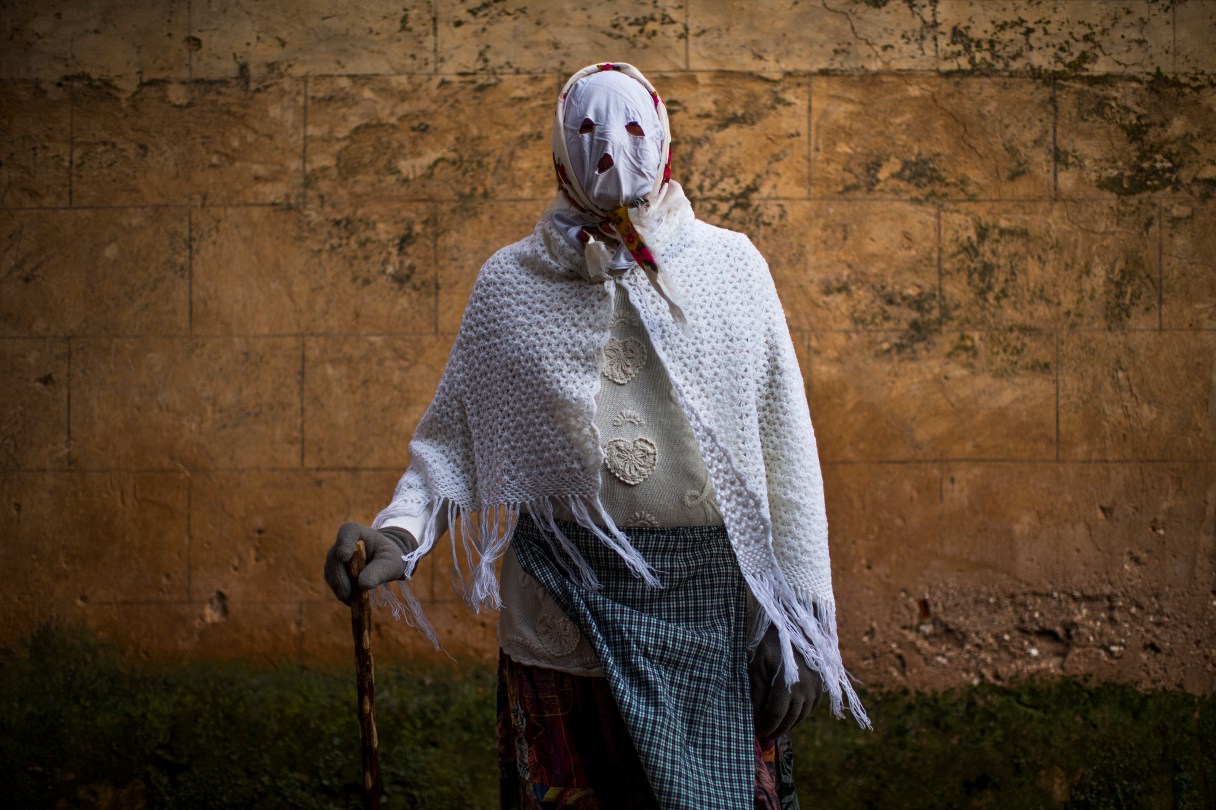
MADRID (AP) – The wild and colorful costumes and masquerades that precede the Christian season of Lent have created popular festival traditions in Spain and Portugal.
One of Portugal’s most famous Carnival events takes place in the northcentral town of Lazarin, with its pagan ‘careto’ ritual of young men in colored woolen quilts donning brass, leather or wooden masks as they dance and chase people – especially young women – through the streets, trying to scare them by making lots of noise and jingling bells.
In Spain’s central town of Luzon, men covered in oil and soot wear bull horns and cowbells to represent the devil. Records of Luzon’s Carnival date as far back as the 14th century, although it is believed to be much older.
Up north in Alsasua, half-man, half-bull figures known as Momotxorros smear their face as if with the blood of a sacrificed animal. Wearing horns and red-stained sheets, they roam the Spanish town, roaring fiercely and brandishing sticks.
In Spain’s ancient village of Unamu, people dress up as Mamuxarro, folkloric figures in white with a red sash and a metal mask to cover their faces as they pursue townsfolk with sticks. According to custom, their alleged victims (usually young women) must kneel and kiss their knee after he makes the sign of the cross on their forehead.