
Monday, November 16, 2026Nov 16

WHO: Children aged 6-to-11 should wear masks at times, too

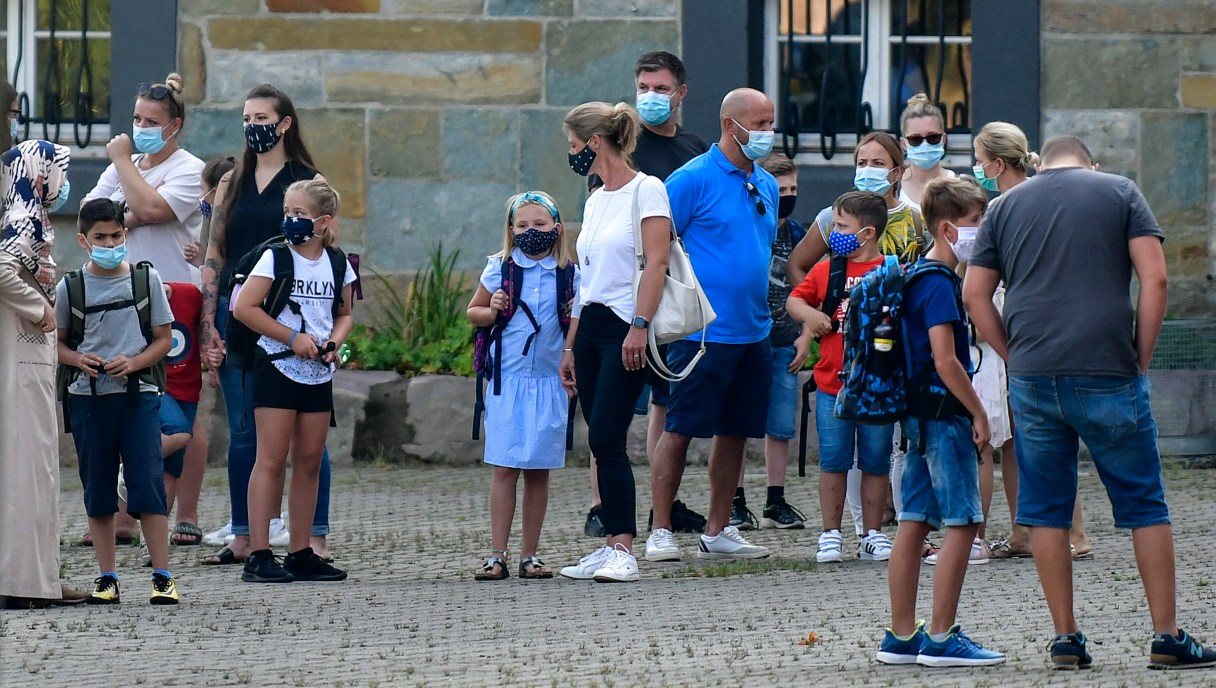
FILE - In this Wednesday, Aug. 12, 2020 file photo, parents wait with children on the schoolyard for the start of their first day at a school in Gelsenkirchen, Germany. Just in time for back-to-school for millions of kids, the World Health Organization on Monday, Aug. 24, 2020 has issued guidance about mask-wearing by children, suggesting in particular that those aged 6 to 11 should wear them too in some cases to help fight the spread of the coronavirus. The WHO recommendations follow upon the widespread belief that children aged under 12 are not considered as likely to propagate the virus as much as adults. (AP Photo/Martin Meissner, File)

GENEVA (AP) – Just as millions of children are heading back to school, the World Health Organization says those aged 6 to 11 should wear masks in some cases to help fight the spread of coronavirus.

The recommendations presented Monday follow the widespread belief that children under 12 are not considered as likely to propagate the virus as much as adults. Children in general face less severe virus symptoms than do adults, with the elderly the most vulnerable to severe infection and death.

Now WHO says decisions about whether children aged 6 to 11 should wear masks should consider factors like whether COVID-19 transmission is widespread in the area where the child lives; the child’s ability to safely use a mask; and adult supervision when taking the masks on or off.

“Luckily, the vast majority of children who are infected with the virus appear to have mild disease or asymptomatic infection, and that’s good news,” said Maria Van Kerkhove, technical chief of the U.N. health agency’s emergencies program.

She still cautioned that some children can develop severe cases of coronavirus and even die.