
Monday, November 9, 2026Nov 9

EU seeks deals in Africa, Mideast to slow migrant arrivals

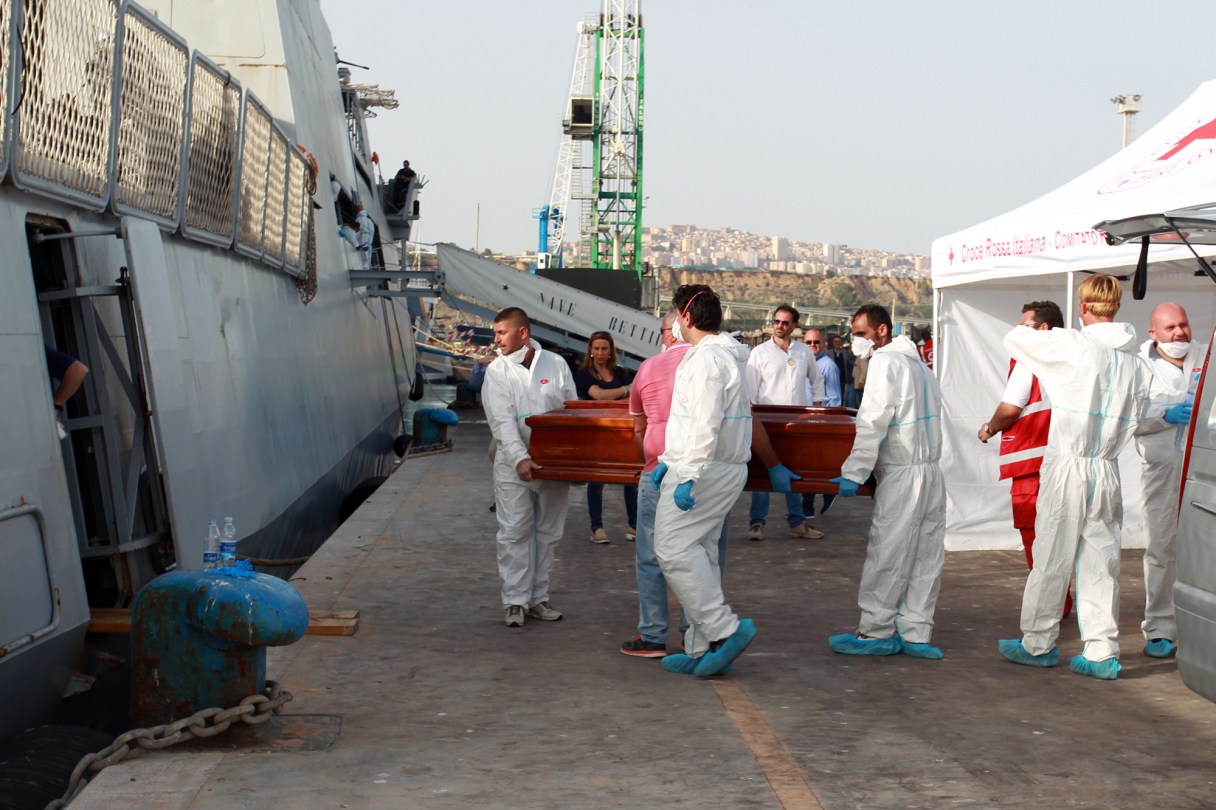
In this picture taken Thursday, May 26, 2016, the coffins of dead migrants who died in a May 25 shipwreck, are disembarked in the Sicilian harbour town of Porto Empedocle, Italy. When it comes to migration, summer is the season of hope and of death. It is the time when tens of thousands try their luck with calmer waters and embark on the desperate journey across the Mediterranean to Europe. (AP Photo/Pasquale Claudio Montana Lampo)
In this picture taken Thursday, May 26, 2016, the coffins of dead migrants who died in a May 25 shipwreck, are disembarked in the Sicilian harbour town of Porto Empedocle, Italy. When it comes to migration, summer is the season of hope and of death. It is the time when tens of thousands try their luck with calmer waters and embark on the desperate journey across the Mediterranean to Europe. (AP Photo/Pasquale Claudio Montana Lampo) In this picture taken Thursday, May 26, 2016, the coffins of dead migrants who died in a May 25 shipwreck, are disembarked in the Sicilian harbour town of Porto Empedocle, Italy. When it comes to migration, summer is the season of hope and of death. It is the time when tens of thousands try their luck with calmer waters and embark on the desperate journey across the Mediterranean to Europe. (AP Photo/Pasquale Claudio Montana Lampo)

BRUSSELS (AP) – The European Union unveiled plans Tuesday to seal agreements with African and Middle East countries in an effort to persuade refugees to stay close to home and to discourage people looking for jobs from heading to Europe.

The European Commission said that the agreements would target countries that migrants and refugees leave, travel through or stay in, often on their way to Europe.

The move is part of the EU’s longer-term strategy to tackle the root causes of migration as the 28-nation bloc struggles to manage its biggest refugee emergency since World War II, with member states divided over what action to take. EU lawmakers immediately expressed concerns that the deals would be another attempt to outsource the bloc’s migrant woes, like the much-maligned migrant agreement with Turkey.

The commission said the new partnership “compacts” would combine funds to build border, asylum and counter-smuggling capacities, as well as develop infrastructure and promote investment. Development and trade incentives would also be offered.

“We propose to use a mix of positive and negative incentives to reward those third countries willing to cooperate effectively with us and to ensure that there are consequences for those who do not,” European Commission Vice-President Frans Timmermans told lawmakers in Strasbourg, France.