
Thursday, November 5, 2026Nov 5

This story is free to read.

Giving the gift of green in the “District of Cannabis”

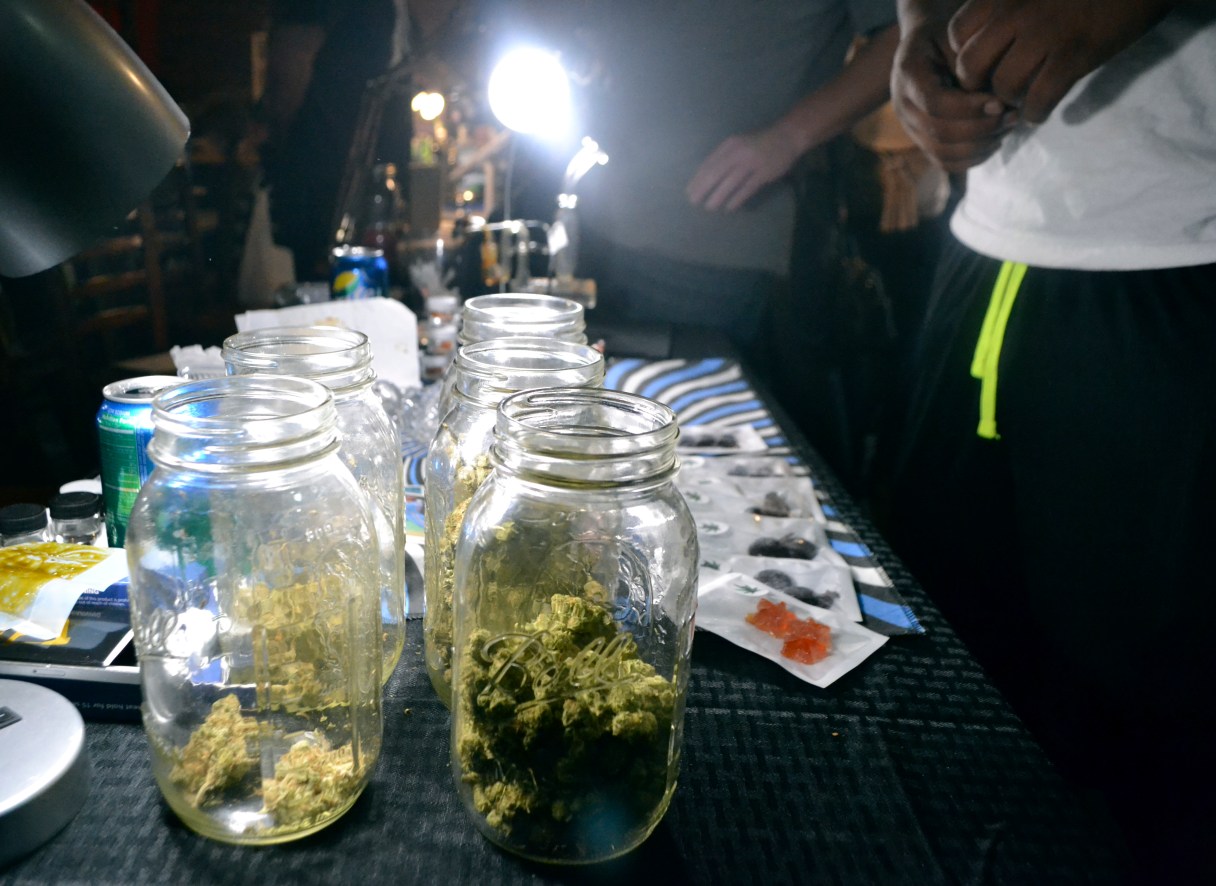
In this Sept. 11, 2017, photo, jars of marijuana buds are displayed in Washington at a closed Ethiopian restaurant at a "gifted" marijuana event. In the so-called “District of Cannabis” it’s legal to grow and consume marijuana, but illegal to buy or sell it. The result of this unique legal grey area has spawned a thriving cottage industry of businesses using the “gifting” loophole. So far the city government and police are letting it happen. (AP Photo/P. Solomon Banda)
In this Sept. 11, 2017, photo, jars of marijuana buds are displayed in Washington at a closed Ethiopian restaurant at a "gifted" marijuana event. In the so-called “District of Cannabis” it’s legal to grow and consume marijuana, but illegal to buy or sell it. The result of this unique legal grey area has spawned a thriving cottage industry of businesses using the “gifting” loophole. So far the city government and police are letting it happen. (AP Photo/P. Solomon Banda) In this Sept. 11, 2017, photo, jars of marijuana buds are displayed in Washington at a closed Ethiopian restaurant at a "gifted" marijuana event. In the so-called “District of Cannabis” it’s legal to grow and consume marijuana, but illegal to buy or sell it. The result of this unique legal grey area has spawned a thriving cottage industry of businesses using the “gifting” loophole. So far the city government and police are letting it happen. (AP Photo/P. Solomon Banda)

WASHINGTON (AP) – In the District of Columbia, an ordinary black t-shirt can cost $45 and a baseball cap can cost $50. That’s because both purchases come with a free “gift”–a small amount of marijuana.

In the so-called “District of Cannabis” it’s legal to consume marijuana, but illegal to buy or sell it. The result of this unique legal grey area is a thriving industry of businesses using the “gifting” loophole. So far the city government and police are letting it happen.

A legalization initiative passed overwhelmingly in 2014, but Congress, which oversees the D.C. city government, blocked the city from regulating or taxing marijuana sales. The results are mixed: marijuana enthusiasts are certainly happy, but legalization activists are unsatisfied and the city council is annoyed at all the lost potential tax revenue.