
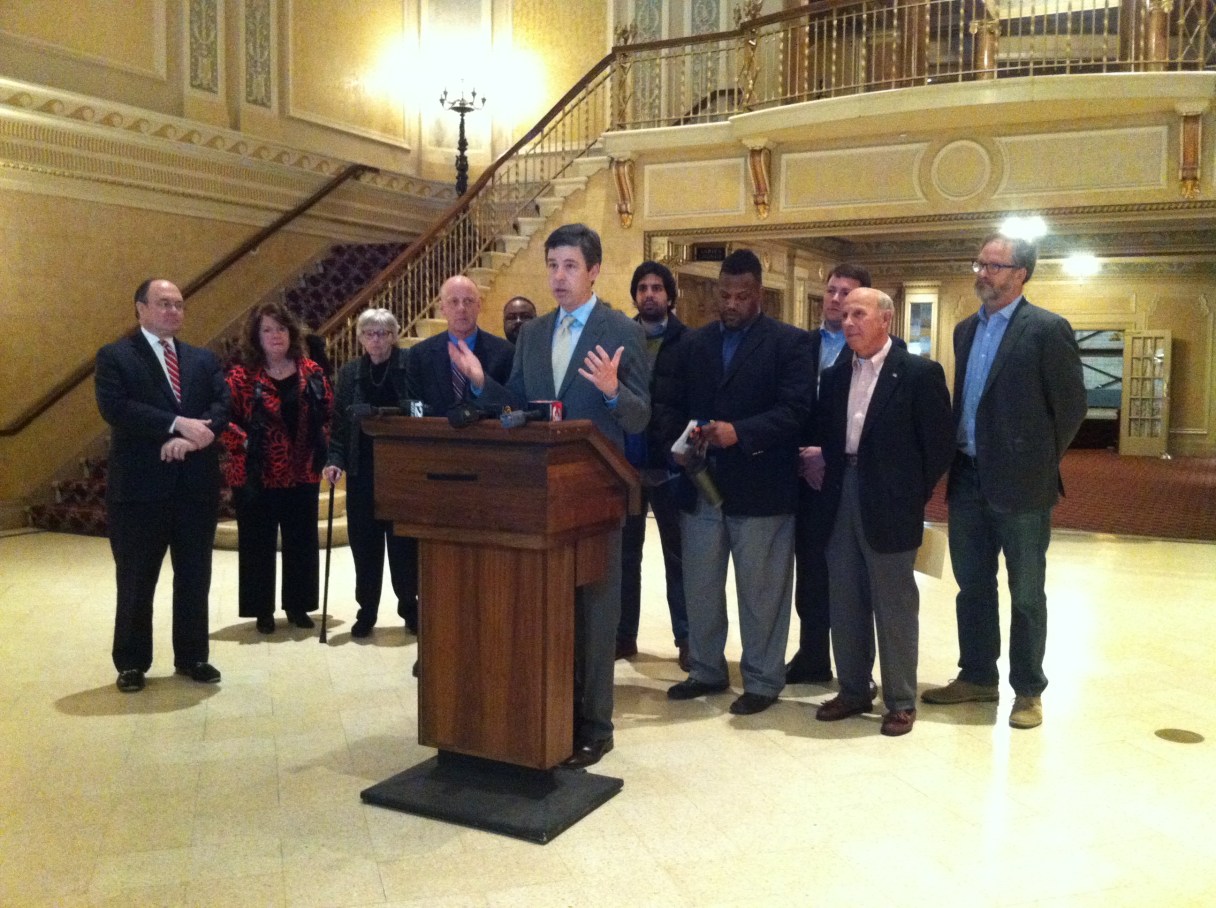
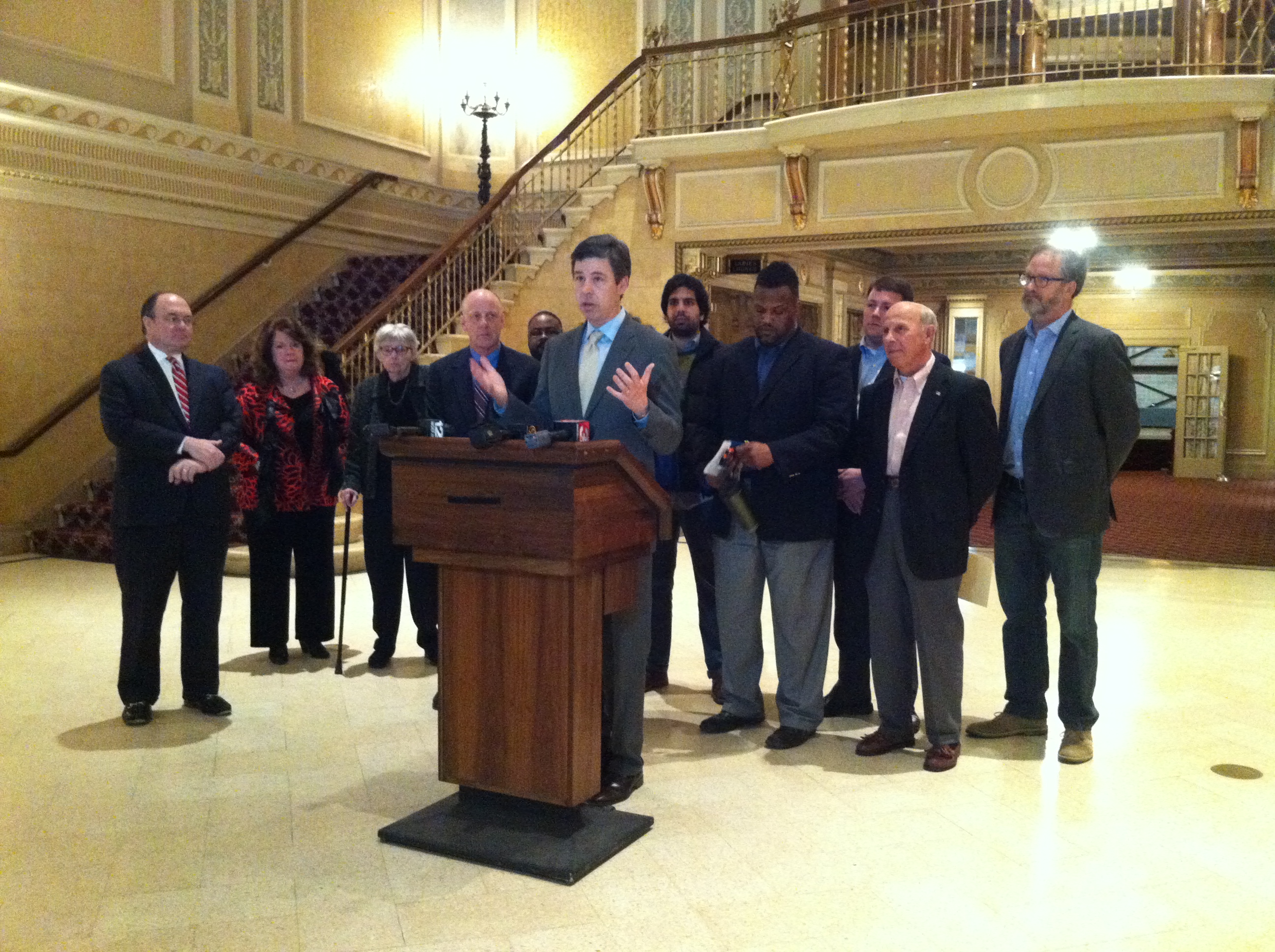
 Mayor Andy Berke in a news conference today at Tivoli Theatre in Chattanooga.
City government plans to give up operation of two of Chattanooga’s premiere entertainment venues — the historic Tivoli Theatre and Soldiers and Sailors Memorial Auditorium — and instead spin them into a new nonprofit organization called the Tivoli Theatre Foundation.
Officials hope a private group can breathe new life into the buildings — both by recruiting more shows to the spaces and by investing more in capital improvements. Foundation board members and Mayor Andy Berke plan to announce the change today.
Soldiers and Sailors Memorial Auditorium
1924: The city pays $700,000 for the auditorium, which opens as a living memorial to Hamilton County war veterans. 1964: Civic groups and city leaders spearhead a $2.1 million renovation. The auditorium closes for nearly a year. 1966: The renovated auditorium reopens with escalators and air conditioning and the basement-level parking garage converted into exhibit space. 1985: By now, Memorial Auditorium’s mission has changed. The completion of UTC’s McKenzie Arena and the Chattanooga Convention and Trade Center eliminate the need for an all-purpose hall. So Memorial turns its focus to a mid-sized theater and concert venue. 1991: The auditorium reopens after a $7 million renovation that added dressing rooms, a hydraulic orchestra pit and new sound and lighting systems. The Tivoli Theatre 1921: After two years of construction, the Tivoli opens at a cost of nearly $1 million. It was designed to house silent films and live productions. 1926: The Tivoli becomes one of the first public buildings in America to be air-conditioned. 1961: The Tivoli closes as patronage declines with the emergence of television. 1963: A grant from the Benwood Foundation allows the Tivoli to reopen after a partial renovation. 1974: The theater is placed on the National Register of Historic Places. 1976: The city buys the theater for $300,000. 1989: After a two-year renovation — funded by state, city and private money — the Tivoli reopens with cosmetic upgrades, new dressing rooms and new sound and light systems. Source: City of Chattanooga
Now, operation of the Tivoli and Memorial Auditorium costs the city $1.5 million annually. After about $750,000 in annual revenues, the city loses about $750,000 a year on the venues. Berke says the money isn’t the impetus for the move. Rather, he wants to see the spaces used more often, which would have larger community implications. He said the city will continue funding the spaces in the near future, but may reduce its commitment down the road. The city plans to lease the venues to the nonprofit organization.
“My number one goal is not to increase revenue. My number one goal is to have the facilities used more so that downtown has more activity,” the mayor said Wednesday. “If we have more people going to the theaters, that builds our quality of life. It also gets people into restaurants and coffee shops and other places that build our economy.”
That’s what happened with Knoxville’s Historical Tennessee Theatre, which is serving as a model for Chattanooga’s transition. That 1,600-seat theater, originally opened in 1928, transitioned to a nonprofit in 1996 with a private contractor acting as the booking agent. Today it is booked more than 200 nights a year and brings in more than $4 million in annual ticket sales (The Tivoli was booked for 153 events during the city’s last fiscal year).
“The restaurants here know when the sellouts are. They add on extra staff. It changes what happens in the area,” said Patrick Roddy, chief operating officer of AC Entertainment, the company hired to manage events at the Knoxville theater.
Roddy said companies like his actively recruit acts and performances to venues, while a government-run venue waits on people to call up to book the space. AC Entertainment also books acts for Chattanooga’s Track 29 music venue and Bonnaroo, one of the country’s biggest music festivals held annually in Manchester, Tenn.
Roddy is familiar with Chattanooga’s growing music scene and thinks the 1,750-seat Tivoli specifically is primed for more utilization — once it’s out of government hands.
“I feel very good that the Tivoli can have real success,” he said.
The city employs seven full-time employees and nine part-time employees between the Tivoli and Memorial. The workers will stay on at least through the end of the fiscal year on June 30, Berke said. The board of the newly minted foundation hasn’t even met. And any agreement between the city and the foundation will eventually need City Council approval.
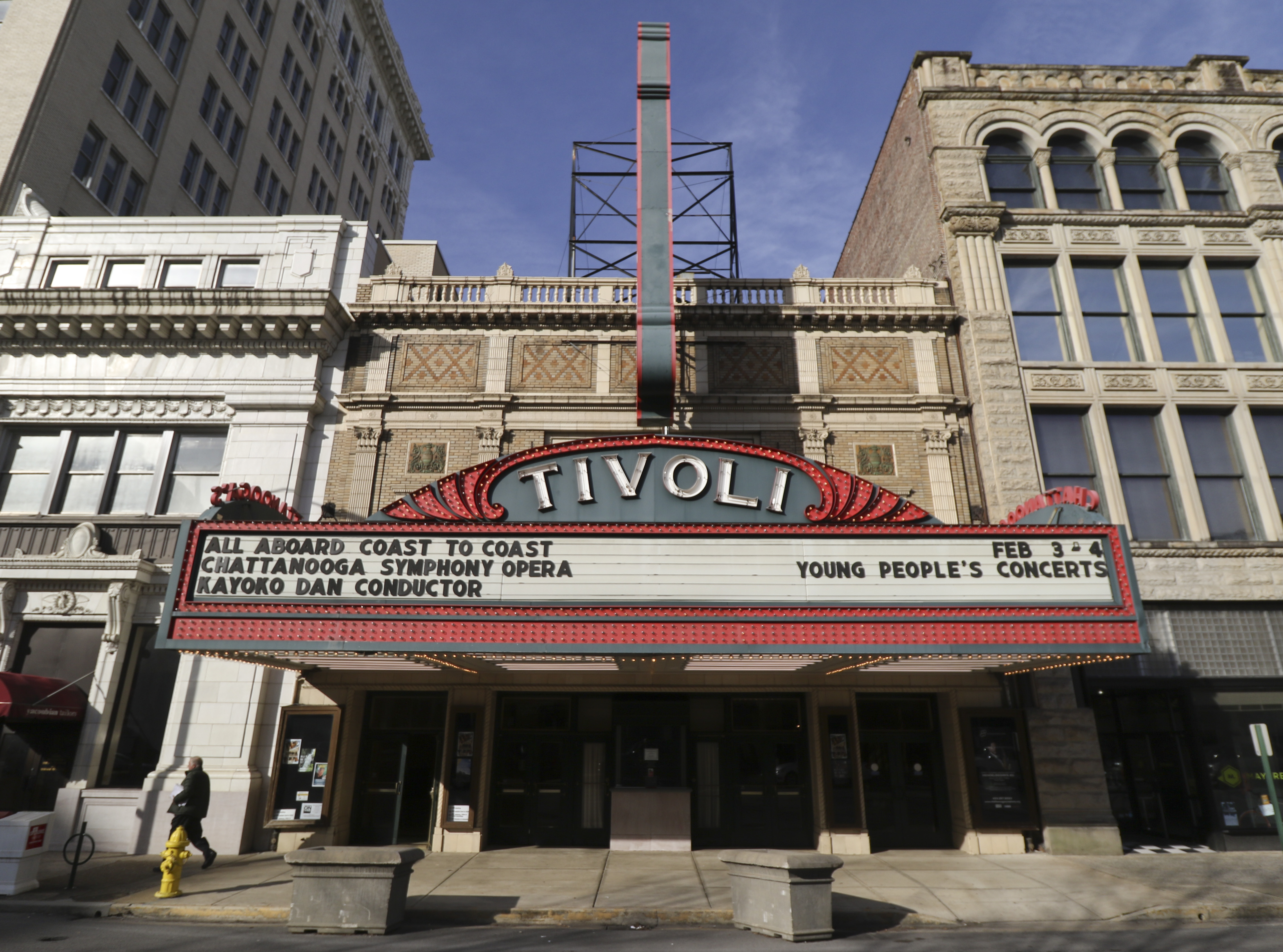 Students attend a special performance by the Chattanooga Symphony Orchestra at the Tivoli Theater on Feb. 4, 2015.
But Keith Sanford, one of the foundation’s board members, said the goal is already clear:
“The biggest thing we’re trying to do is get more programming, more experiences brought into Chattanooga,” said Sanford, market president for First Tennessee Bank in Chattanooga.
The city has owned and operated the Tivoli since 1976 when it was purchased for $300,000. It originally opened in 1921 as a home for silent films and stage productions. The city paid $700,000 for Memorial Auditorium when it opened in 1924 as a memorial to Hamilton County war veterans. The 3,800-seat auditorium also includes basement exhibit space.
Berke and Sanford are confident that a nonprofit will be able to raise more money for physical upgrades for the Tivoli and Memorial, which haven’t seen major renovations in some 25 years.
But the venues will lose the stability of an annual city line-item budget allocation.
Molly Sasse, executive director of the Chattanooga Symphony and Opera, said the Tivoli gets more use than people think. The CSO is the Tivoli’s biggest tenant, booking between 40 and 60 nights each year.
“It is our city’s performing arts hall,” she said.
Sasse said the theater is in need of repairs. But she is concerned about possible repercussions of a public divestment in the arts.
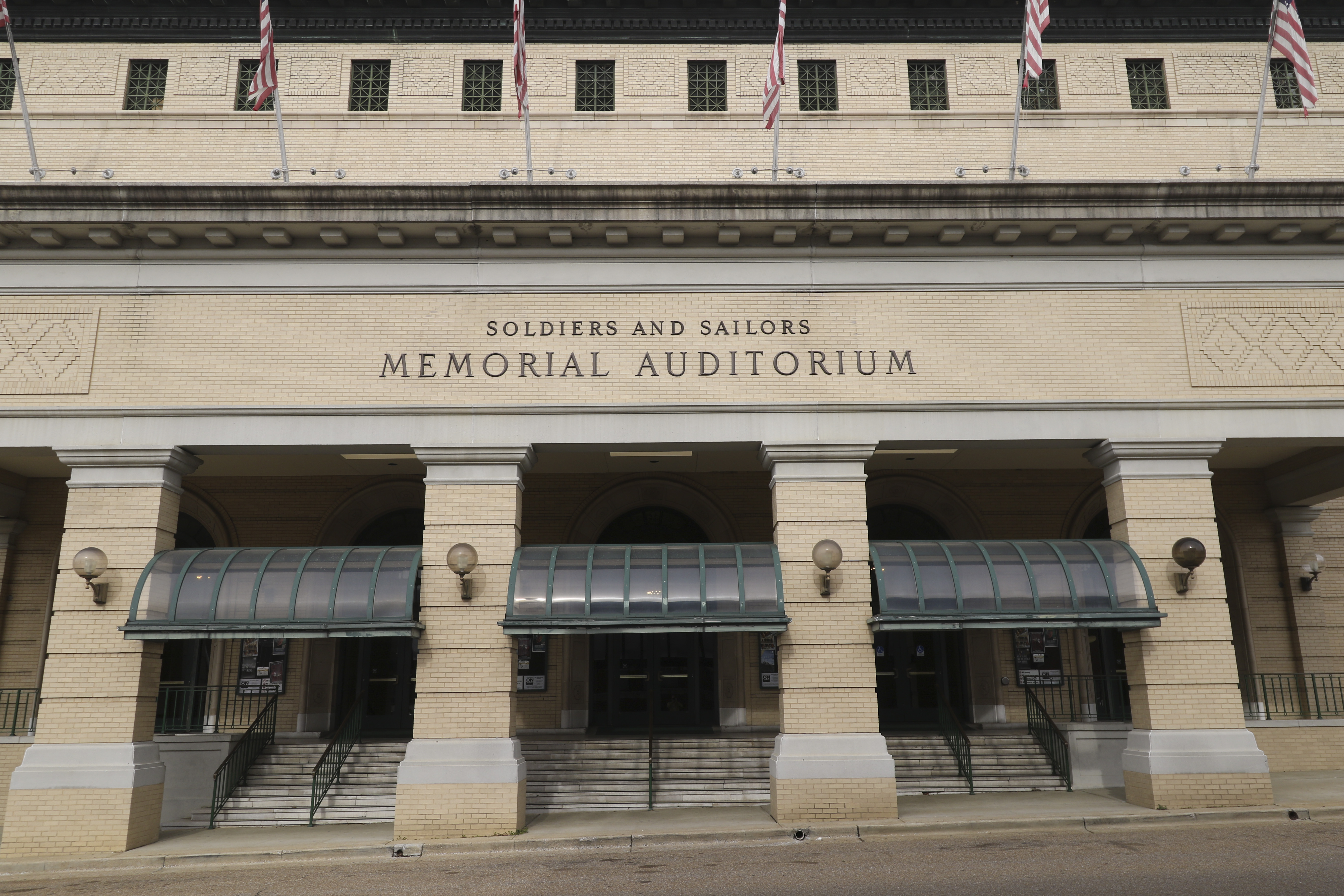 Memorial Auditorium in downtown Chattanooga.
“I think that it sends a really strong message when performing arts facilities, museums, libraries, parks — things that make a city a great place to be — are heavily invested in by the public sector,” she said. “That just sends a big message to me, that the city thinks those kinds of things are important.”
Editor’s note: Bruce Hartmann, president of the Chattanooga Times Free Press, serves on the Tivoli Theatre Foundation board. He previously served on the board of the Historical Tennessee Theatre Foundation.
Contact staff writer Kevin Hardy at khardy@timesfreepress.com or 423-757-6249.