
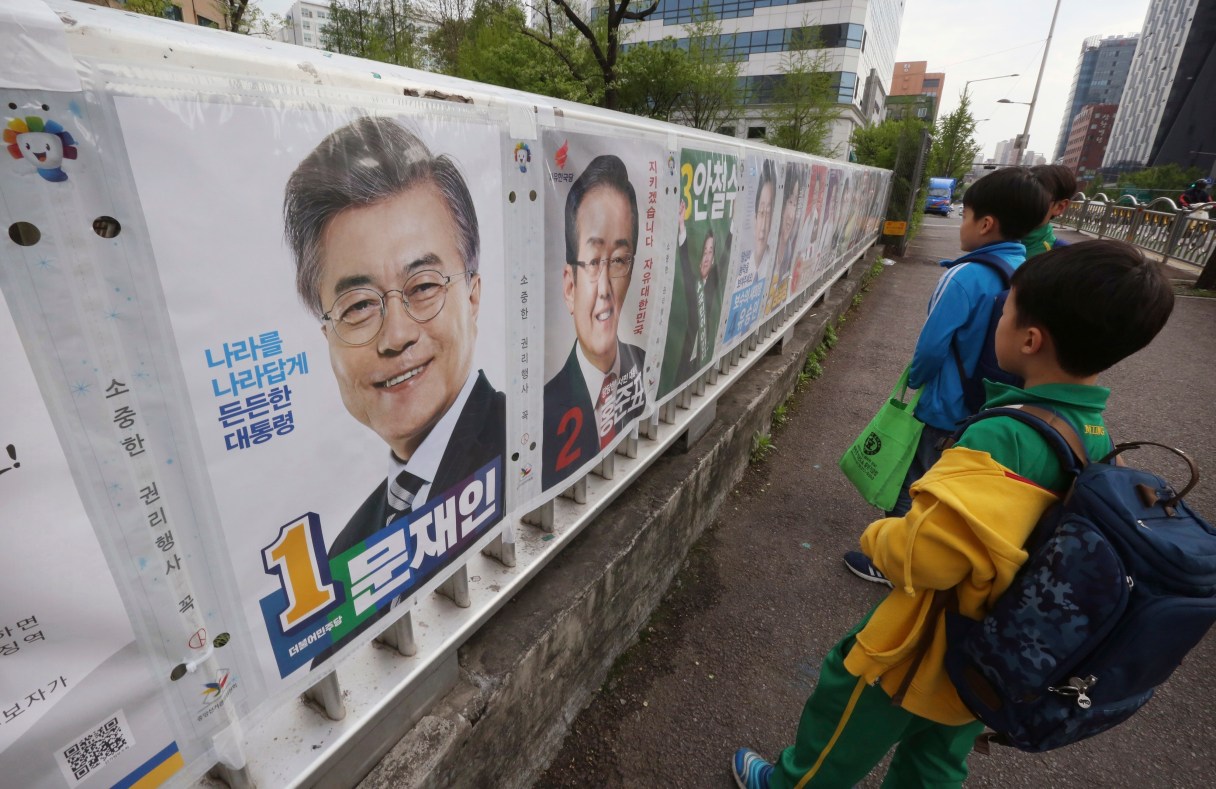
SEOUL, South Korea – Creating jobs, ending corruption and boosting stubbornly low birthrates should be high on a to-do list for South Korea’s next president after a campaign mostly dominated by security and foreign policy issues.
There’s concern that the economy will likely take a backseat to North Korea when South Koreans pick their next leader on Tuesday. Voters have been rattled by a row over who should foot the bill for a U.S. anti-missile system deployed in the country to defend against North Korean aggression, after President Donald Trump suggested that South Korea should pay more for U.S. security commitment.
Public demand for change in South Korea’s economic system remains high as growth and wealth continue to be concentrated in the hands of top few family-run business giants known as chaebol. Anger over allegations of collusion between big businesses and the government helped trigger massive monthslong protests that led to the ouster of President Park Geun-hye in March and the arrest of the de-facto leader at Samsung, South Korea’s largest business group.
Leading presidential contenders have tried to tap into the discontent over economic injustice, high youth unemployment and increased inequality between those with full-time jobs at chaebol and those who are underemployed or looking for work.
But the lack of concrete reform plans means that none of their economic agenda gained much attention during the campaign.