
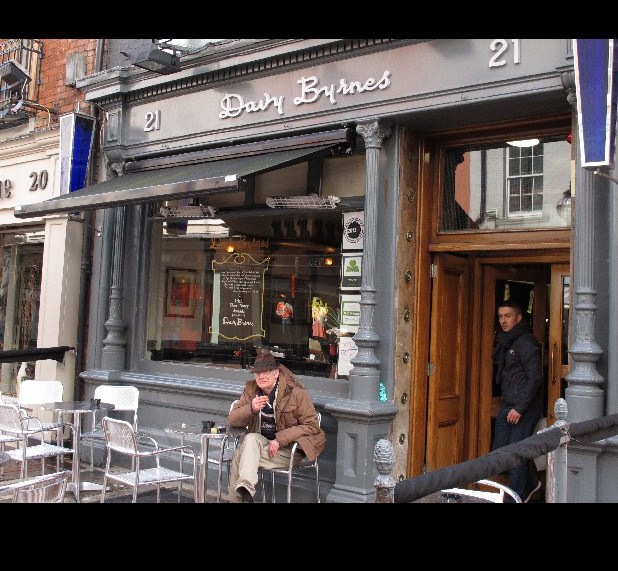
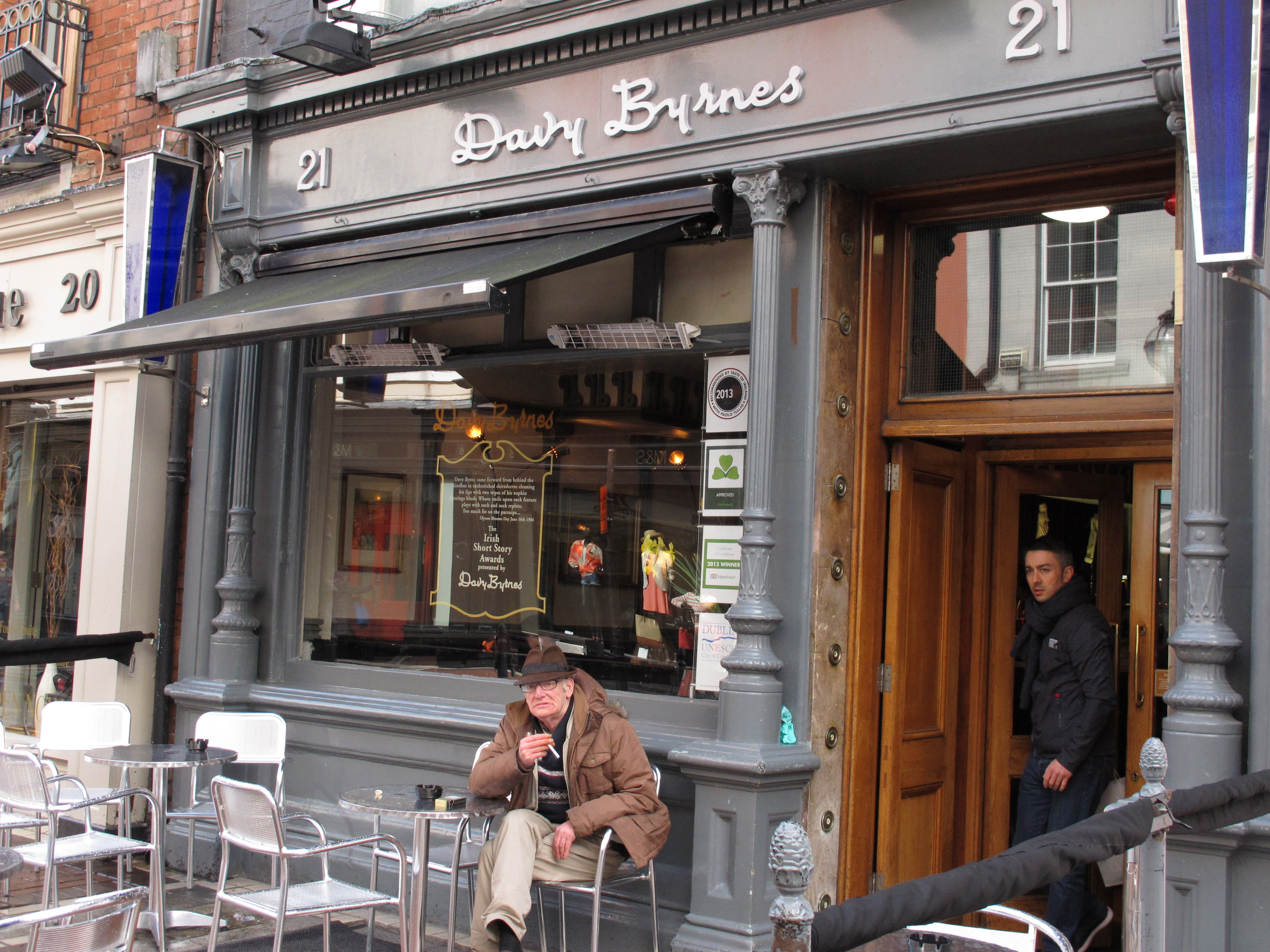
 Davy Byrne’s pub was famously mentioned in James Joyces’ “Ulysses” when the protagonist of the novel, Leopold Bloom, ate lunch there. Every year on Bloomsday (June 16), Joyce lovers descend on the pub for that famous literary lunch: a gorgonzola sandwich and glass of burgundy.
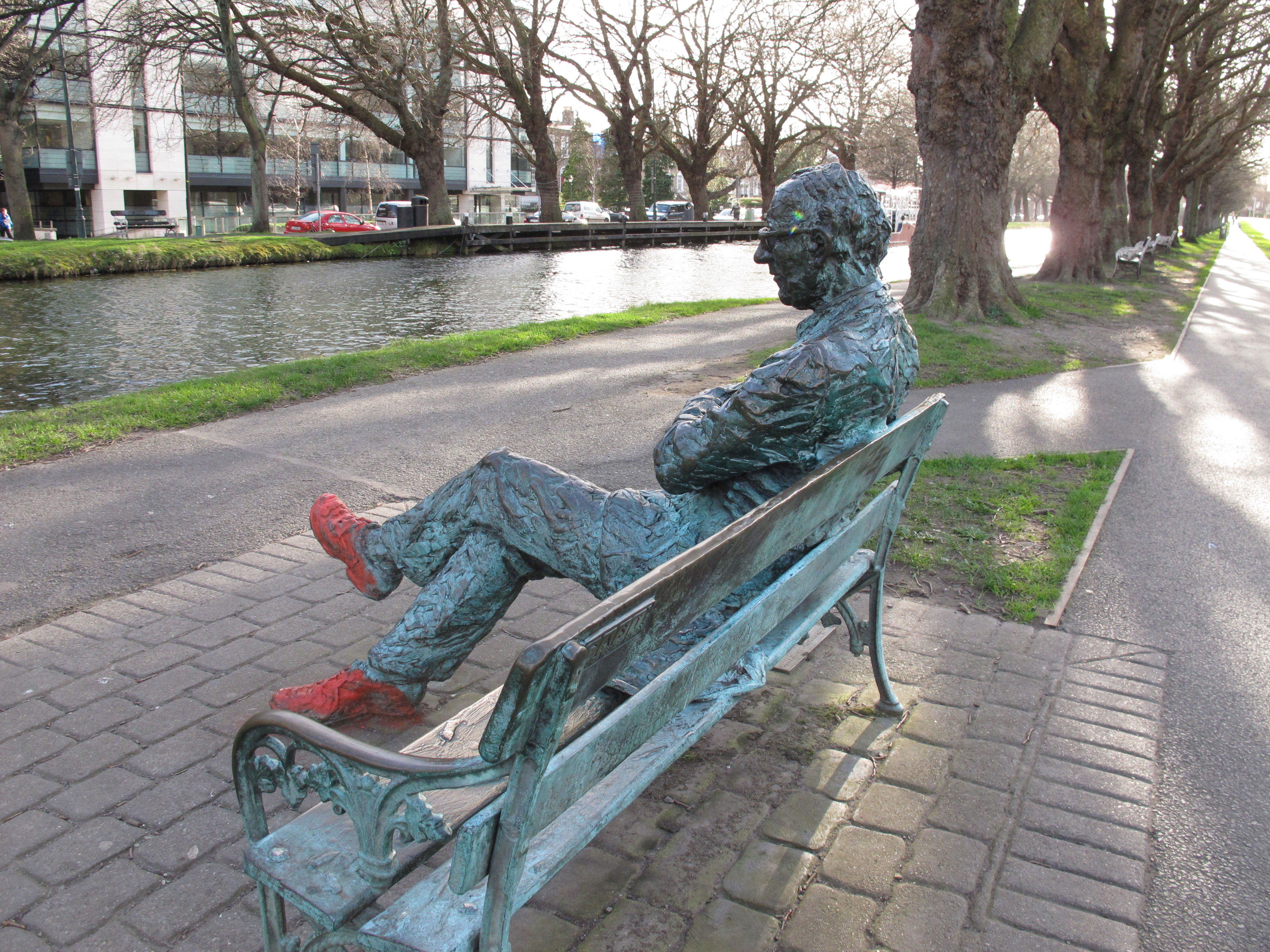 A bronze depiction of poet Patrick Kavanagh sits by the Grand Canal in Dublin, Ireland. It was inspired by Kavanagh’s poem about the canal: “O commemorate me where there is water, canal water preferably, so stilly greeny at the heart of summer.”
DUBLIN, Ireland – James Joyce immortalized this misty port city in his literary epic “Ulysses,” though many Dubliners freely admit they haven’t read a word of the stream-of-consciousness novel. That doesn’t stop them from throwing a huge celebration every June 16, honoring the day in 1904 when the fictional Leopold Bloom perambulated through the streets of the author’s hometown.
Every year, thousands of Joyce lovers and tourists, many in period costume, flock to the capital to retrace Bloom’s steps. The faithful devour “innards of beasts and fowls” for breakfast, plunge into the once-famous gentlemen-only bathing spot called the Forty Foot, and descend on Davy Byrnes’ pub for that famous literary lunch: a gorgonzola sandwich and glass of burgundy.
But while the event – known as Bloomsday – is the city’s largest and most colorful literary celebration, it is hardly the only one. With its old-world pubs filled with faded pictures of poets and rebels, clattery cafes and cobblestone alleys, centuries-old libraries and elegant museums, Dublin is a haven for those who want to immerse themselves in books and writers and words – washed down of course, with the obligatory pint of Guinness.
If there is a pub on every corner – Dublin boasts around 1,000 of them – it seems there is a poet, too. There are statues, busts and plaques commemorating writers, and pubs and restaurants filled with literary references. Literary-themed walks transport visitors to the worlds of Joyce, Shaw and Wilde.
A life-size, colorful stone statue depicts Oscar Wilde lounging languidly on a crag in the park at Merrion Square. Joyce is depicted rather more severely in bronze, leaning on his cane as he strolls down North Earl Street. And tourists love to pose for photos sitting next to sculptures of two writers seated on benches: Brendan Behan by the Royal Canal and Patrick Kavanagh by the Grand Canal.