
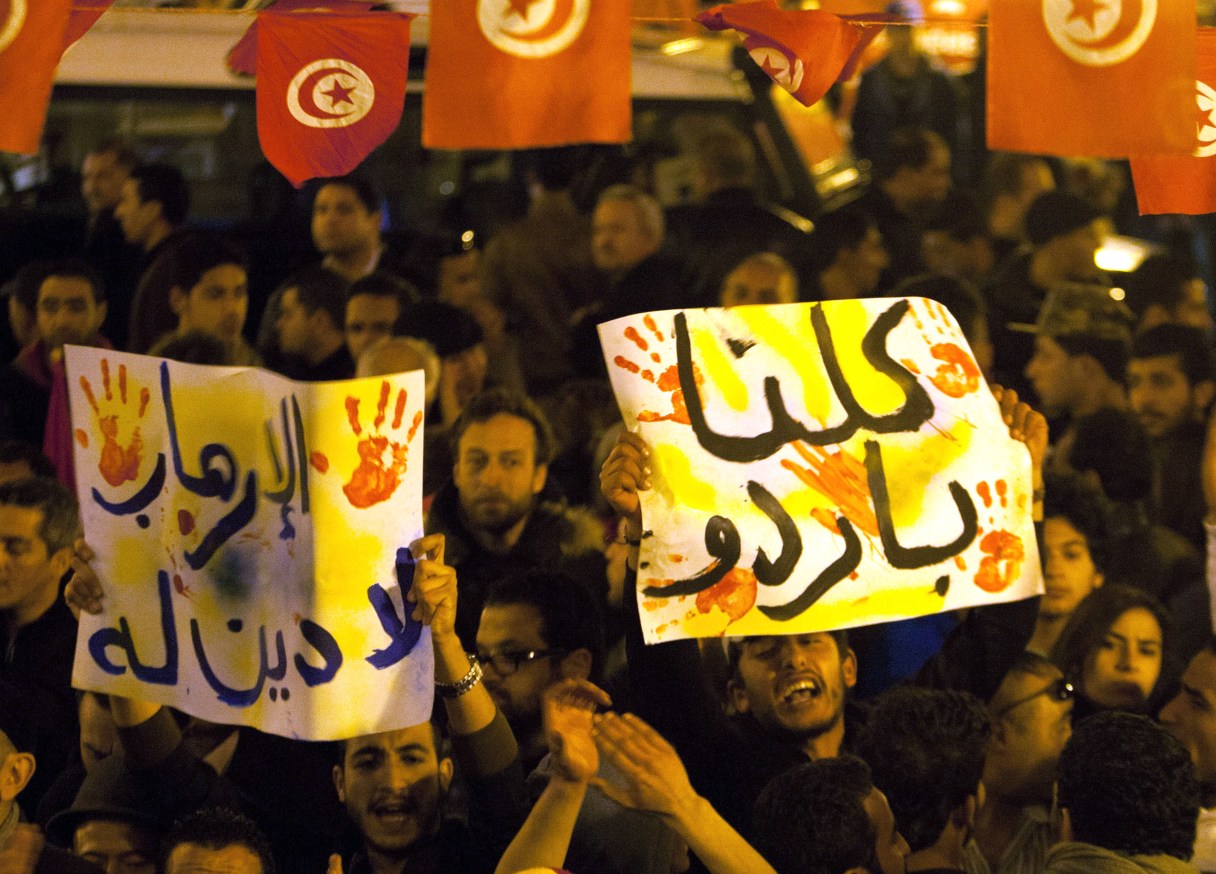
RABAT, Morocco (AP) – The attack on Tunisia’s national museum and the nearby parliament on Wednesday, for which the Islamic State group has claimed responsibility, tops years of radical violence that has rocked the country after the 2011 revolution that overthrew the country’s long-ruling secular dictator. The country’s disparate radical elements appear to be increasingly drawn toward the banner of the Islamic State.
___
DIFFUSE MILITANTS
Rather than being overt Islamic State members, it is likely that perpetrators of Wednesday’s attack came from the large mass of disaffected young people in the country, some of whom fought with extremists groups in Syria or were inspired by their radical rhetoric.
Years of uneven economic development, followed by a post-revolutionary downturn, have left a deep reservoir of disaffected and unemployed young people. Many have left for Syria – or even easier, neighboring Libya – to train and fight with radical groups.