
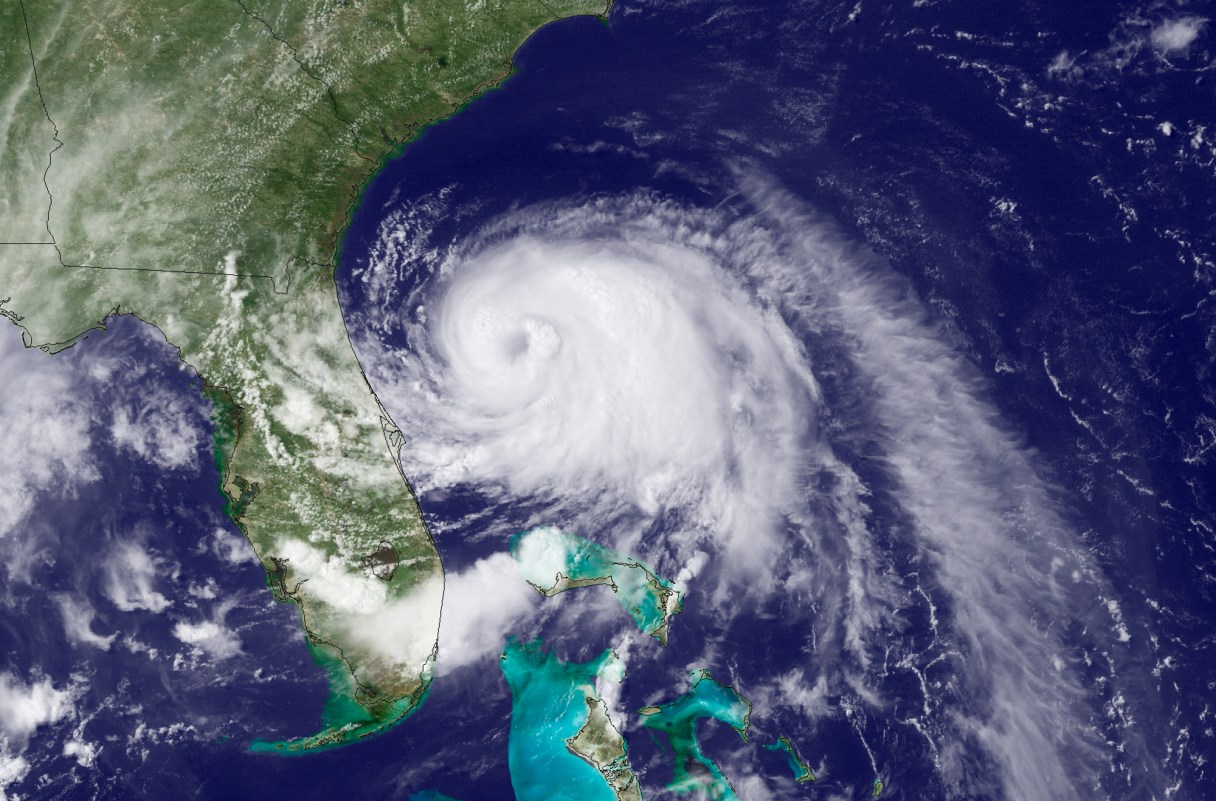
RODANTHE, N.C. (AP) – As one of the year’s busiest travel weekends approaches, so does another visitor: Tropical Storm Arthur, expected to grow into a hurricane by the Fourth of July and hit most harshly at North Carolina’s Outer Banks, a popular getaway spot of thin barrier islands along the shore.
The first named storm of the Atlantic hurricane season prompted a hurricane warning for a wide swath of the North Carolina coast and spurred authorities to order a mandatory evacuation for visitors to the Outer Banks’ Hatteras Island as of 5 a.m. Thursday. Residents also were advised to leave the island. A voluntary evacuation was announced for the Outer Banks’ Ocracoke Island, accessible only by ferry.
Officials, hotel owners and would-be vacationers as far north as New England were also carefully watching forecasts. The storm was enough of a concern that officials in Boston decided to move the annual Boston Pops July 4th concert and fireworks show up by a day because of potential heavy rain Friday night. And rip tides were a threat as far north as New Jersey.
The Outer Banks will be especially vulnerable, forecasters said. As word of the mandatory evacuation on Hatteras Island spread, a steady stream of cars, trailers and recreational vehicles began rolling north on North Carolina Highway 12, a two-lane road that is the only way to the mainland other than ferries to the south. Home to the famous Cape Hatteras Lighthouse, the island is just a narrow spit of land. Twice in recent years, storm-driven waves have sliced N.C. 12, rendering it impassable.
One of the visitors who planned to leave Thursday was Gary Reinhardt, 63, of Sarasota, Florida.