
Sunday, November 15, 2026Nov 15

Wounded and ‘afraid,’ Rohingya seek Bangladesh hospital aid

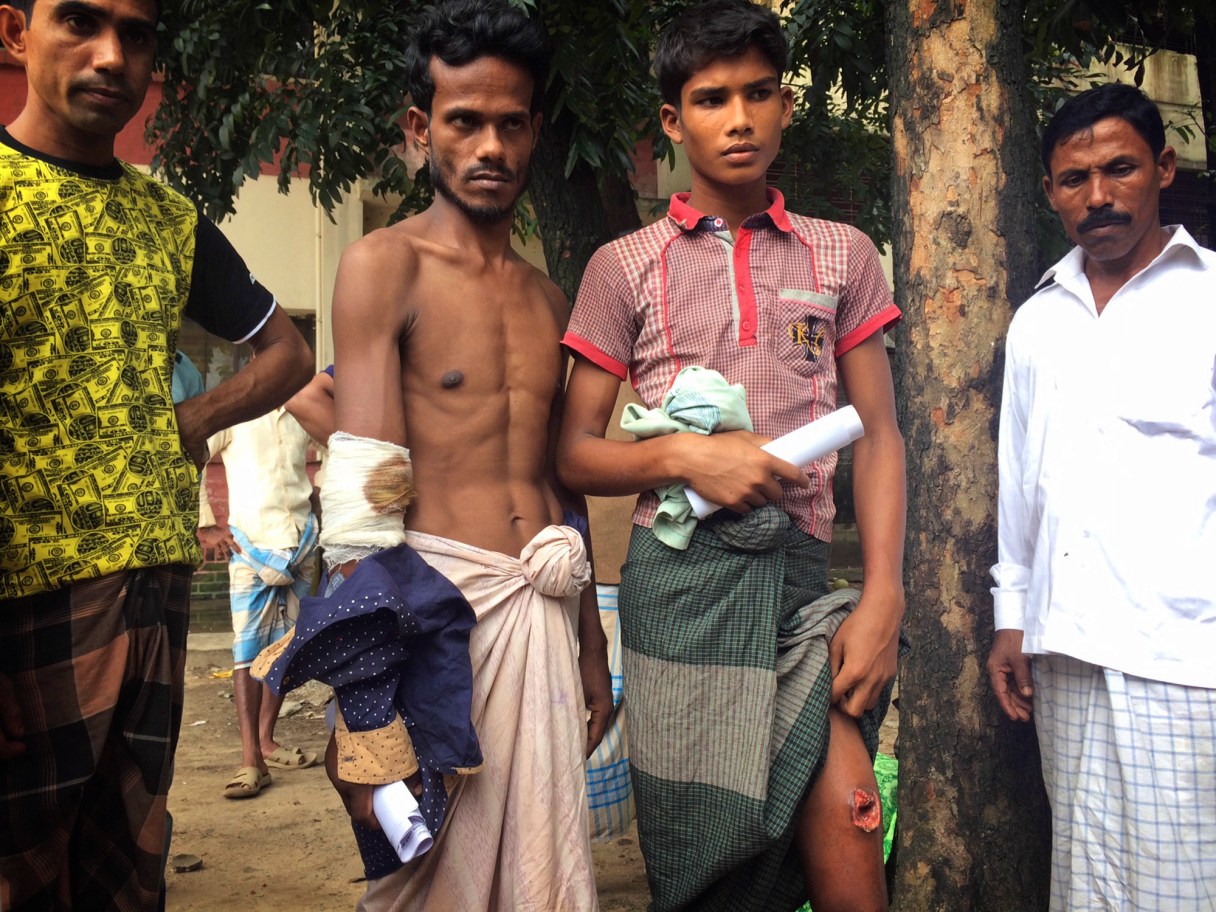
Mohammad Osama, 16, center right, and Amanullah, 28, center left, show their bullets wound outside Sadar hospital, in Cox Bazar, Bangladesh, Monday, Sept. 4, 2017. Osama and Amanullah, who fled from their village from Myanmar alleged that they were shot by Myanmar army soldiers. A hospital near Bangladesh's southeastern border has become overcrowded with dozens of Rohingya refugees who arrived with bullet wounds and broken bones after fleeing violence in western Myanmar. The UNHCR on Monday was counting some 73,000 new refugees in Bangladesh since violence erupted on Aug. 25 in Myanmar's western Rakhine state. (AP Photo/Muneeza Naqvi)

COX’S BAZAR, Bangladesh (AP) – With Rohingya refugees still streaming across the swampy border into Bangladesh, one hospital was struggling Monday to treat dozens of men who had arrived with broken bones, bullet wounds and horrific stories of death.

Already, some 73,000 Rohingya Muslims have entered Bangladesh in fleeing violence in western Myanmar, which erupted Aug. 25. The refugees have filled three existing refugee camps set up in the 1990s, aid workers say. Thousands more were sheltering wherever they could find space.

“We have heard reports of people cordoned off in the area” near the border, said UNHCR spokeswoman Vivian Tan. “We have also heard reports that at some border points, controls have been relaxed.”

UNHCR field agents had yet to gain access to border areas to fully assess the situation, but aid workers said many refugees needed medical attention for respiratory diseases, infections and malnutrition.

On Monday, a clutch of refugees carrying nothing but bed sheets and personal documents in plastic bags were squatting in the open behind the Cox’s Bazar Sadar Hospital, about two hours from the nearest border point.