
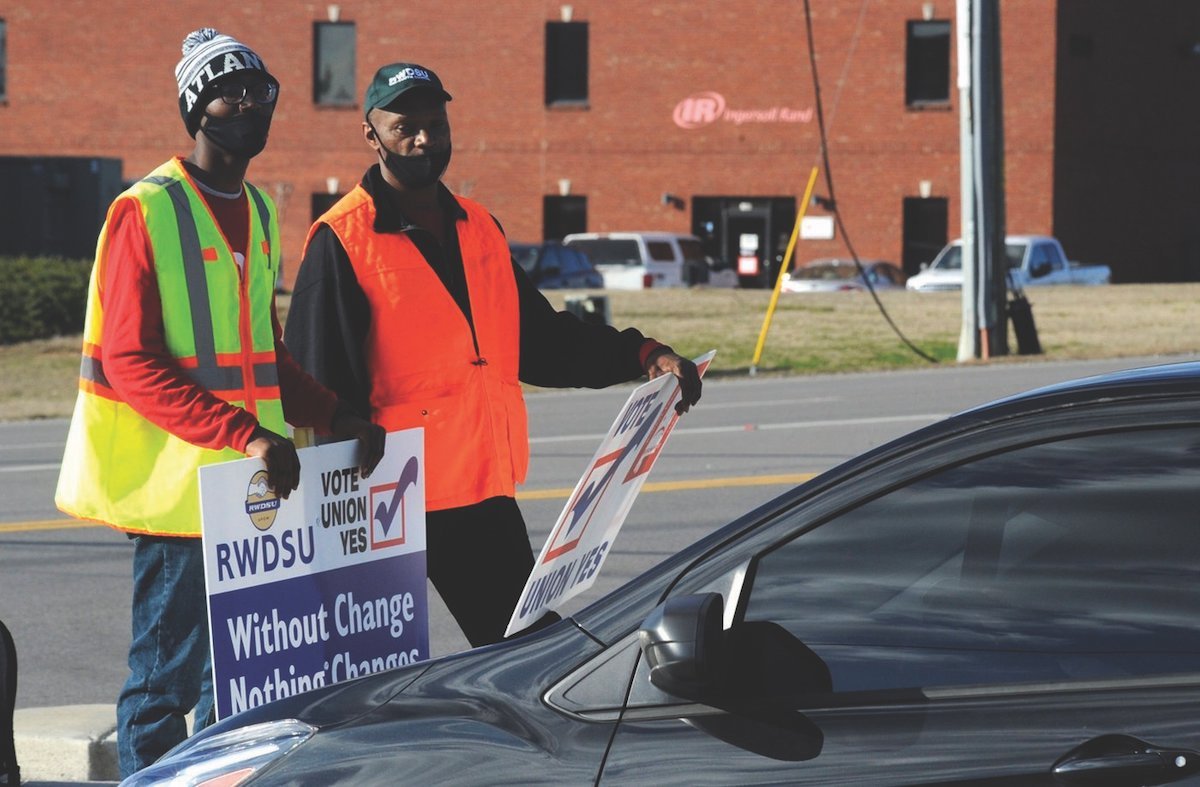
A group of gravediggers in Columbus, Ohio, who just negotiated a 3% raise. The poultry plant that processes chicken nuggets for McDonald’s. The workers who make Cap’n Crunch in Iowa. The women’s shoe department at Saks Fifth Avenue in Manhattan.
The Retail, Wholesale and Department Store Union is not the largest labor union in the United States, but it may be one of the most eclectic. Its membership, totaling about 100,000 workers, seems to reach into every conceivable corner of the U.S. economy, stretching from the cradle (they make Gerber baby food) to the grave (those cemetery workers in Columbus).
And now it is potentially on the cusp of breaking into Amazon, one of the world’s most dominant companies, which since its founding has beaten back every attempt to organize any part of its massive U.S. workforce.
This month, a group of 5,800 workers at an Amazon warehouse in Bessemer, Alabama, are voting whether to join the RWDSU. It is the first large-scale union vote in Amazon’s history, and a decision by the workers to organize would have implications for the labor movement across the country, especially as retail giants like Amazon and Walmart have gained power – and added workers – during the pandemic.
The Amazon campaign, said Stuart Appelbaum, the union’s president, “is about the future of work and how working people are going to be treated in the new economy.”