
Monday, November 16, 2026Nov 16

Afghanistan’s goat farmers find luxury niche in cashmere

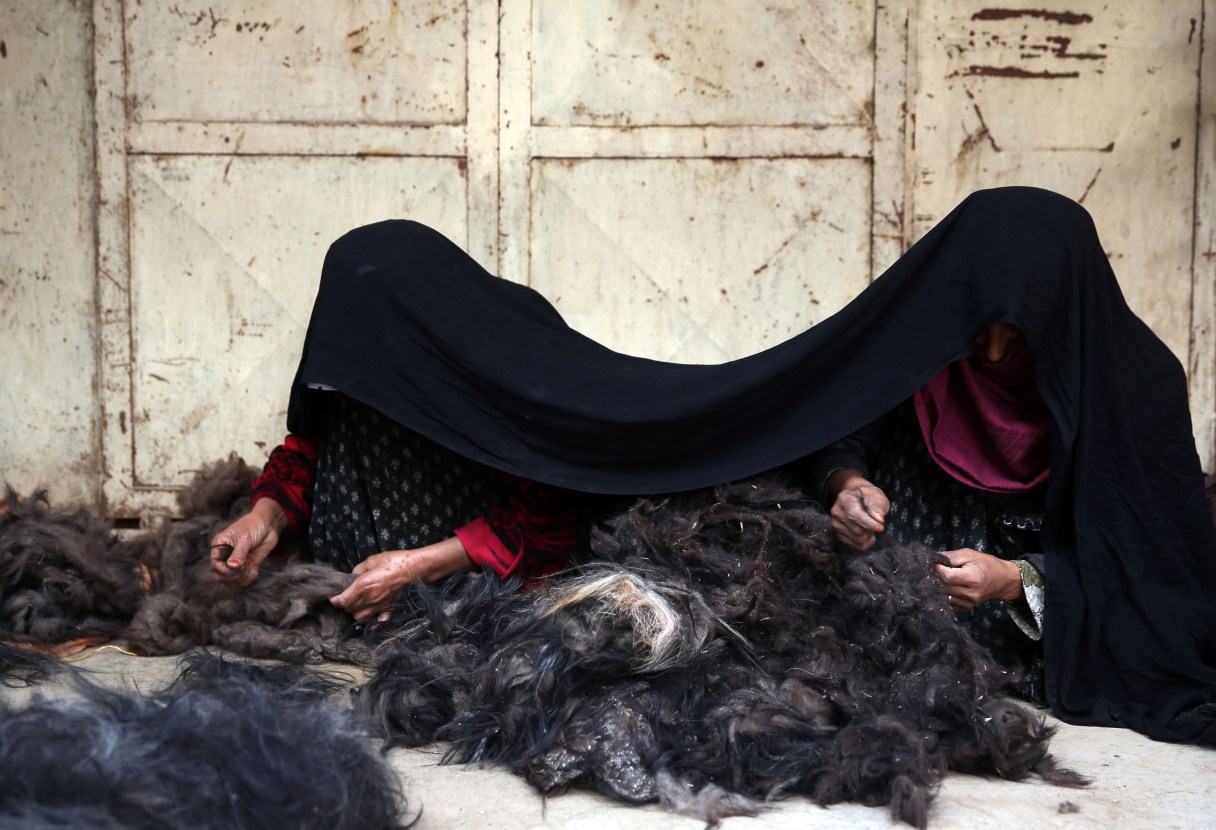
In this Wednesday, April 15, 2015 photo,  Afghan female laborers work at a traditional cashmere factory in Herat city, west of the capital Kabul, Afghanistan. Not so long ago, Afghan farmers collected the thick winter undercoat their goats shed every spring and threw it on the fire to heat their homes and cook their food. Some have since learned that the super-soft fluff that comes off in clumps as the weather warms up, once cleaned, refined and spun into yarn is cashmere - a luxury product that finds customers as far away as the United States, Britain and Europe. (AP Photo/Massoud Hossaini)
In this Wednesday, April 15, 2015 photo, Afghan female laborers work at a traditional cashmere factory in Herat city, west of the capital Kabul, Afghanistan. Not so long ago, Afghan farmers collected the thick winter undercoat their goats shed every spring and threw it on the fire to heat their homes and cook their food. Some have since learned that the super-soft fluff that comes off in clumps as the weather warms up, once cleaned, refined and spun into yarn is cashmere - a luxury product that finds customers as far away as the United States, Britain and Europe. (AP Photo/Massoud Hossaini)

HERAT, Afghanistan (AP) – Not so long ago, Afghan farmers collected the thick winter undercoat their goats shed every spring and threw it on the fire to heat their homes and cook their food. Some have since learned that the super-soft fluff that comes off in clumps as the weather warms up, once cleaned, refined and spun into yarn is cashmere – a luxury product that finds customers as far away as the United States, Britain and Europe.

It’s changed life for goat herders like Mohammad Amin. He has 120 goats grazing the open spaces around an industrial park on the outskirts of the western city of Herat. At this time of year, most of the female goats have kids and shed the cashmere, which Amin pulls off in huge handfuls.

With an extended family of 13, he has a guaranteed income from the best of the cashmere he harvests as traders, processors, donors and international businesses are cottoning on to Afghanistan’s potential as a major producer.

“Buyers come to us and buy the good quality cashmere, the rest we take to the market and sell,” Amin said.

Each animal yields up to 250 grams (8.8 ounces) of cashmere, Amin said. Each season he can earn more than 61,250 afghanis ($1,100) – not bad in a country where the annual national average is less than $700.