
Every word of this column, without exception, is written from a perspective of compassion and sympathy; this, I sincerely ask my readers to understand. There is no judgment here, no condescension and no superiority complex. When people hurt, my heart hurts for them, especially when I see their hurt taking them in what I believe to be the wrong direction.
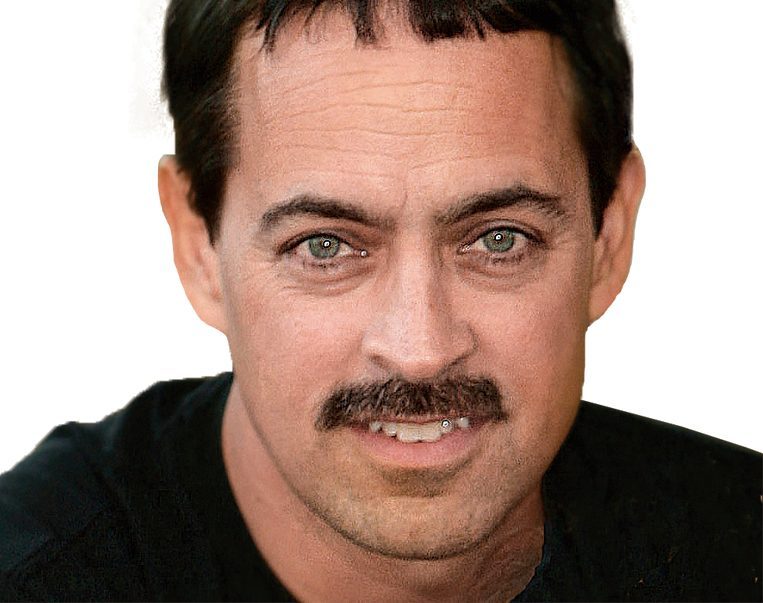
I am just now learning that a couple of weeks ago, the tremendous actor and wonderful comedian, Billy Crystal, in an interview on CBS Sunday Morning, said that he no longer talks to God, because he cannot trust him. Crystal is Jewish; I am Christian, so we would almost surely have some theological differences, but much of what I know of God is rooted in the Old Testament, not merely the New, so there would also surely be a lot of commonalities.
Mr. Crystal’s stated reasoning for no longer trusting God, as is so often the case, stems both from personal tragedy and harsh world conditions. He lost his home of forty-six years in the Pacific Palisades wildfire. He lost some dear friends, Rob and Michelle Reiner, in a horrific murder, and he had been with them mere hours earlier.
As to the broader conditions of Earth, he said, “Too many bad things have happened. The earth is in bad shape. This is a weird, scary time.”
I think it is safe to say that, not only is he not the only one to ever face these issues, absolutely everyone either has or will, if they live long enough. That being the case, it seems beneficial for us to examine all of that briefly. Can God be trusted in light of personal tragedy and a broken, hurting world?
Yes, he can.
We should first of all remember that God did not hand us a broken, hurting world, a world where people would experience personal tragedy. He actually gave us the exact opposite: a perfect world where no one would ever die, no loss would ever come and no cheek would ever be moistened by a falling tear. But he also gave us something infinitely precious to go along with all of that: a free will. Rather than make fleshly robots programmed to do his bidding, he made people who could either continue to love and follow their creator, or give in to the temptation Satan presented them.
He warned them; there was no excuse. He had been good to them; they would not even exist without him. And yet, they chose sin, and consequences came with that choice. Now, humanity was no longer immortal, and the world was no longer perfect and paradisaical. In fact, Adam and Eve themselves became the first to ever experience both of the tragedies that have so shaken Mr. Crystal: they lost their home, and not many years later, had to weep over the grave of their murdered son, Abel.
But God was too good to leave humanity without hope. There in the garden, he promised to send his son, the seed of the woman, to crush the serpent’s head and redeem fallen man. With that redemption would also ultimately come the restoration of earth itself to a perfect state; Paul spoke of that in Romans 8, Isaiah in Isaiah 35, and John the Beloved in Revelation 20. So, we came from a perfect world, we are going back to a perfect world, and God will be the source of both.
But what about all of the “in the meantime?” What about fires and wars and murders? What about the times we pray and God does not do what we want?
Job could relate to that; he had ten graves of children to weep over, wrecked health, an estranged wife, and three slanderers. Joseph was sold into slavery by his own brothers, falsely accused of rape and imprisoned and forgotten by those he had helped. David saved the nation, and for his efforts was hunted for death by King Saul and the entire army, having to spend around 13 years living in the wilderness. But here’s what happened when they just kept trusting: Joseph ended up in command of all Egypt, Job ended up with twice what he had lost and David ended up on the throne. God is not a genie who does things on demand, but he is a very good God who, in the words of Romans 8:28, makes all things (even the bad things) work together for good to them that love God and are called according to his purpose.
But what if he chose not to ever “fix” anything? The three Hebrew boys have that answer for us. Faced with the fire, they acknowledged that God was able to deliver them from it, but then they said, “But if not.” The but if not boiled down to their determination to serve God even if they lost everything and then be satisfied to awake in his presence.
Day by day, God is good to all of us, even the wicked. Jesus observed that he “maketh his sun to rise on the evil and on the good, and sendeth rain on the just and on the unjust.” We all breathe the breath he put into our bodies; we are all warmed by his sun and watered by his rain and fed by the plants of his ground. We live lives that are probably 99% joy and happiness, and 1% hurt and pain.
God cannot always be tracked, but he can always be trusted.
Bo Wagner is pastor of Cornerstone Baptist Church of Mooresboro, North Carolina, a widely traveled evangelist and the author of several books available on Amazon and wordofhismouth.com. Email him at 2knowhim@cbc-web.org.