
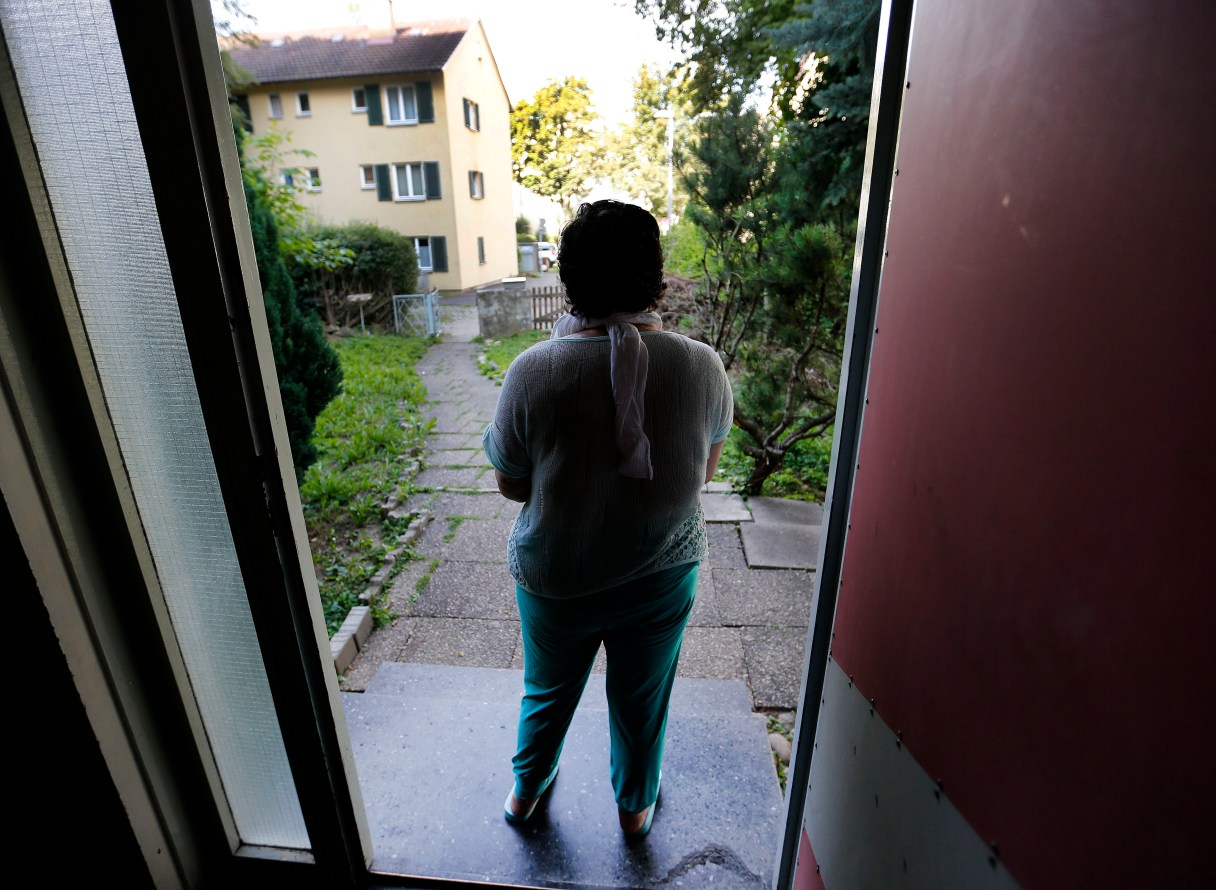
VILLINGEN-SCHWENNINGEN, Germany (AP) – The Yazidi girl had been in the safety of a refugee camp in Iraq for two weeks when she imagined she heard the voices of Islamic State fighters outside her tent.
Petrified by the thought of again facing rape and abuse at their hands, 17-year-old Yasmin vowed to make herself undesirable. So she doused herself in gasoline and lit a match. The flames burned her hair and face, peeling away her nose, lips and ears.
It was in that state, physically disfigured and mentally so scarred that she had falsely thought her former captors were coming for her, that German doctor Jan Ilhan Kizilhan found her in a refugee camp in northern Iraq last year.
Now 18, Yasmin is one of 1,100 women, mainly of the Yazidi religious minority, who have escaped IS captivity and are in Germany for psychological treatment. The pioneering program that Kizilhan helps run, which has attracted international attention, tries to address a basic problem: Long after the women are rescued, the trauma remains. Even in refugee camps in Iraq, Kizilhan noted some 60 cases where Yazidi women committed suicide.
Recalling her ordeal today, Yasmin hunches over in her chair, grips her gnarled hands together and looks down at the floor. But she straightens up and her face brightens as she remembers Kizilhan entering her tent in the refugee camp. He told her and her mother, in their own language, how he could help in Germany.