
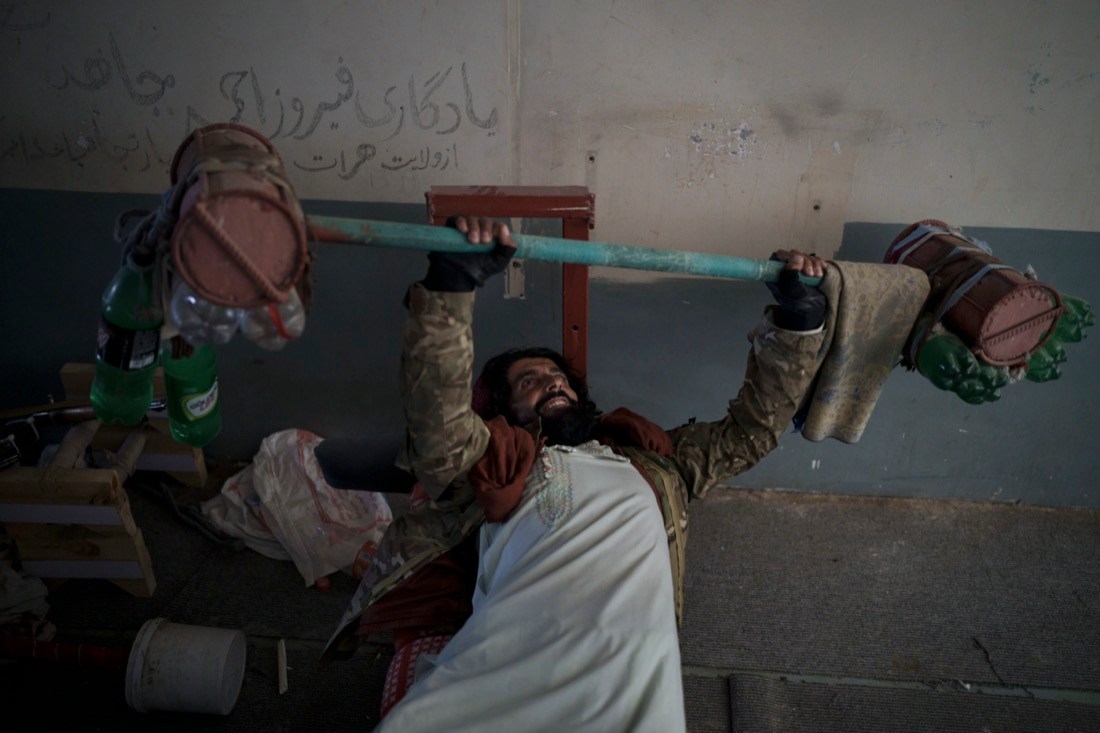
KABUL (AP) – Once, Kabul’s main prison was crowded with thousands of Taliban captured and arrested by the government. On Monday, a Taliban commander strolled through its empty halls and cell blocks, showing his friends where he had once been imprisoned.
It was a sign of the sudden and startling new order in Afghanistan after the militant group swept into the capital nearly a month ago and threw out the crumbling, U.S.-backed government it had fought for 20 years.
The Taliban now run Pul-e-Charkhi Prison, a sprawling complex on Kabul’s eastern outskirts. After capturing the city, the fighters freed all the inmates there, the government guards fled, and now dozens of Taliban fighters are running the facility.
The commander, who refused to give his name, was on a personal visit to the complex with a group of his friends. He told The Associated Press he had been arrested around a decade ago in eastern Kunar province and was brought to Pul-e-Charkhi, bound and blindfolded.
“I feel so terrible when I remember those days,” he said. He said prisoners suffered abuses and torture. He was imprisoned for around 14 months before he was released. “Those days are the darkest days of my life, and now this the happiest moment for me that I am free and come here without fear.”