
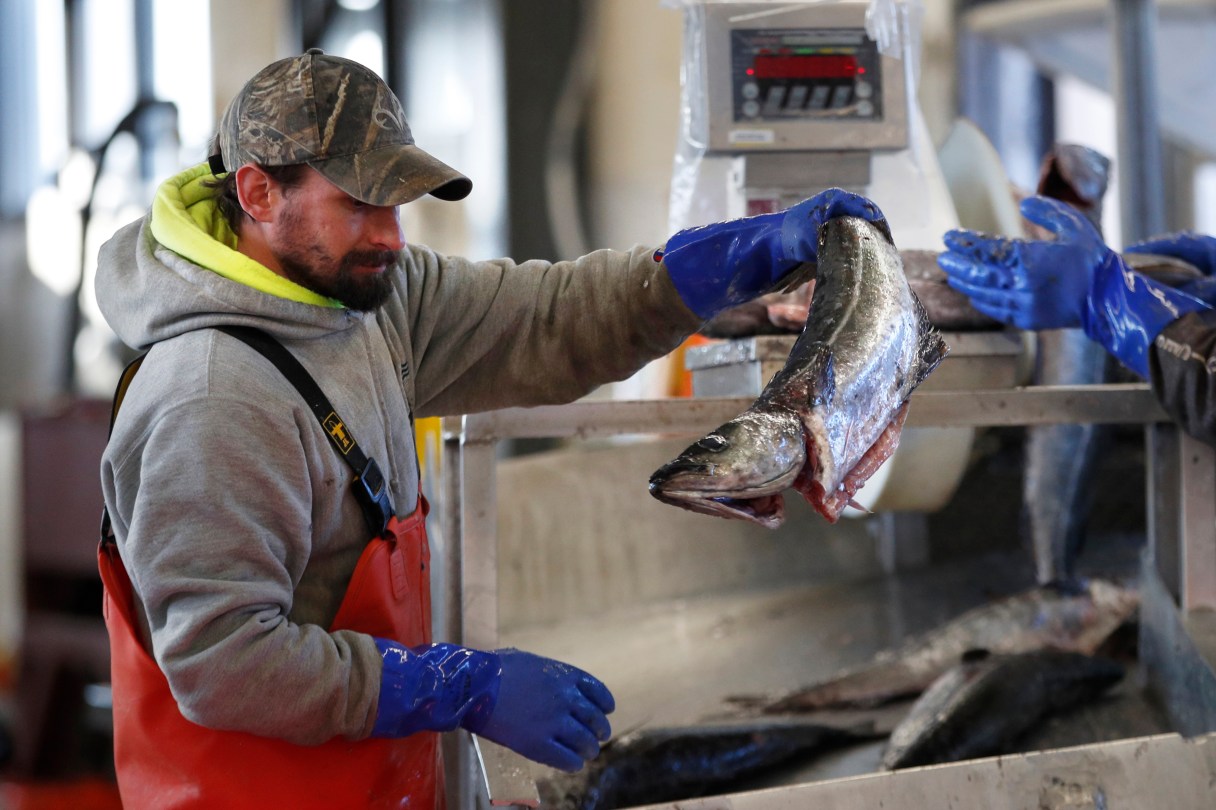
PORTLAND, Maine (AP) – The coronavirus pandemic has hurt the U.S. seafood industry due to a precipitous fall in imports and exports and a drop in catch of some species.
Those are the findings of a group of scientists who sought to quantify the damage of the pandemic on America’s seafood business, which has also suffered in part because of its reliance on restaurant sales. Consumer demand for seafood at restaurants dropped by more than 70% during the early months of the pandemic, according to the scientists, who published their findings recently in the scientific journal Fish and Fisheries.
Imports fell about 37% and exports about 43% over the first nine months of the year compared to 2019, the study said. The economic impact has been felt most severely in states that rely heavily on the seafood sector, such as Maine, Alaska and Louisiana, said Easton White, a University of Vermont biologist and the study’s lead author.
It hasn’t all been doom and gloom for the industry, as seafood delivery and home cooking have helped businesses weather the pandemic, White said. The industry will be in a better position to rebound after the pandemic if domestic consumers take more of an interest in fresh seafood, he said.
“Shifting to these local markets is something that could be really helpful for recovery purposes,” White said. “The way forward is to focus on shortening the supply chain a little bit.”