
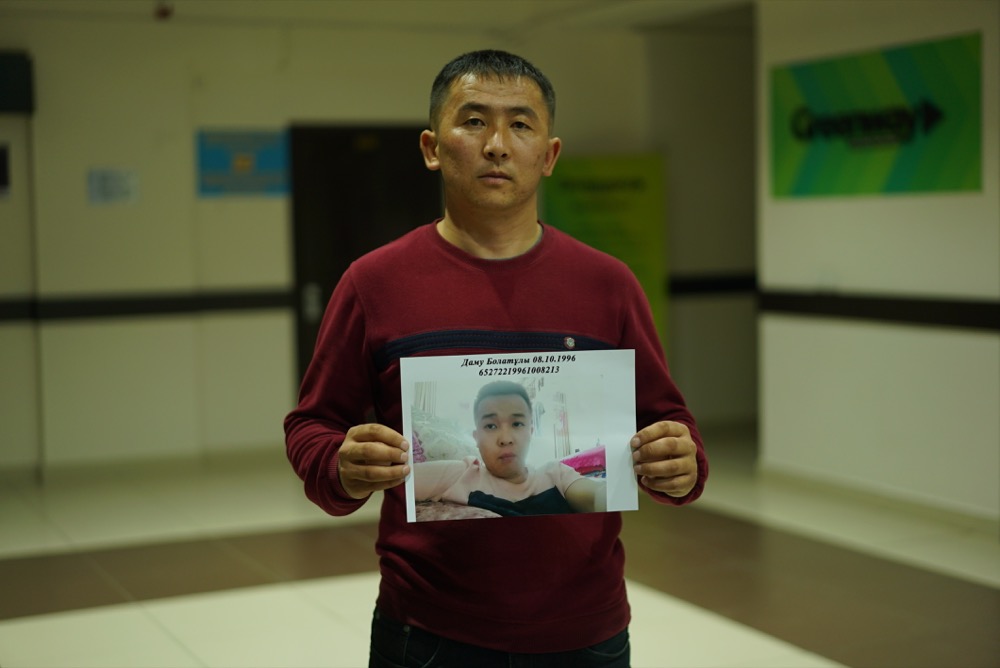
 In this photo taken Dec. 7, 2018, Mussa Imamadiuly, a truck driver, stands with a picture of his wife’s little brother for a photo outside the office of an advocacy group for ethnic Kazakhs born in China in Almaty, Kazakhstan on Imamadiuly says shortly after his marriage, his new wife’s little brother was arrested and taken to an internment camp. Last month, they heard through relatives still in China that police had notified them that his wife’s little brother was about to be transferred to a factory. (AP Photo/ Dake Kang)
HOTAN, China (AP) – Barbed wire and hundreds of cameras ring a massive compound of more than 30 dormitories, schools, warehouses and workshops in China’s far west. Dozens of armed officers and a growling Doberman stand guard outside.
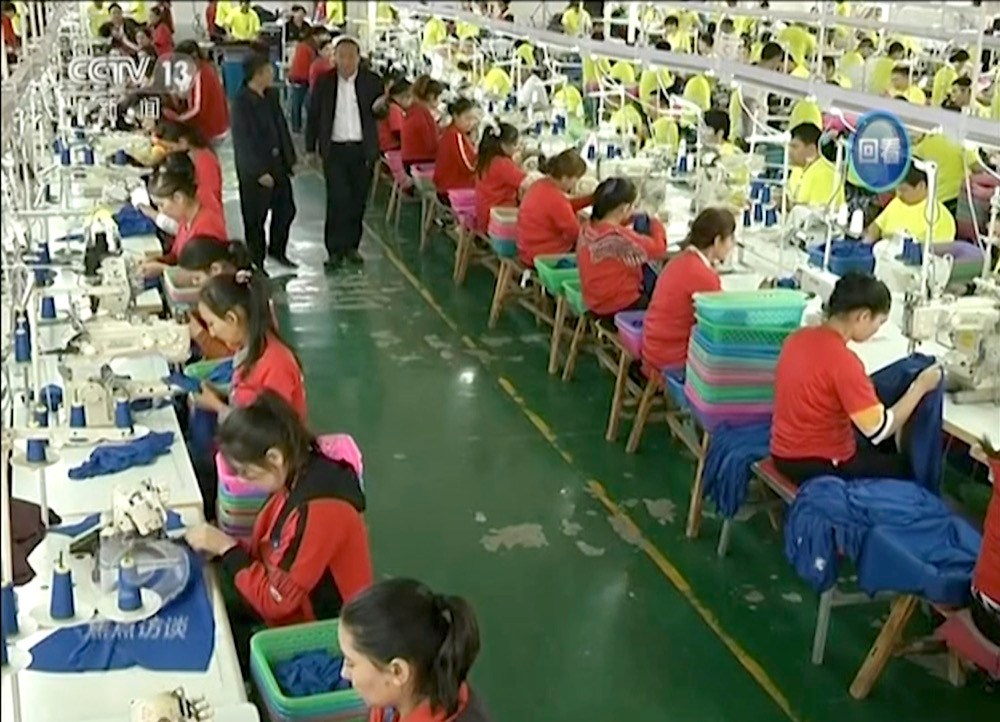
Behind locked gates, men and women are sewing sportswear that can end up on U.S. college campuses and sports teams.
This is one of a growing number of internment camps in the Xinjiang region, where by some estimates 1 million Muslims are detained, forced to give up their language and their religion and subject to political indoctrination. Now, the Chinese government is also forcing some detainees to work in manufacturing and food industries. Some of them are within the internment camps; others are privately-owned, state-subsidized factories where detainees are sent once they are released.
The Associated Press has tracked recent, ongoing shipments from one such factory inside an internment camp to Badger Sportswear, a leading supplier in Statesville, North Carolina. The shipments show how difficult it is to stop products made with forced labor from getting into the global supply chain, even though such imports are illegal in the U.S. Badger CEO John Anton said Sunday that the company would source sportswear elsewhere while it investigates.
Chinese authorities say the camps, which they call training centers, offer free vocational training for Uighurs, Kazakhs and others, mostly Muslims, as part of a plan to bring minorities into “a modern civilized” world and eliminate poverty in Xinjiang. They say that people in the centers have signed agreements to receive vocational training.